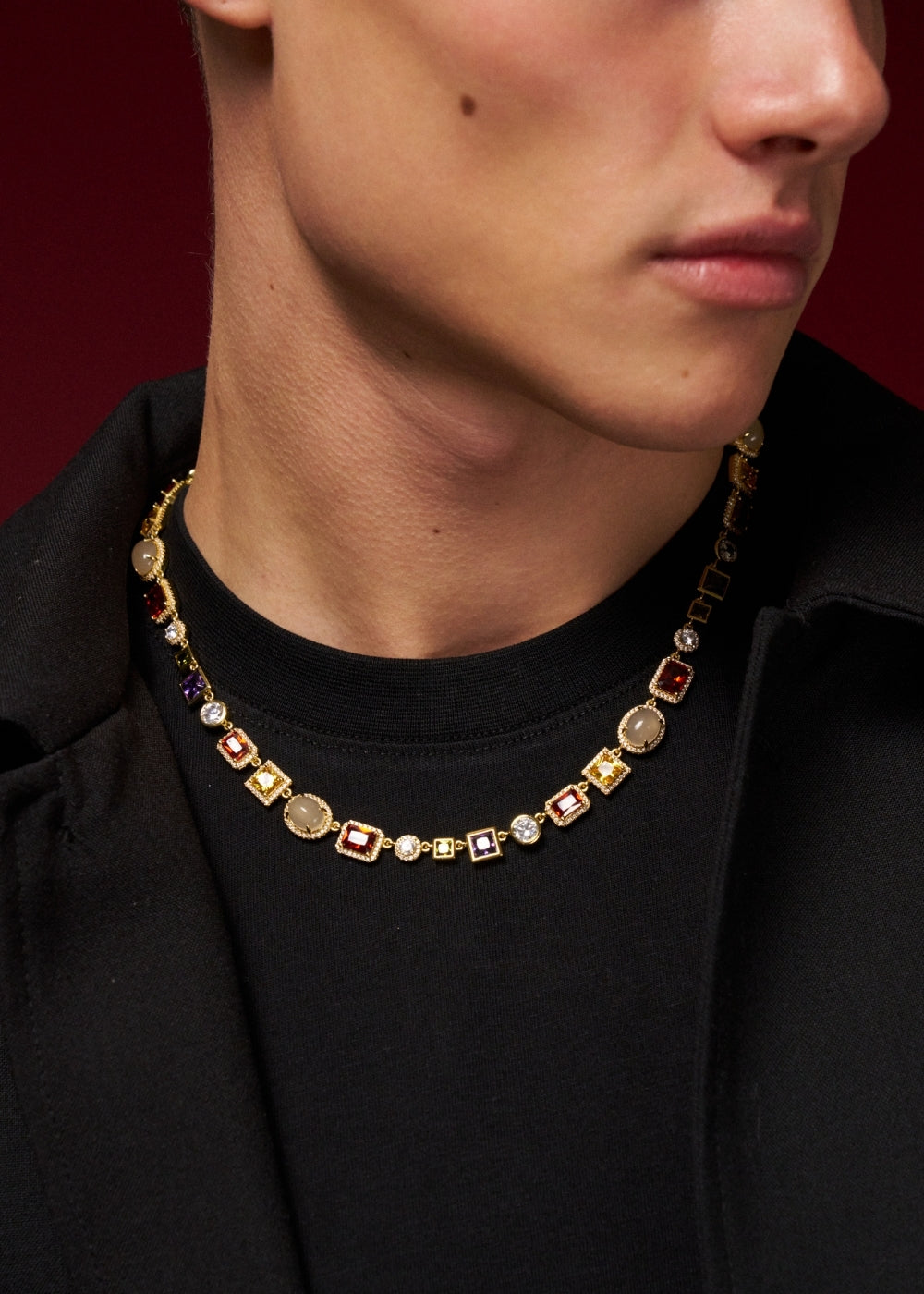
GEMSTONES
SHOP NOW


Cart
Your cart is empty
Your gifting options
Make your gift extra special with our luxury packaging options. Select a gift bag, gift box or a combination to create the perfect presentation.

Luxury Gift Box, Gift Bag & Wrapping Kit ($16.00)
Includes: CRAFTD Luxury Gift Box, Gift Bag, Tissue Wrapping Paper & Ribbon

Meaning Card ($4.00)
Add more meaning to your gift with a meaning card included with your order.
15 variations available

Gift Bag, Ribbon & Wrapping ($10.00)
Ideal for items that already include a gift box.
Includes: Premium CRAFTD Gift Bag, Ribbon & Tissue Wrapping. Doesn’t include: Luxury Gift Box.

Luxury Gift Box ($10.00)
Present your gift in our signature gift box, designed to impress before it’s even opened.
Includes: Premium gift box
Choose your option
To My Boyfriend

To My Husband

To My Soulmate

To My Son

To My Grandson

To My Brother

To My True Friend

To My Dad

A Symbol Of Strength

A Symbol Of Faith

A Symbol Of Protection

A Symbol of Luck

A Symbol Of Safe Travel

A Symbol Of Adventure
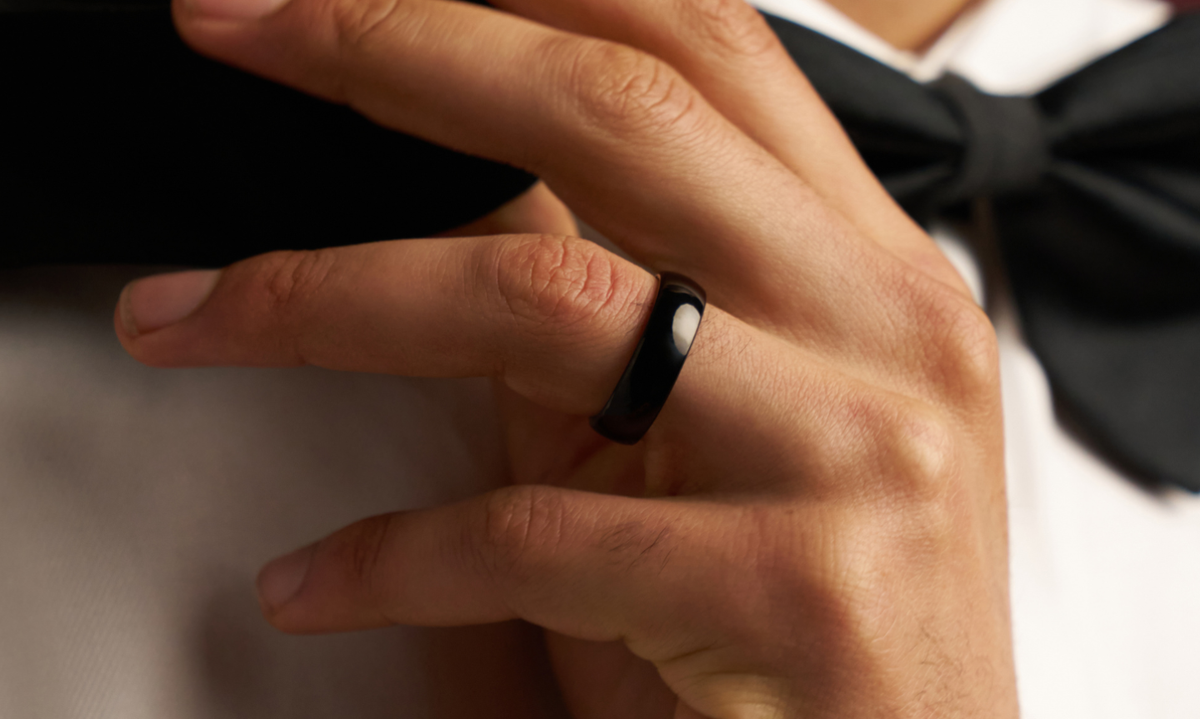
A black ring does a job no other colour can. It takes the shine out of jewellery and leaves the shape, so the ring looks like a considered choice instead of a glint of metal.
This guide covers what a black ring can mean, the four materials that give rings their black, how each one ages, and the black rings we make.

Black stone, silver setting. Featured: Onyx Oval Stone Signet Ring (Silver).
Jump to:
Restraint is usually the point. Black doesn't catch the light the way polished gold does, so a ring can sit on your hand without pulling every eye towards it.
Black is also the colour that forgives the most. Black works with a navy suit, a grey knit, a plain white T-shirt or leather jacket, and it never clashes with a watch. For a first ring, that makes it a very safe place to start.
Not one fixed meaning. A black ring has stood for several things over time, and what it says today depends on who's wearing it and where.
In Georgian and Victorian Britain, black rings were worn to remember the dead. They were made in black enamel, or later in jet from the Yorkshire coast, and they became widespread after Queen Victoria went into long mourning for Prince Albert in 1861. That history is why some older generations still link black jewellery with grief.
Today, black is just as likely to mean the opposite. A black tungsten or enamel band has become a common alternative wedding ring for men who find plain gold too traditional, and it looks sharp against a dark suit on the day.

A black band dressed for black tie. Featured: Rounded Ring (Black) 7mm | Tungsten.
Some people in the asexual community wear a black ring on the middle finger of the right hand as a quiet marker of identity. It's a recognised symbol, but it isn't universal: lots of men choose that finger purely for fit, so a black ring there doesn't on its own say anything for certain.
The stone's own symbolism is covered in what black onyx means for men.
A ring can be black in four quite different ways, and the method changes how it looks, feels and lasts.
Here the metal stays gold or silver and the black comes from a stone set into it. Our onyx rings use hand-selected natural black onyx, cut into a smooth cabochon and set into a 316L stainless steel ring with an 18K gold or rhodium finish. The contrast between bright metal and deep black is the whole appeal.

The black here is the stone itself. Featured: Onyx Squared Stone Signet Ring (Gold).

Ten small stones, each in its own setting. Featured: Onyx Stone Band Ring (Silver).
Enamel is a hard coloured coating fused to the surface of a metal. Our black bands are 316L stainless steel triple-coated in black enamel, which gives an even, rich black from edge to edge, and the coating is scratch-resistant. You can see the finish on the Band 2.0, which adds etched detail to a 5mm band.

Black enamel over a steel core. Featured: Band 2.0 Ring (Black).

Black on black, and still easy to spot. Featured: Round Band Ring (Black) 5mm.
Tungsten ranks among the toughest metals a ring can be made from. To turn it black, ours is oxidised at over 800°C, then sealed under rhodium and PVD. Ours is the Rounded Ring in black tungsten, a smooth 7mm band. The comparison in tungsten vs titanium wedding bands explains how the metal stacks up against the alternatives.

Tungsten, dark and dense. Featured: Tungsten.
Silver can also be darkened. Oxidising turns the surface of 925 sterling silver a deep black, and our Bevelled Ring (8mm) and Rounded Ring (7mm) are made this way, hallmarked and sealed with a fade-resistant coating. Because it's real silver underneath, the ring carries more weight and value than a coated base metal.
Three face shapes, each offered in both metals. The Oval is the most classic, the Squared the boldest, and the Rectangle the slimmest, a narrow bar of onyx that suits the little finger.

A slim bar of onyx on a gold signet. Featured: Onyx Rectangle Stone Signet Ring (Gold).

The same shape in silver. Featured: Onyx Rectangle Stone Signet Ring (Silver).
For black without a signet face, the Onyx Stone Band Ring sets ten individually cut stones around the ring. There's a gold version and a silver one, and every onyx style is grouped in the onyx rings collection.
Three 5mm bands in black enamel: the Round Band with a softly curved profile, the Flat Band with a flat, high-shine face, and the Band 2.0 with etched detailing. Our guide to band rings for men covers profiles and widths in more depth.

Flat face, high shine. Featured: Flat Band Ring (Black) 5mm.
For a heavier, wider black band, choose between tungsten, which is the hardest wearing, and oxidised sterling silver, which is solid precious metal. The tungsten styles are grouped in our tungsten collection.
Black sits between the two main metals, so it slots in beside almost anything you own.

Black stones, gold band, daily wear. Featured: Onyx Stone Band Ring (Gold).
Usually nothing beyond taste. Most men wear black because it looks understated and goes with everything. It has carried other meanings over the years, from mourning in the 1800s to an alternative wedding band today, but context decides which, if any, applies.
Some people in the asexual community wear a black ring on the middle finger of the right hand as a quiet signal of identity. Many others simply prefer how a ring sits there, so it isn't a reliable code by itself.
Yes. Black tungsten and black enamel bands are a common choice for grooms who want something less traditional than plain gold, and they sit well next to a dark suit.
Four materials cover almost all of them: a black stone such as onyx, an enamel coating over a metal core, a darkened hard metal such as tungsten, or silver that has been oxidised to turn it black.
That comes down to the material. A stone holds its colour, since the black is the stone itself. Coatings and oxidised finishes are protected but can soften at the edges after years of wear, which some men like.
Not possible. Unlike gold or silver, tungsten can't be cut and soldered, so measure carefully before ordering.
Yes. Black sits between gold and silver, so it works with both. A gold signet set with onyx brings the two together in one piece.
The core of our onyx rings and enamel bands is 316L steel, and 316L releases very little nickel. The black sterling silver rings are solid 925 silver.
Choose onyx if you want colour from a stone and the shine of metal around it, enamel for an even all-over black at an easy price, tungsten for hard-wearing weight, and oxidised silver for real metal with a lived-in finish.
Whichever you start with, it's the ring most likely to suit everything else you wear. The stone rings are grouped under onyx rings, the plain bands under band rings.
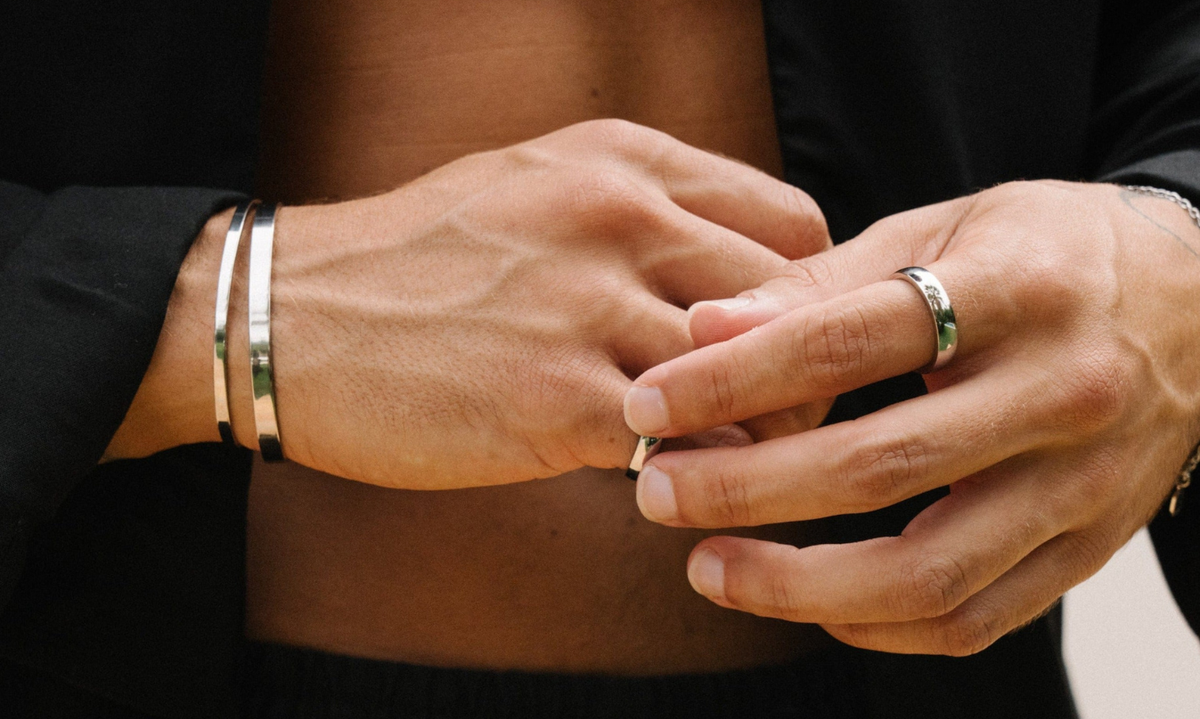
Bangles for Men: Open, Closed and How to Choose
Closed loop or open band? Here’s what makes a bracelet a bangle, where the style began, how to size one by hand or by wrist, and which of our open bangles suits you.
Read more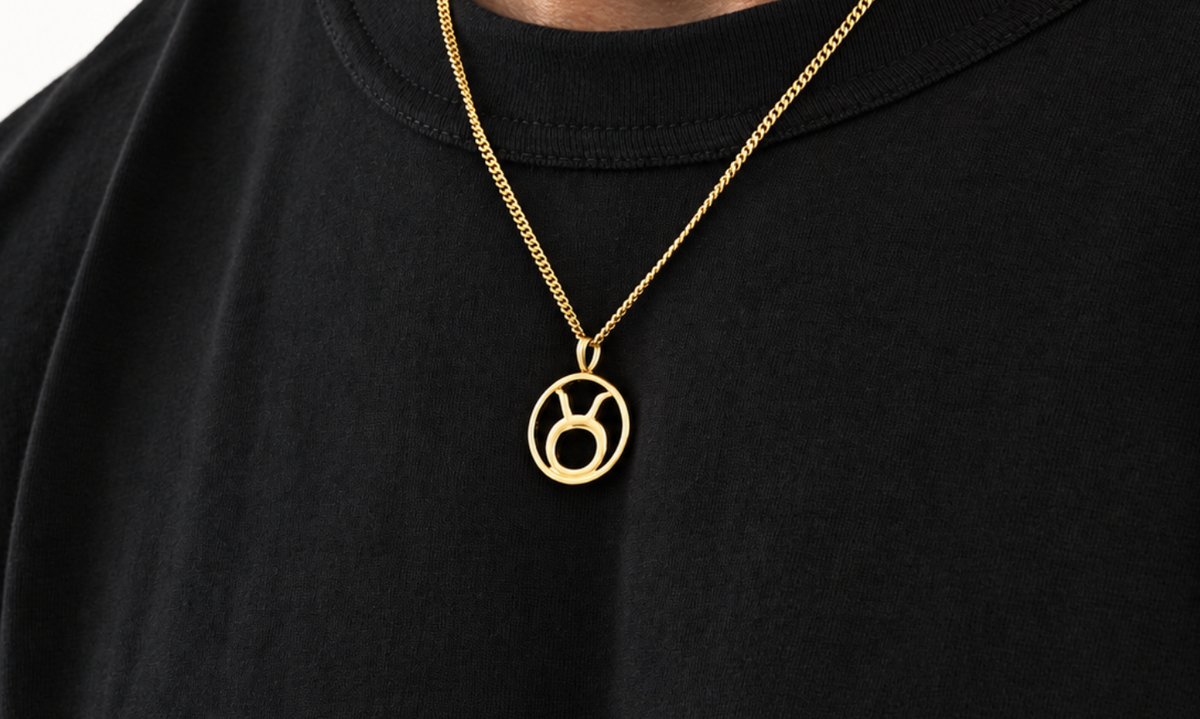
Zodiac Necklaces for Men: Choosing Your Star Sign
Not sure which sign is yours, or what it’s meant to say about you? Dates and elements for all twelve, what to do if you’re born on a cusp, and how to wear one.
Read more

Leave a comment
This site is protected by hCaptcha and the hCaptcha Privacy Policy and Terms of Service apply.