GEMSTONES
SHOP NOW


Cart
Your cart is empty
Your gifting options
Make your gift extra special with our luxury packaging options. Select a gift bag, gift box or a combination to create the perfect presentation.

Luxury Gift Box, Gift Bag & Wrapping Kit ($16.00)
Includes: CRAFTD Luxury Gift Box, Gift Bag, Tissue Wrapping Paper & Ribbon

Meaning Card ($4.00)
Add more meaning to your gift with a meaning card included with your order.
15 variations available

Gift Bag, Ribbon & Wrapping ($10.00)
Ideal for items that already include a gift box.
Includes: Premium CRAFTD Gift Bag, Ribbon & Tissue Wrapping. Doesn’t include: Luxury Gift Box.

Luxury Gift Box ($10.00)
Present your gift in our signature gift box, designed to impress before it’s even opened.
Includes: Premium gift box
Choose your option
To My Boyfriend

To My Husband

To My Soulmate

To My Son

To My Grandson

To My Brother

To My True Friend

To My Dad

A Symbol Of Strength

A Symbol Of Faith

A Symbol Of Protection

A Symbol of Luck

A Symbol Of Safe Travel

A Symbol Of Adventure
Nobody really needs a compass anymore. Your phone can find north in seconds. So can your car, your watch, and half the apps you forgot you downloaded. But a compass pendant was never really about directions. It's about direction. Purpose, movement, and the reminder to keep going the right way. Here's where the symbol comes from, what it means, and how to choose one that feels like yours.
Jump to:
A compass does one job. Wherever you are, however lost you feel, it points the way. For most of history that was a practical promise. Now it's a personal one.

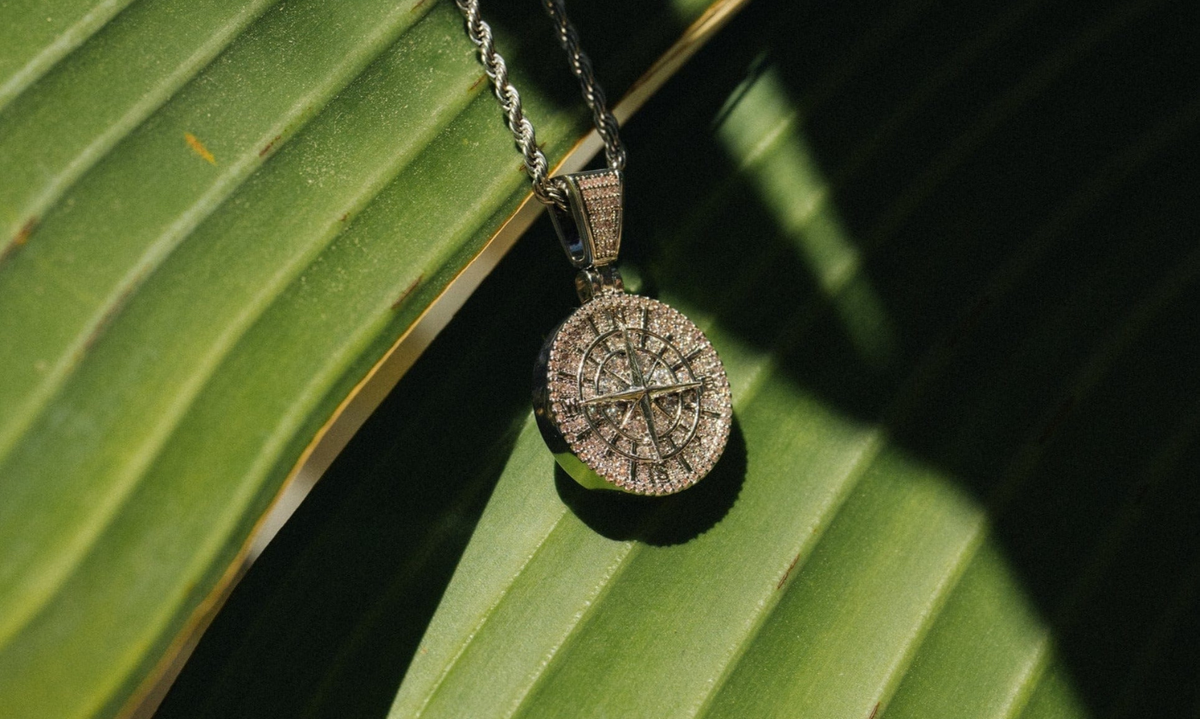
Featured: Compass Pendant (Rose Gold)
Because nobody wears a compass to navigate anymore, the pendant is free to mean something bigger: direction, purpose, and the confidence to find your own way. For some men, that meaning stays close to the original. A compass pendant marks a love of travel, a life spent moving, or a particular journey that changed things. Sailors and explorers trusted the instrument with their lives for centuries, and a small version worn close has long been a nod to that tradition.
For most, though, it has nothing to do with maps. The compass stands for inner direction. Knowing what you value, where you're headed, and holding that course when everything around you is pulling in different directions. It's not about knowing exactly where you're going. It's about trusting yourself to find it.
The magnetic compass is one of the oldest navigational tools ever made. The earliest records point to China, where lodestone, a naturally magnetic rock, was used more than two thousand years ago. By around the 11th century, Chinese sailors were using magnetised needles to navigate at sea, and the technology appears in European records a century or two later.

Featured: Compass Pendant (Silver)
The design most compass jewellery carries today, the star-shaped face with its radiating points, is the compass rose. It grew out of the wind roses drawn on medieval sailing charts, marking the directions of the winds long before magnetic needles were standard on board. North, south, east and west earned their places on the rose, and the shape became shorthand for navigation itself. That's the version you'll recognise on a compass rose necklace: part instrument, part map.
How much the object mattered shows in how far men went to keep one. During the Second World War, miniature escape compasses were hidden inside airmen's uniform buttons, small enough to miss in a search and valuable enough to be worth the risk. Within a generation or two, satellites had retired the instrument from daily life almost entirely. The symbol didn't retire with it. Strip away the usefulness and what's left is the meaning, and the meaning is the part men still wear.
Across cultures, the compass has traditionally been associated with guidance and protection, particularly for people setting out on a journey. Giving or wearing one was a way of asking for safe passage and a sure way home.

Featured: Compass Pendant Set (Silver)
For men of faith, a compass pendant often carries a further layer: a reminder that they're guided by something larger than themselves, and that the direction is already set even when the road isn't visible. For others, the meaning is entirely personal. It's the idea of a moral compass made physical. A fixed point to check yourself against when decisions get noisy.
None of these readings cancels the others out. The compass belongs to no single faith or tradition, which is part of why it travels so well. The wearer decides what north means.
Two generations ago a compass was a tool. Today it's a choice, and that's exactly what gives it weight. Putting one on says something no phone can: I know where I'm going, and I chose the reminder myself.

Featured: Compass Pendant (Gold)
Beyond that, the reasons vary more than you'd expect. One man wears his because he moved countries at twenty and never quite stopped. Another was handed one by his father before university, and it hasn't come off since. A third simply likes what it stands for: independence, and the refusal to follow someone else's route.
The compass also suits how most men actually wear jewellery. It's masculine without being loud. The detail sits in the engraving, not the size, so it works as an everyday piece rather than a statement one. A compass pendant doesn't announce anything. It just suggests the man wearing it knows where he's headed.
Same piece, three names, and none of them is wrong.
"Compass necklace" describes the whole thing: chain and pendant together. "Compass pendant" is more precise, the piece hanging from the chain. "Compass rose" is the design itself, the star-shaped face with its radiating points, named after the wind roses drawn on old sailing charts. You'll see all three used interchangeably, including by us, because the men searching for this piece use all three too.
Our Compass collection covers the full range of men's compass necklaces, from the original pendant to iced and Nordic interpretations, each finished with our signature scratch and fade-resistant protection. If you'd rather build something more personal, our Build Your Own Pendant lets you start with a compass and add up to two mini pendants or gemstone charms, also in Silver.
The original, and still the one most men start with. This pendant carries a finely detailed compass face, etched with the four cardinal points and finished for daily wear. The gold version is triple-coated in 18K gold over a solid core; the silver is the cooler, easier-going route. Both are built to be put on once and forgotten about. Also in Rose Gold.

The same symbol, with considerably more presence. The Iced Compass sets the compass medallion with hundreds of hand-placed AAA-grade stones, so the shine never sits still. The meaning doesn't change; the volume does. Worn on a slightly heavier chain, it holds its own as the centrepiece of a look rather than a detail within one.

Not a necklace, but it earns its place here. The Compass Signet Ring carries the compass emblem on a clean signet face, for the man who'd rather wear the symbol on his hand than his chest. It pairs naturally with the pendant if you want the theme to run through a full look, without doubling up on chains. Also in Gold.

A guide for the road ahead, taken from older maps. The Nordic Compass is inspired by the Vegvísir, an Icelandic sign recorded in 19th-century manuscripts and often linked to older folk tradition. The manuscript describes it as a symbol that keeps its bearer from losing their way in storms and bad weather. Eight staves radiate from a central point, so it wears like a compass drawn by hand rather than a machined instrument. If the standard rose feels too expected, this is the one. Also in Silver.

The understated route in. The Mini Compass shrinks the design down without losing the detail, hand-carved and sized to sit close to the collar. It's the easiest compass to layer, the natural second piece in a stack, and at £30 it's also the simplest way to start wearing the symbol.
Gold suits the history of the piece. Compasses were instruments in brass and gilt, and an 18K gold compass pendant carries that same warmth. It works especially well against darker clothing, where the face picks up the light.
Silver is the everyday answer. It sits more neutrally with a modern wardrobe, reads a little more understated, and takes less deciding in the morning. If the compass is going to be a daily piece, a silver compass pendant rarely puts a foot wrong.

Featured: Compass Pendant (Rose Gold)
Rose gold is the unexpected one. Fewer men wear it, which is exactly its appeal. Warmer than silver, softer than gold, and distinctive without trying to be.
If you're stuck, check the metal already in your rotation. The watch, the rings, the chain you reach for most days. Matching that is the safest call, and every compass above comes in more than one finish, so the choice is never forced.
The rule with a medallion pendant is proportion. A few ways in:

Featured: Compass collection
Traditionally, a compass was given before a journey. It meant safe travels, and it meant come back. Gifting one today keeps that spirit and widens it: it's a way of marking a new chapter and telling someone you trust them to navigate it.
That's why compass pendants turn up at the same moments again and again. Graduations. First jobs. A son moving out, a mate moving abroad, an eighteenth or twenty-first. It says you'll find your way without anyone having to make a speech about it.

Featured: Compass Gift Set (Silver)
If you're gifting, the Compass Gift Set is the complete answer: the pendant and a Wheat chain, boxed and ready to hand over, covered by a lifetime warranty. Also available in Gold.
Not much is needed. Wipe the pendant down with a soft cloth now and then, keep it away from chlorine and harsh chemicals, and store it somewhere dry when it's off. The engraved face holds fine detail, so a gentle clean with warm water keeps the etching sharp.
Every CRAFTD compass is finished with our scratch and fade-resistant protection and covered by a lifetime guarantee, so daily wear is the point, not the risk.
It represents direction, guidance, and trust in your own path. Some men wear it for a love of travel, others as a personal reminder to stay on course. The meaning is set by the wearer.
Traditionally, the compass is associated with guidance and protection on a journey. For people of faith it can represent being guided by something larger; for others it stands for an inner moral compass.
It's a traditional send-off gift meaning safe travels and a sure way home. Today it marks new chapters, such as graduations, new jobs and moves, and says you trust the person to find their way.
The Vegvísir is Icelandic, recorded in 19th-century manuscripts, where it's described as keeping its bearer from losing their way in bad weather. It's often linked with Viking imagery today, though the surviving evidence is later than the Viking age.
No. The compass belongs to no single faith, which is part of its appeal. Some men give it a spiritual reading, but it's just as often worn as a symbol of travel, independence or personal direction.
A 3mm Wheat chain is the classic pairing, a Rope adds texture, and a 4mm Cuban gives the piece more presence. At 50 to 55cm the pendant sits mid-chest, easy to wear over a tee or under a shirt.
Yes. CRAFTD compass pendants are finished with scratch and fade-resistant protection and covered by a lifetime guarantee, so daily wear is what they're built for.
The instrument's work is done. Satellites handle the navigating now, and they're welcome to it. What the compass kept is the part that was always worth keeping: the promise that you can find your way. Worn for yourself or handed to someone else, it's the rare piece that gets more personal the longer it's worn.
You can explore the full Compass collection here. The only question is which way yours points.
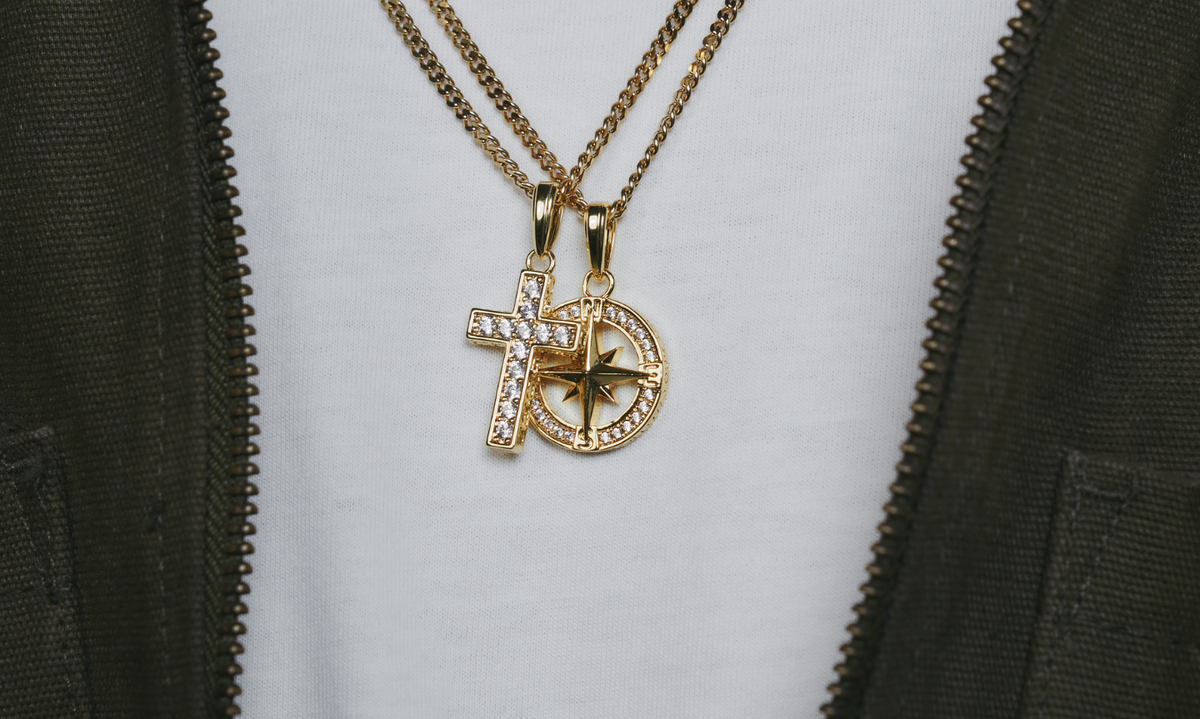
Why Men Wear Cross Necklaces and What They Mean
For some men, the cross is faith. For others, it’s family, endurance, protection or something only they understand. However it’s worn, it remains one of the most personal symbols a man can keep close.
Read more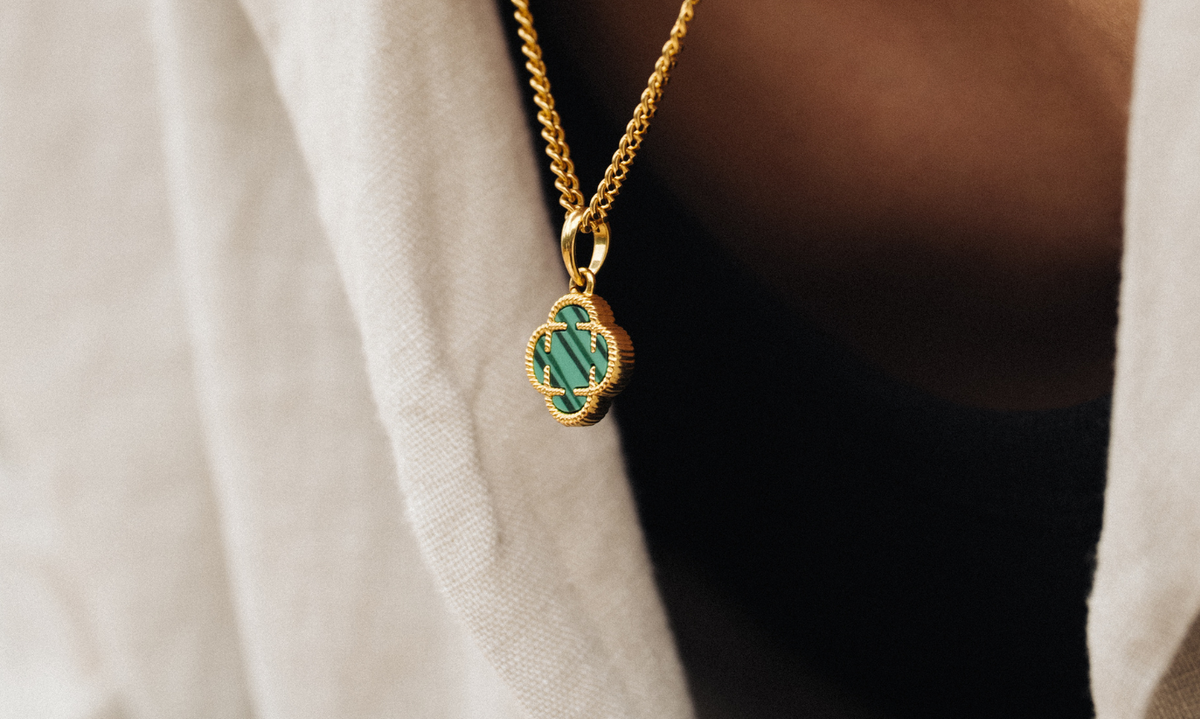
Why Men Wear Clover Bracelets and Necklaces for Luck
Wondering what a clover bracelet actually means, and why every man suddenly owns one? Here's the story behind the four-leaf clover, and how men wear clover bracelets, necklaces, and pendants well.
Read more

Leave a comment
This site is protected by hCaptcha and the hCaptcha Privacy Policy and Terms of Service apply.