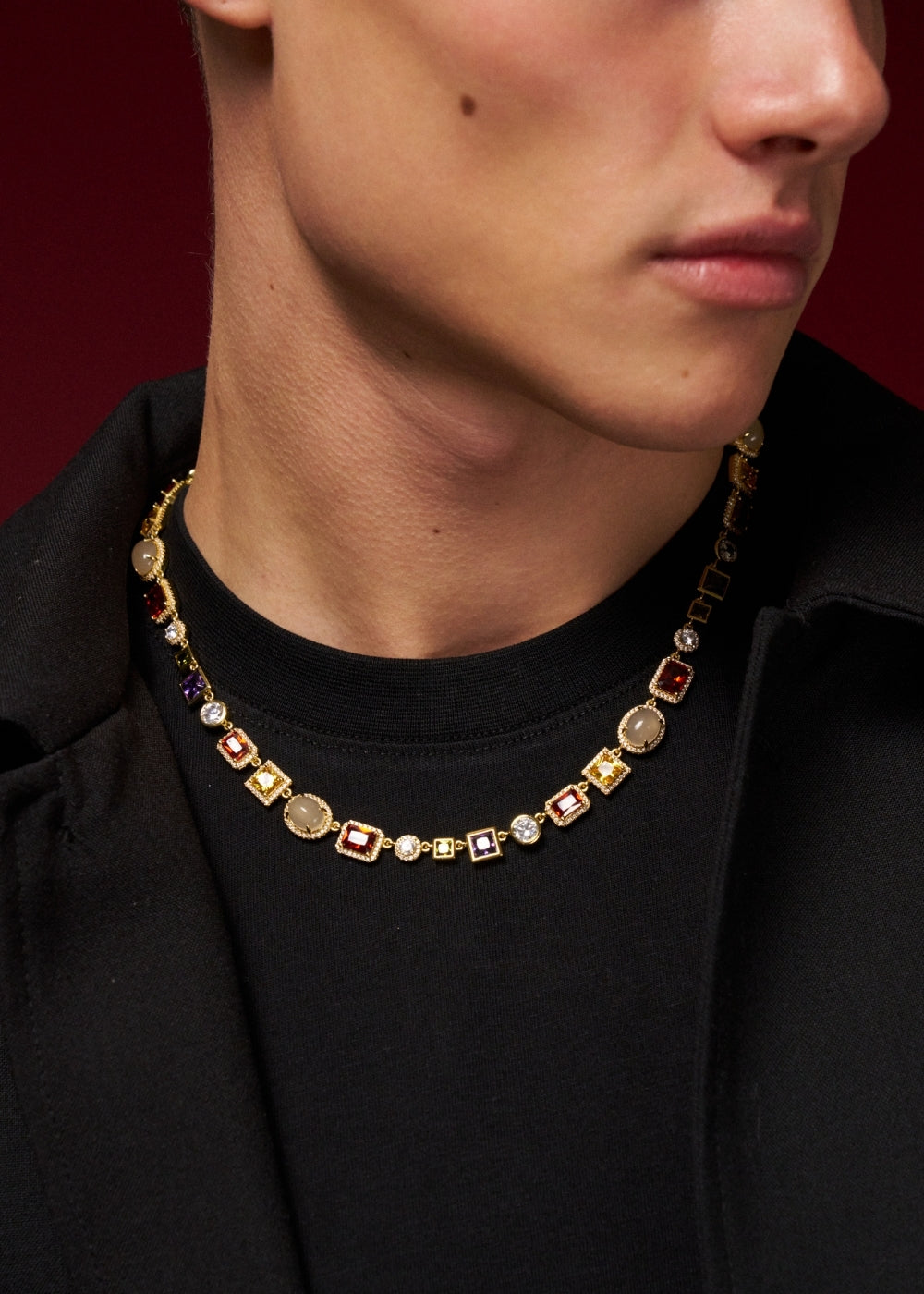
GEMSTONES
SHOP NOW


Cart
Your cart is empty
Your gifting options
Make your gift extra special with our luxury packaging options. Select a gift bag, gift box or a combination to create the perfect presentation.

Luxury Gift Box, Gift Bag & Wrapping Kit ($16.00)
Includes: CRAFTD Luxury Gift Box, Gift Bag, Tissue Wrapping Paper & Ribbon

Meaning Card ($4.00)
Add more meaning to your gift with a meaning card included with your order.
15 variations available

Gift Bag, Ribbon & Wrapping ($10.00)
Ideal for items that already include a gift box.
Includes: Premium CRAFTD Gift Bag, Ribbon & Tissue Wrapping. Doesn’t include: Luxury Gift Box.

Luxury Gift Box ($10.00)
Present your gift in our signature gift box, designed to impress before it’s even opened.
Includes: Premium gift box
Choose your option
To My Boyfriend

To My Husband

To My Soulmate

To My Son

To My Grandson

To My Brother

To My True Friend

To My Dad

A Symbol Of Strength

A Symbol Of Faith

A Symbol Of Protection

A Symbol of Luck

A Symbol Of Safe Travel

A Symbol Of Adventure
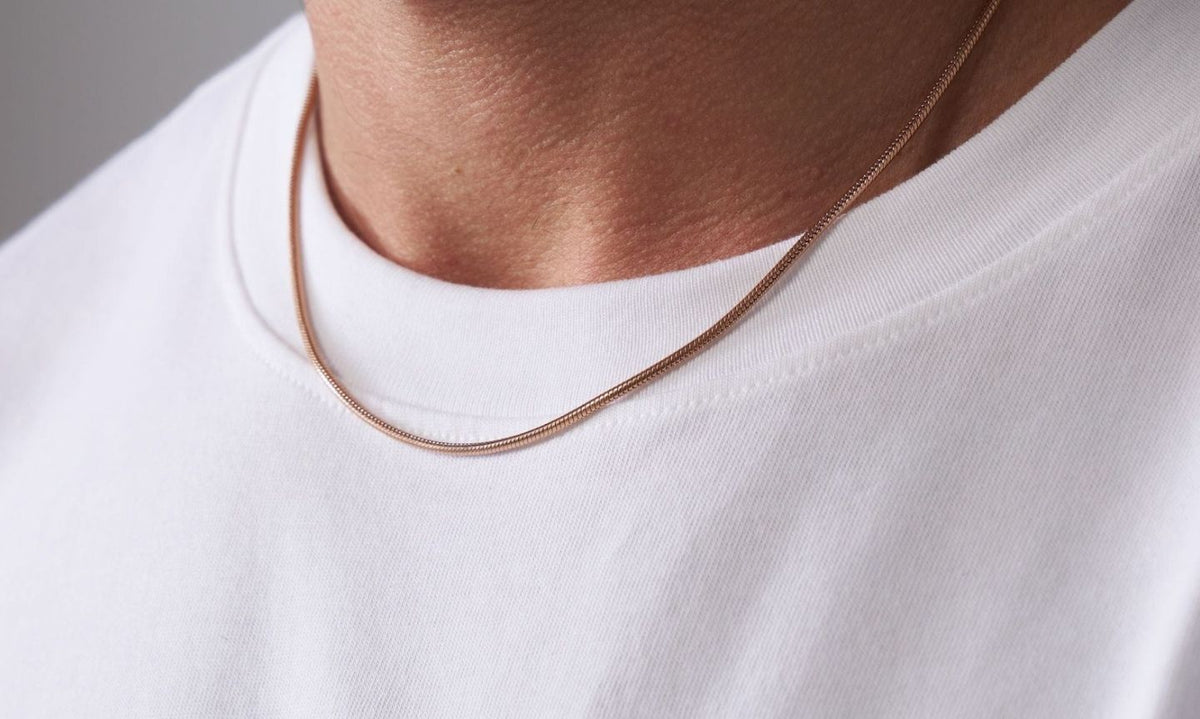
A herringbone chain is a flat chain made from short, slanted links laid in tight rows, each row leaning the opposite way to the one beside it. Packed together, those links form a smooth band that lies close to the skin and reflects light like a ribbon of poured metal.
Few chains look better, and few are less forgiving. We don't make a herringbone ourselves, and below we explain why: what gives it that look, why it bends so easily, why it's a poor match for a pendant and which of our chains comes closest without the weak points.

Smooth and fluid like a herringbone, but round, so it bends in every direction. Featured: Snake Chain (Gold) 2mm.
Jump to:
Look closely and you'll see rows of tiny angled links, set so close that almost no gaps show between them. One row slopes left, the next slopes right, and together they build a zigzag along the whole chain. That zigzag gave the chain its name: it echoes the bones of a herring, and the same pattern turns up in tweed and in parquet flooring.
From a step back, the pattern melts away and you see a flat, glossy strip. Three things set it apart:
Men's herringbones usually run from around 4mm to 7mm wide. The narrow end looks refined but is the most fragile; the wide end makes a bolder statement and is more often seen in gold.
The same build that makes a herringbone so smooth is what makes it delicate. Its links are flat and overlap each other closely, so the chain flexes easily front to back but resists bending sideways or twisting. Push it in a direction it doesn't want to go and a few links shift out of line. Once that happens, they rarely settle back.
The everyday causes are simple:
On most chains a small bend disappears among the links. On a herringbone it shows straight away, because it interrupts that clean reflective face. A jeweller can sometimes soften a mild bend, but a sharp kink usually leaves a permanent line.
We'd advise against it. A pendant puts all its weight on a few links at the centre, and on a flat chain that weight makes the links fold over each other. Over time the middle creases, and the pendant can wear a groove into the chain's face as it swings.
The bail is a problem too. A herringbone is wide and flat, so many bails either won't pass over it or sit at an awkward angle. For a chain that carries a pendant, choose a round one. Our guide to men's chains sets out which styles are built for the job.
These two get compared more often than any other two chains, because both look smooth and fluid rather than linky. The difference is shape: a herringbone is a flat band, while a snake is a slim, round line made of tiny plates. That one difference changes how each behaves day to day.
| Herringbone | Snake | |
|---|---|---|
| Profile | Flat, with a front and a back | Round, the same from every side |
| How it bends | Front to back only | In every direction |
| Kink risk | High | Lower, though a sharp fold can still crease it |
| Pendants | Not recommended | Fine with a light one |
| Look | A wide, mirror-like strip | A fine, even line of shine |
If you love the herringbone's liquid look but want something you can wear without a second thought, the snake is the natural swap. For how a snake chain is built and how to judge a good one, see our snake chain guide.

Up close, the snake's tiny plates catch the light in one even line. Featured: Snake Chain (Silver) 2mm.
A herringbone isn't the only chain that lies flat. Curb chains do too, including our Connell Chain (Silver) 2mm and the heavier Cuban (Silver) 4mm. The difference is that their links are separate, interlocking loops twisted to sit flat, so each one can move a little on its own. That gives them some slack when they're bent, where a herringbone has none.
Visually, a curb or Cuban reads as a row of links with depth and edges, while a herringbone reads as a solid surface. For a flat chain that shrugs off daily wear, a curb is the better bet; our curb chain guide goes into the family in more detail.
The Snake Chain (Gold) 2mm and Snake Chain (Silver) 2mm are where we'd point anyone drawn to a herringbone. They share its smooth, link-free look, but their round shape lets them flex and roll with you instead of folding. At 2mm they sit neatly at the collarbone and come in 50cm, 55cm and 60cm, fastened with a lobster clasp.
For the wrist, the Snake Bracelet (Silver) 2mm and Snake Bracelet (Gold) 2mm carry the same look in a slimmer form. The whole line-up is in our snake collection, or browse all our chains.

Laid out in full, it keeps a clean curve with no flat face to crease. Featured: Snake Chain (Gold) 2mm.

The same smooth look, sized for the wrist. Featured: Snake Bracelet (Gold) 2mm.

A slim silver line, worn solo or beside a watch strap. Featured: Snake Bracelet (Silver) 2mm.
Because it lies so flat, a herringbone looks best worn short and on its own. Around 45cm to 50cm lets it sit low on the neck, where its smooth face catches the light. Pair it with an unbuttoned shirt or a plain tee to show it off; a high, stiff collar tends to rub against it.
Layering is where it struggles. Other chains rub across its surface and can drag it into a twist, so if you like a stacked look, a round chain such as a snake is the safer pick. For proportions in general, see how to choose a chain length and a chain width that suit you.

Two snakes at different lengths, which a herringbone wouldn't tolerate. Featured: Snake Chain (Gold) 2mm.

Round chains slide past each other without bending. Featured: Snake Chain (Gold) 2mm.
If one's already in your drawer, a few habits will keep it flat and bright:
If it does pick up a bend, don't try to force it straight with your fingers or pliers, which usually makes it worse. Let a jeweller look at it and ask whether it can be eased.
It's a flat chain made from short, slanted links set in close rows, with each row angled the opposite way to the last. The result rests flat on the skin and has a smooth, reflective surface.
The rows of angled links form a zigzag that looks like the skeleton of a herring. The same name is used for the zigzag weave in tweed and the pattern in parquet floors.
Yes, more than almost any other chain. Its flat, closely packed links mean a twist, a tight coil or a drop can push them out of line and leave a visible bend.
Sometimes a jeweller can ease a mild bend, but a sharp kink usually leaves a mark that never fully goes. Prevention is far easier than repair.
It isn't recommended. A pendant pulls on a few links at the centre and makes the chain fold there, which is exactly how kinks start. A round chain is a better partner.
No. Turning over in bed twists the chain under your weight, and that's a classic way for a herringbone to get bent. Remove it before bed and lay it flat.
Most men's herringbones fall between about 4mm and 7mm. Narrow ones look neat but are the most fragile, and wider ones make a bolder, flatter shape.
Not at the moment. Our closest alternative is the Snake Chain 2mm, which has a similar smooth look but is round, so it copes better with everyday movement.
A herringbone rewards careful owners with a finish few chains can match, but it asks a lot in return: no pendants, no sleeping in it and no rough handling. If that sounds like too much work, you can still get the smooth, fluid look in a chain that's happier with real life.
That's the Snake Chain: round, flexible and built for daily wear. To compare every chain shape side by side, read men's chains, explained.
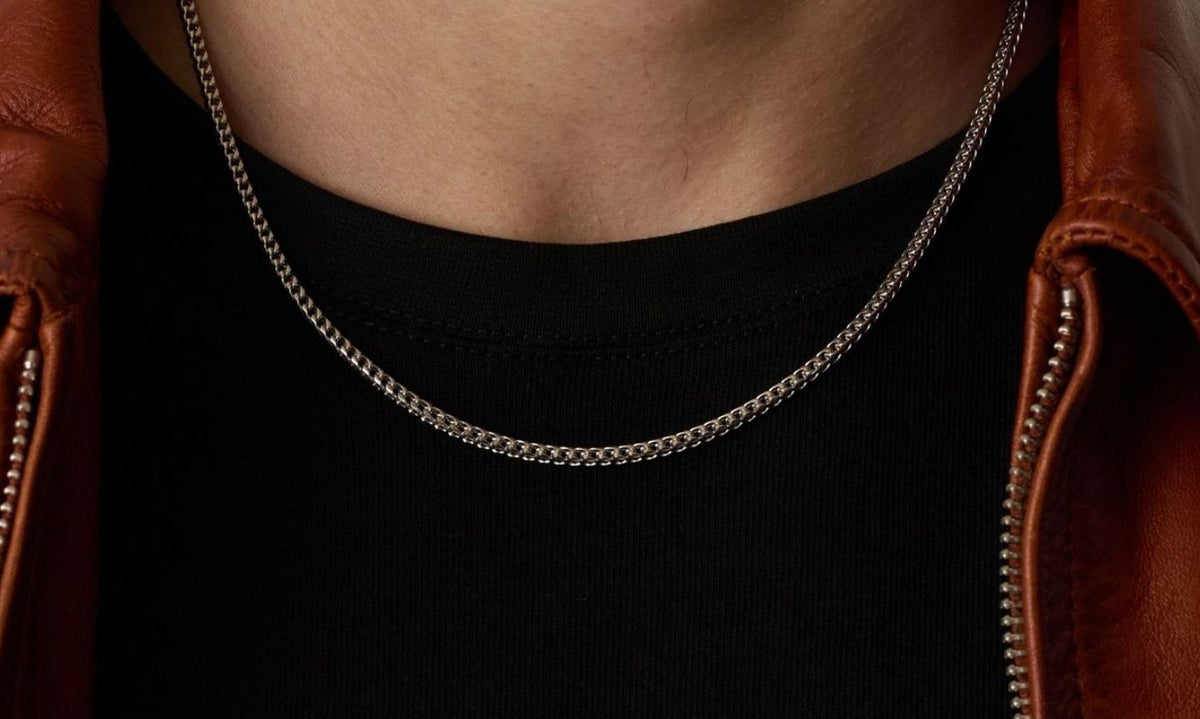
A franco chain is a dense, four-sided take on the curb, built from V-shaped links that look identical from every side. Here’s how it’s made, how it compares with similar chains and what suits it.
Read more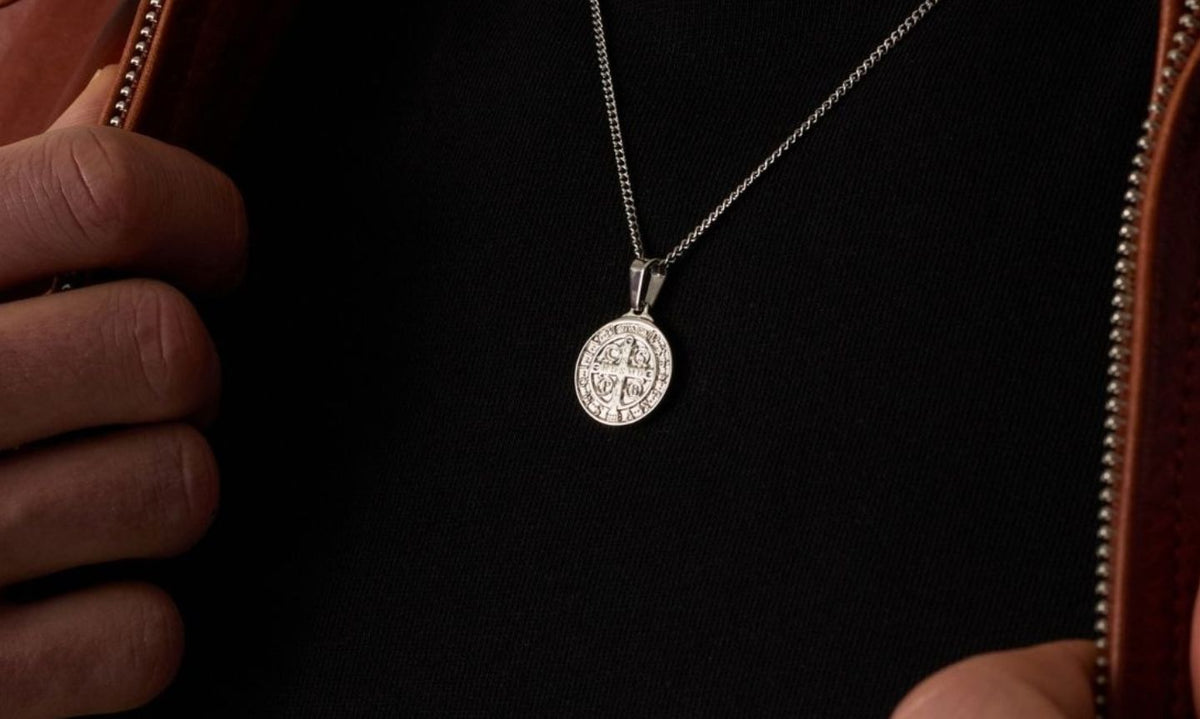
St Benedict Pendant Meaning: The Story Behind the Letters
A St Benedict pendant carries a series of Latin initials with centuries of meaning behind them. Here’s what each one says, where the design came from and how to wear it today.
Read more

Leave a comment
This site is protected by hCaptcha and the hCaptcha Privacy Policy and Terms of Service apply.