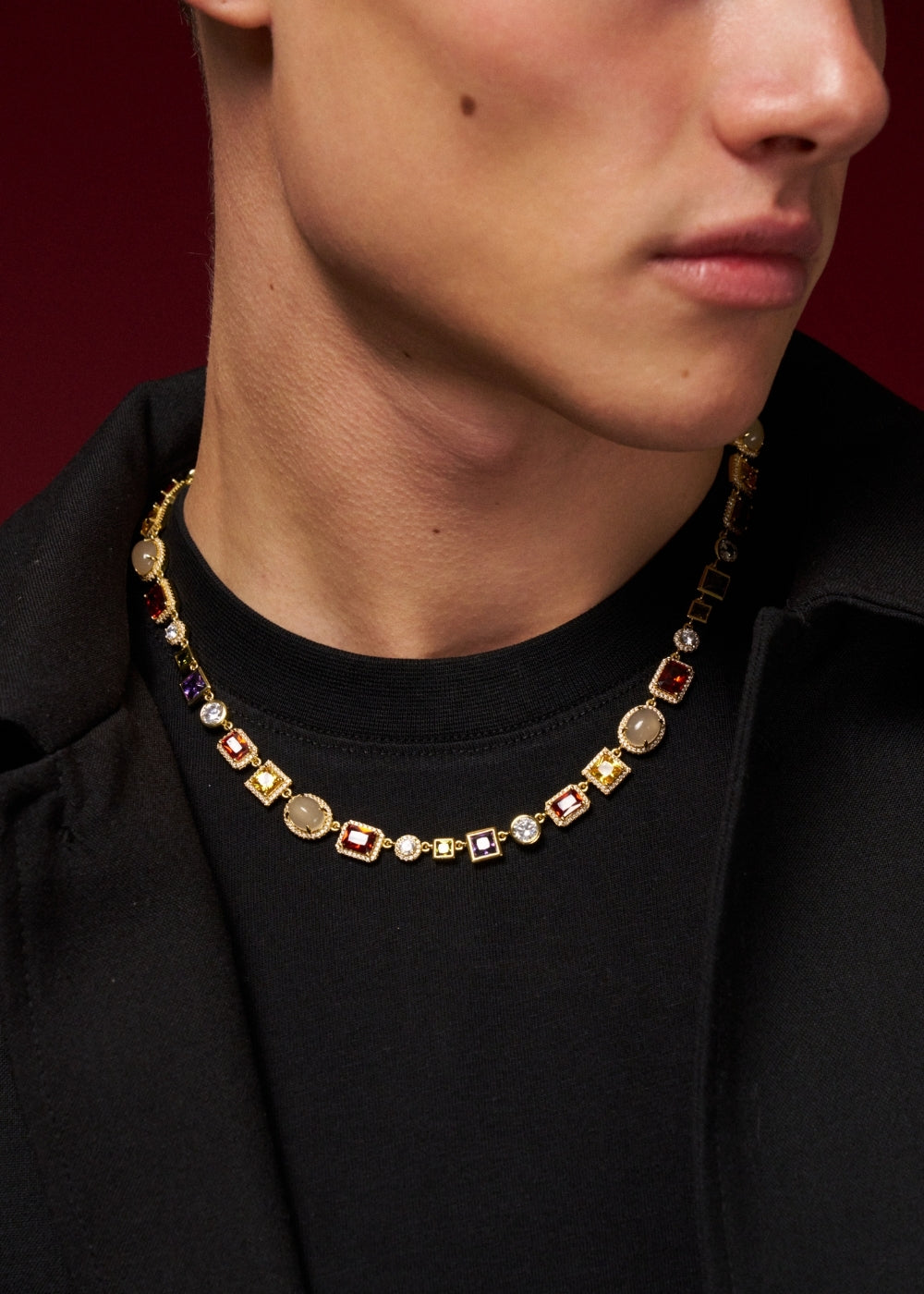
GEMSTONES
SHOP NOW


Cart
Your cart is empty
Your gifting options
Make your gift extra special with our luxury packaging options. Select a gift bag, gift box or a combination to create the perfect presentation.

Luxury Gift Box, Gift Bag & Wrapping Kit ($16.00)
Includes: CRAFTD Luxury Gift Box, Gift Bag, Tissue Wrapping Paper & Ribbon

Meaning Card ($4.00)
Add more meaning to your gift with a meaning card included with your order.
15 variations available

Gift Bag, Ribbon & Wrapping ($10.00)
Ideal for items that already include a gift box.
Includes: Premium CRAFTD Gift Bag, Ribbon & Tissue Wrapping. Doesn’t include: Luxury Gift Box.

Luxury Gift Box ($10.00)
Present your gift in our signature gift box, designed to impress before it’s even opened.
Includes: Premium gift box
Choose your option
To My Boyfriend

To My Husband

To My Soulmate

To My Son

To My Grandson

To My Brother

To My True Friend

To My Dad

A Symbol Of Strength

A Symbol Of Faith

A Symbol Of Protection

A Symbol of Luck

A Symbol Of Safe Travel

A Symbol Of Self Belief

A Symbol Of Adventure

Most fake pearls give themselves away in under a minute, if you know what to look for.
Real pearls and good imitations can look almost identical in a photo. In your hand they're very different things. A real pearl is grown, layer by layer, inside a living mollusc. A fake is a bead with a pearly coat. That difference shows up in how it feels, how it catches the light and, eventually, how it wears.

Real freshwater pearls, up close. Look at how each one differs slightly in shape and glow.
Below we'll cover how to tell if pearls are real, eight tests you can do at home, what fake pearls are made of, the difference between freshwater and saltwater pearls, how much pearls are actually worth, and the pearls we use at CRAFTD.
Jump to:
The quickest answer: real pearls feel slightly gritty against your teeth, they're a little uneven, and each one has its own glow. Fakes feel smooth, look perfect and match each other exactly.
Here's how the two compare at a glance.
| Check | Real pearl | Fake pearl |
|---|---|---|
| Against your teeth | Slightly gritty | Smooth, like glass |
| Surface up close | Fine ridges, small marks | Even, or grainy paint |
| Shape across a strand | Slight differences | Identical beads |
| Glow in daylight | Deep, with soft colour | Flat or shiny |
| First touch | Cool, then warms | Plastic feels warm at once |
| Drill holes | Clean edges, layers visible | Chipped or peeling coating |
| Weight | Solid for its size | Plastic feels light |
No single check is proof on its own. Two or three together will tell you almost everything.
A real pearl forms when something gets inside a mollusc, an oyster or a freshwater mussel, and the animal coats it in nacre, the same material that lines its shell. Layer after layer builds up until you have a pearl. The Natural History Museum's explainer on how oysters make pearls covers the biology well.
There are two kinds of real pearl:
Anything else, whether it's glass, plastic or shell with a pearly coating, is an imitation. You'll often see it sold as "simulated", "faux" or "shell pearl".

No two strands match exactly. That variation is one of the surest signs of real pearls.
Start with the first four. They need nothing but your hands, your eyes and a window.
Run a pearl gently along the biting edge of your front tooth. Real nacre has a fine, sandy texture you can feel, a bit like very fine sandpaper. Glass and plastic slide across smoothly. Keep it gentle: you're feeling for texture, not biting.
Rub two pearls from the same strand lightly against each other. Real pearls feel slightly rough and can leave a trace of fine powder, which wipes off without harm. Fakes glide past each other.
Take the strand to a window. Real pearls have lustre, a deep glow that seems to come from inside, often with a faint overtone of pink, green or silver that shifts as you turn them. Each pearl will look a little different. Fakes tend to look either flat or glassy, and all exactly the same.

Hold pearls in daylight: real ones show soft colour and glow that shifts as you turn them.
Lay the strand flat and look along it. Real pearls are grown, so even a well-matched strand has small differences in size, roundness and surface. If every bead is identical, like peas from a factory, be suspicious.
Real pearls feel cool against your skin for a few seconds before they warm up. Plastic imitations feel warm almost straight away. Glass fakes also feel cool, so this test rules out plastic rather than proving anything on its own.
Real pearls feel solid for their size. Plastic fakes feel noticeably light. Glass is harder to catch this way, because it can be as heavy as a pearl, so pair this with the tooth test.
This is where coatings fail first. Around the hole on a real pearl, the edge is crisp and you may see the layers of nacre, or a fine line where a bead nucleus meets the nacre. On a fake, the coating often looks thin, chipped or peeling, with glass or plastic showing underneath.

The Filigree Real Pearl Necklace. Set pearls make shape and lustre easy to compare.
Under a jeweller's loupe or a phone camera zoomed right in, real nacre shows a fine, maze-like pattern of ridges, like a contour map. Fakes look either perfectly smooth or grainy, with the texture of paint. A professional gemmologist can go further: an X-ray shows the internal structure of a pearl and can even tell natural from cultured. It's the only certain test, and it's worth paying for if you think an heirloom could be valuable.
Most people only need the first four tests. If a strand passes those, it's almost certainly real.
Imitation pearls come in a few types, from cheap to surprisingly convincing:
None of these is a problem in itself. A fashion piece is a fashion piece. The issue is when a coated bead is sold as a real pearl, because it won't look or wear the same over time. The same goes for metal: if you're checking a silver chain as well as pearls, our guide on how to tell if jewellery is real silver walks through the tests.
All four of the main types below are real, cultured pearls. What changes is where they grow, how big they get and what they cost.
| Type | Grown in | Typical look |
|---|---|---|
| Freshwater | Freshwater mussels, mostly in China | White and pastel, slightly off-round, soft lustre |
| Akoya | Saltwater oysters, mainly Japan and China | Round, white, sharp mirror-like lustre |
| South Sea | Large saltwater oysters, Australia, Indonesia and the Philippines | Big, white to golden, satin lustre |
| Tahitian | Black-lipped oysters, French Polynesia | Dark grey to black, with green or purple tones |
Freshwater pearls are the everyday workhorse. A single mussel can grow many pearls at once, which keeps them affordable, and most are almost entirely nacre, so they're hard-wearing. Their slight irregularity is part of their appeal: no two look quite the same.

From the Summer Pearls shoot: real freshwater pearls, worn every day.
Anything from almost nothing to millions. Where a pearl falls in that range comes down to a handful of things:
As a rough guide to what you'll pay for a new necklace:
| Pearl type | Typical necklace price |
|---|---|
| Imitation (glass, plastic, shell) | Under £50 |
| Freshwater | Around £50 to a few hundred |
| Akoya | A few hundred to several thousand |
| South Sea and Tahitian | Around a thousand to tens of thousands |
| Natural (antique) | Tens of thousands to millions, at auction |
At the very top, natural pearls with a history behind them sell like art. La Peregrina, a natural pearl once owned by Spanish and English royalty and later by Elizabeth Taylor, sold at auction in 2011 for more than $11 million.
Usually very little. The oysters people eat are a different family from pearl oysters. When they do produce a pearl, it's typically small, chalky and without real lustre, which makes it a nice story rather than a valuable gem. Gem-quality pearls come from specific pearl oysters and freshwater mussels, almost all of them farmed.
Not as gems. Simulated pearls are coated beads, so any value is in the design or the brand, and resale is close to zero. If you've inherited a strand and aren't sure, run the tests above first. If it passes, a gemmologist's appraisal will tell you what it's really worth.
For most people, no, in the financial sense. Like most jewellery, new pearls rarely resell for what you paid. The value is in wearing them. A real pearl necklace that you wear for years, and that looks better for it, is money better spent than a fake that peels in a season.

From A New Wave of Pearls. Freshwater pearls are grown, so every strand is slightly different.
Real freshwater pearls, every time. If it's not the real deal, it's not CRAFTD.
We chose freshwater pearls for men's jewellery for three reasons. They're real pearls through and through. Their slight irregularity gives every piece its own character, which suits a necklace you'll wear with a T-shirt far better than a perfectly matched formal strand. And they make real pearls accessible, rather than something saved for special occasions.

The Rounded Real Pearl Necklace in silver: 5-7mm real freshwater pearls, adjustable from 48 to 53cm.
The Rounded Real Pearl Necklace is the classic: hand-strung freshwater pearls in a clean, rounded line. The Chain Wrap Real Pearl Necklace weaves pearls with a 1mm silver rope chain, and the Filigree Real Pearl Necklace sets each one between detailed silver links. For your wrist, the Rounded Real Pearl Bracelet matches the necklace. See them all in the Men's Real Pearl Necklace Collection.
Real pearls are softer than metal or stone, so they need a little more thought. The rule to remember: pearls go on last and come off first. Fragrance, aftershave, sun cream and chlorine are what dull nacre over time, so dress, then put your pearls on.
After wearing, give them a quick wipe with a soft, dry cloth, and keep them on their own rather than in a pile with chains and rings that could scratch them. Our men's pearl bracelet guide has a fuller care routine, and it applies just as well to a necklace.

Real pearls against black. The soft, uneven glow is what a coated bead can't copy.
The tooth test. Rub a pearl gently along the edge of your front tooth. Real pearls feel slightly gritty, like fine sand, because of the layers of nacre on the surface. Glass and plastic fakes feel smooth.
Yes. Real pearls feel cool when you first pick them up and take a few seconds to warm in your hand. Plastic pearls feel close to room temperature straight away. Glass feels cold too, so use this alongside other tests.
Yes. Freshwater pearls are real pearls grown in mussels, usually on pearl farms. They're cultured rather than natural, like almost every pearl sold today, but they're made of genuine nacre, not coated glass or plastic.
It can, but it's rare, and perfectly round pearls are the most valuable. Most real pearls are slightly off-round and a strand of them won't match perfectly. A strand where every bead is identical is more likely to be fake.
It depends on the type. A freshwater pearl necklace can cost from around £50 to a few hundred. Akoya strands usually run from a few hundred into the thousands, and fine South Sea or Tahitian strands can cost several thousand or more.
Usually very little. The oysters people eat rarely produce gem-quality pearls. What you find is typically a small, chalky, non-lustrous pearl with curiosity value rather than gem value. Gem pearls come from specific pearl oysters and freshwater mussels.
Not much as gems. Simulated pearls are glass, plastic or shell beads with a pearly coating, and their value is in the design, not the material. They have little to no resale value.
Yes. Every CRAFTD pearl piece is made with real freshwater pearls, so each pearl has its own natural shape and lustre. Our necklaces use 5-7mm pearls on an adjustable 48-53cm fit.
Run the tooth test, look at the drill holes and hold the strand up to a window. Between those three, you'll know what you're holding. Real pearls are grown, slightly imperfect and full of depth. Fakes are perfect, and that's the giveaway.
If you're buying, explore the Men's Real Pearl Necklace Collection. Then read why men wear pearl necklaces and our guide to styling a men's pearl necklace for how to wear yours. The Summer Pearls lookbook and A New Wave of Pearls show them on.

Men's Jewellery Styles: The Most Popular Looks and Who They Suit
"Jewellery styles" means three different things at once, which is why searching it gets you nowhere. It can mean the look you're going for, the type of piece, or the pattern of links on a chain. He...
Read more
How to Clean Pearls and Care for Them the Right Way
How do you clean pearls without damaging them? A soft cloth does most of the work. Here's how to clean, store and wear real pearls, and the things that ruin them.
Read more

Leave a comment
This site is protected by hCaptcha and the hCaptcha Privacy Policy and Terms of Service apply.