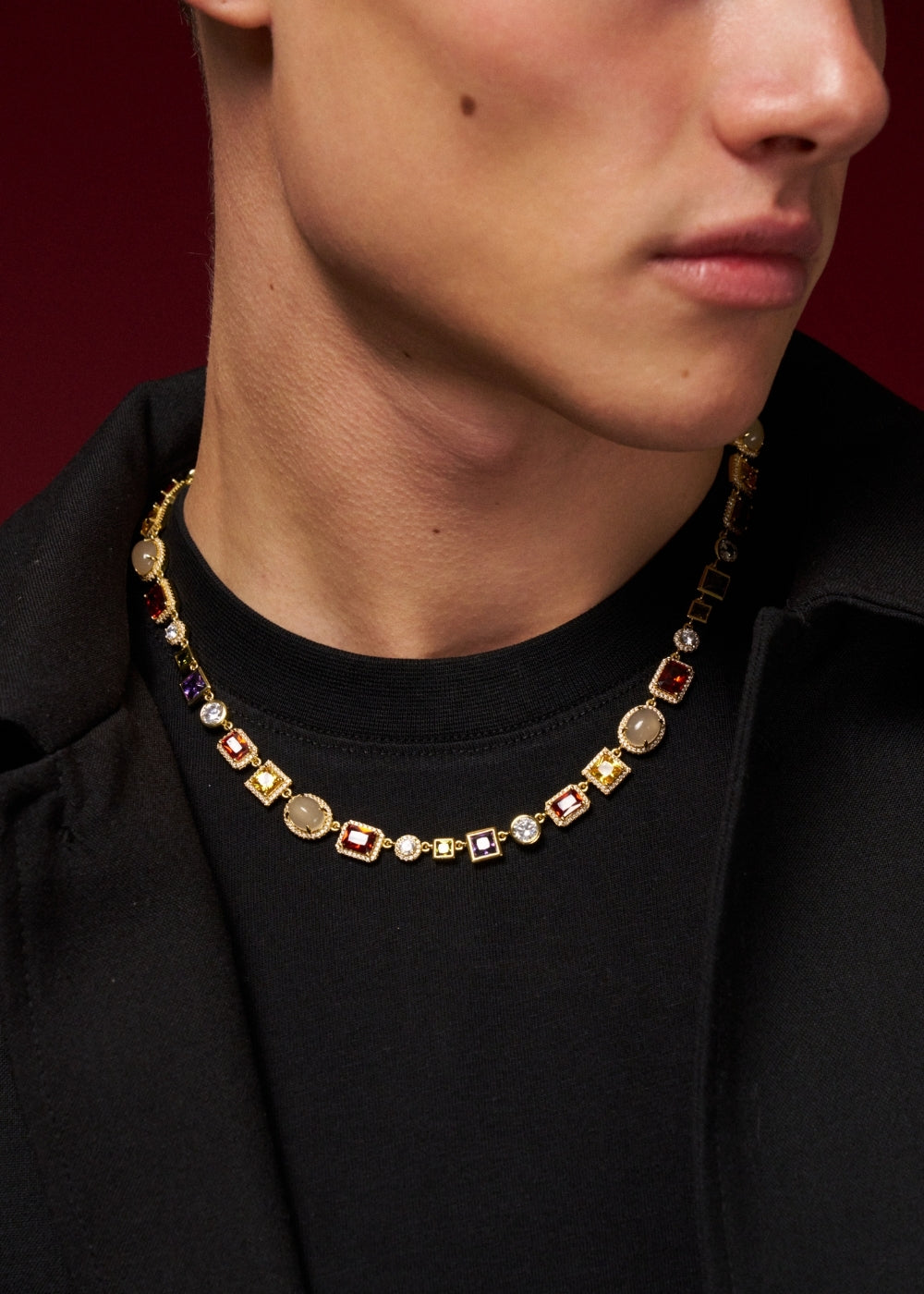
GEMSTONES
SHOP NOW


Cart
Your cart is empty
Your gifting options
Make your gift extra special with our luxury packaging options. Select a gift bag, gift box or a combination to create the perfect presentation.

Luxury Gift Box, Gift Bag & Wrapping Kit ($16.00)
Includes: CRAFTD Luxury Gift Box, Gift Bag, Tissue Wrapping Paper & Ribbon

Meaning Card ($4.00)
Add more meaning to your gift with a meaning card included with your order.
15 variations available

Gift Bag, Ribbon & Wrapping ($10.00)
Ideal for items that already include a gift box.
Includes: Premium CRAFTD Gift Bag, Ribbon & Tissue Wrapping. Doesn’t include: Luxury Gift Box.

Luxury Gift Box ($10.00)
Present your gift in our signature gift box, designed to impress before it’s even opened.
Includes: Premium gift box
Choose your option
To My Boyfriend

To My Grandson

To My Brother

To My True Friend

To My Dad

A Symbol of Luck

A Symbol Of Safe Travel

A Symbol Of Self Belief

A Symbol Of Adventure
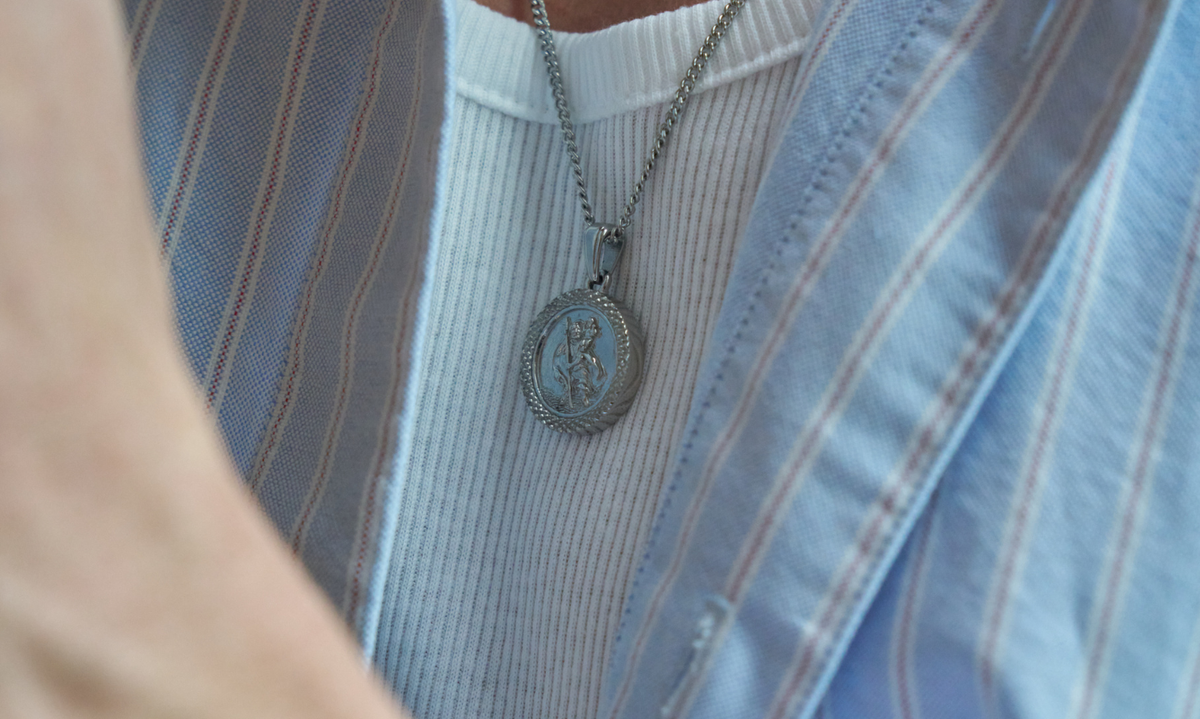
The St Christopher has hung around necks for the best part of a century: on travellers, on new drivers, on men who were handed one by someone who wanted them home safe. Most men know the medal. Far fewer know the story on it. Here's who Saint Christopher was, what wearing him means, and how to choose one built for wherever you're going.
Jump to:
Saint Christopher is one of the most recognised saints in the Christian tradition, honoured as a martyr who is traditionally believed to have died in the third century, during the persecutions of the Roman emperor Decius. Very little about his life is recorded as history. What survived instead is a legend, and it's one of the best.

Featured: Enamel Saint Christopher (Gold)
The story, best known from the medieval Golden Legend, tells of a man of enormous size and strength who set out to serve the greatest master in the world. He served a king, until he noticed the king feared the devil. He served the devil, until he saw the devil flinch at the sight of a cross. A hermit pointed him towards Christ, and towards a task that suited his build: carrying travellers across a dangerous river.
One night, a child asked to cross. Halfway over, the child grew so heavy that the giant could barely stay on his feet. When he asked why, the answer came back: he had been carrying the one who carries the weight of the world. The child was Christ, and the ferryman was given a new name. Christopher, from the Greek Christophoros: the Christ-bearer. That's the moment every St Christopher medal shows. The giant mid-river, staff in hand, the child on his shoulder.

Featured: Saint Christopher collection
Travellers, first and always. Because his whole story is about carrying people safely across danger, Christopher became the saint you looked to before any journey.
Over the centuries, that patronage stretched to cover almost every way a person can be in motion. Drivers keep his medal on dashboards and keyrings. Sailors and ferrymen claimed him early. Surfers, athletes and anyone whose life involves leaving home and coming back have all folded him into their own traditions. When cars arrived, so did the St Christopher glovebox medal, and it has never really left.
If a pendant exists for the man who's going somewhere, this is it.


Featured: Men's Enamel Saint Christopher (Silver)
At its core, a St Christopher says one thing: safe passage. Wearing one is a quiet request that whatever the journey, you make it to the other side.
But there's a second meaning inside the legend that gets less airtime. Christopher was the strong one. The one who carried others. Plenty of men connect with that reading more than the travel one: the medal as a nod to the weight they carry for the people around them, and a reminder that carrying it is the point.
For others, the meaning has nothing to do with saints at all. A St Christopher is so often a gift that the pendant ends up standing for the person who gave it. The meaning isn't on the medallion. It's in whose voice you hear when you put it on.

Featured: Classic Saint Christopher Necklace (Silver)
That is also why men tend to hold onto these pieces in a different way. A St Christopher is often the necklace they rarely take off. It goes through showers, flights, holidays, work, training, long drives and ordinary days quietly in the background. Most of the time, you barely think about it. Then the moment it goes missing, you realise what it has come to mean.
It's not always the metal you're worried about. It's the story attached to it. The dad who gave it to you. The grandparent who chose it before you were old enough to understand what it meant. The piece you promised yourself you would look after. And when it disappears, then somehow turns up again, it starts to feel like part of the meaning too. A St Christopher has a way of becoming more than something you wear.
Sometimes, it feels like something that finds its way back to you.
Traditionally, the dangers of the road: accidents, storms, rough water, and misfortune while travelling.
Medieval belief went further. Churches across Europe painted Christopher enormous on the wall facing the main door, so anyone setting out that day could look in and see him. The idea, recorded in inscriptions of the time, was that whoever looked on the image of St Christopher would come to no sudden harm before nightfall. He was protection you checked in with on the way out.

Featured: Enamel Saint Christopher (Gold)
That belief survives on the pieces themselves. Traditional medals carry the inscription St Christopher protect us around the rim: five words that turned a prayer into something you could fasten and forget. The medal works on the same logic as those church walls, brought down to pocket scale. You don't visit it. It travels with you.
Faith is the oldest reason, and for many men it's still the one that matters. But St Christopher has a habit of crossing into cultures that have nothing to do with church.
In the surf towns of 1960s California, the St Christopher medal became the badge of the whole scene. Surfers wore them in the water, and trading medals became the era's way of marking going steady. Ask anyone who grew up around British roads and they'll remember the medal fixed to a parent's dashboard, or the one that arrived in a small box the week they passed their driving test. And in plenty of families, the St Christopher is simply what gets passed down: a grandfather's medallion that has already done its share of miles.
Different routes in, same destination. It's a piece men wear because somebody, at some point, wanted them protected.
Yes. This one causes more confusion than any other question about him, so it's worth being precise.
In 1969, the Catholic Church revised its universal calendar of feasts and removed several saints whose lives had little verifiable historical record. Christopher was among them. That change was widely reported as Christopher being "de-canonised", but that's not what happened. He was never removed from the roll of saints. His feast day simply stopped being marked on the universal calendar, and local churches remain free to celebrate it, as many still do. He's also venerated in Orthodox tradition.

Featured: Saint Christopher Signet (Silver)
So the medal hasn't lost its standing. If anything, the fact that men kept wearing it regardless says something about how far the symbol had already travelled beyond the calendar.
Same object, three names, and none of them is wrong.
"Medal" is the traditional term, the one the Catholic tradition uses and the one your grandfather's generation grew up with: saints come on medals, and always have. "Medallion" describes the shape, a round disc cast in relief. "Pendant" just describes how it's worn, hanging from a chain. Whichever word you searched for, you've landed in the right place, and we use all three, because the men looking for this piece do too.
We make the St Christopher in more forms than any other saint, because no other saint gets asked for as often. All of them live in our Saint Christopher collection, and all of them carry the same scene: the crossing, cast in relief.
The classic, and the one most men picture. Our original St. Christopher keeps the medallion clean and balanced: the saint, the child, the river, and nothing it doesn't need. It's the everyday version, sized to sit mid-chest without announcing itself, in Silver or 18K Gold.

Closest in spirit to the originals. The Enamel Saint Christopher frames the scene with hand-applied enamel, the way mid-century travel medals did. The contrast makes the crossing easier to read from a distance, and gives the piece the feel of something found in a father's drawer rather than a display case. Also in Silver.

The saint, with presence. The Iced St Christopher surrounds the medallion with hand-set stones, for the man who wants the meaning and the shine in the same piece. The story stays at the centre; the frame does the talking.

The medal, redrawn. The St Christopher 2.0 is our most recent take on the classic, with the crossing cut in deeper relief so the figures catch light and shadow the way an old struck medal does. It reads traditional at a glance and considered up close. Finished with our signature scratch and fade-resistant protection, so it can actually live the travelling life it stands for.


Featured: Also available in Gold
You can, and plenty of men who don't get on with chains do exactly that. The St. Christopher Signet Ring puts the crossing on a classic signet face, also in Gold.

Featured: St. Christopher Signet Ring (Silver)
Silver is the traditional answer for this particular pendant. The travel medals that made the St Christopher famous, on dashboards, in gloveboxes, around surfers' necks, were almost always silver-toned, so a silver medallion carries that lineage with it. It's also the easier daily wear if the rest of your rotation runs cool.

Featured: Enamel Saint Christopher (Silver)
Gold turns the same medal into more of an heirloom. It's the version that gets given for milestones, photographed at christenings, and passed on with a story attached. If the piece is a marker of something, gold marks it more visibly.
Neither reading is binding. Look at what already sits on his wrist and neck, follow that lead, and you won't miss. Every piece in the collection comes in both.
The medal shape is what sets the styling rules here. A round pendant wants a chain that frames it rather than fights it, and a 3mm Rope or Cuban does that cleanly. Every St Christopher pendant comes on a 53cm (22 inch) chain as standard, which lands mid-chest: visible in an open collar, easy to tuck away when the setting calls for quiet. If you're still weighing up the chain itself, our guide to every type of men's chain walks through the full line-up.

Featured: Saint Christopher collection
Worn under the shirt is the traditional way, and it suits the piece. A St Christopher was never really jewellery for other people. Against the skin, it does its job whether or not anyone knows it's there.
If you're layering, keep the medal as the anchor and build guidance around it. The Compass and North Star are its natural companions, three symbols about finding the way, each saying it differently. Our Make A Pendant Set pairs any two for 15% less than buying them separately.
Here's the thing about St Christophers: most of the men wearing one didn't buy it.
It's the pendant that appears when someone's world is about to get bigger. A passed driving test. A first car. A gap year, a move abroad, a new job that means motorways every Monday. The people who love that man can't come along for any of it, so they send the saint instead. It's a way of saying be careful out there, from people who'd never say it out loud.

Featured: Enamel Saint Christopher Gift Set (Gold)
If you want the gift to arrive finished, the Enamel Saint Christopher Gift Set pairs the medal with a matching chain, boxed and covered by a lifetime warranty. Also in Silver.
A pendant built for travel should be able to take some. The scratch and fade-resistant coating on every piece handles daily wear, weather and showers, so the medal doesn't need babying. When the relief starts collecting the day's dust, a soft cloth brings the detail in the crossing back up.

Featured: St. Christopher Signet Ring (Silver)
Saint Christopher's story is seventeen centuries old, and it survives because the promise inside it never dates: someone strong enough to get you across, whatever the river happens to be. Wherever this year takes you, there's a version of the medal made to go with you.
You can explore the full Saint Christopher collection here.
No. Saint Christopher doesn't appear anywhere in the Bible. His story comes from later Christian tradition, most famously the medieval Golden Legend, which is also why the historical record of his life is so thin.
Christopher comes from the Greek Christophoros, meaning "Christ-bearer". In the legend, it's the name given to the ferryman after he unknowingly carried the Christ child across the river.
No. Plenty of men wear one as a travel token, a family piece, or a gift from someone who matters, with no religious practice behind it. Like any symbol with deep roots, it wears best when you know the story you're carrying.
There's an old piece of folklore that a St Christopher should be given rather than bought, which is partly why so many arrive as gifts. It's a tradition, not a rule, and there's no religious basis for it. If the meaning speaks to you, buy the piece.
A St Christopher is a medal of a saint, worn mainly for protection while travelling. A crucifix is a cross bearing the figure of Jesus, worn as a direct expression of Christian faith. Many men wear both, on separate chains at different lengths. Our guide to men's crucifix necklaces covers the second in full.
A 3mm Rope or Cuban chain at around 53cm (22 inches) is the classic pairing: strong enough for a medal, clean enough to keep the scene the focus. Go slimmer if you're wearing it under a shirt, or heavier if you want the piece to lead the look.
Traditionally 25 July in the Western church. Some churches still mark the day with blessings for travellers, and in some places, for their cars.
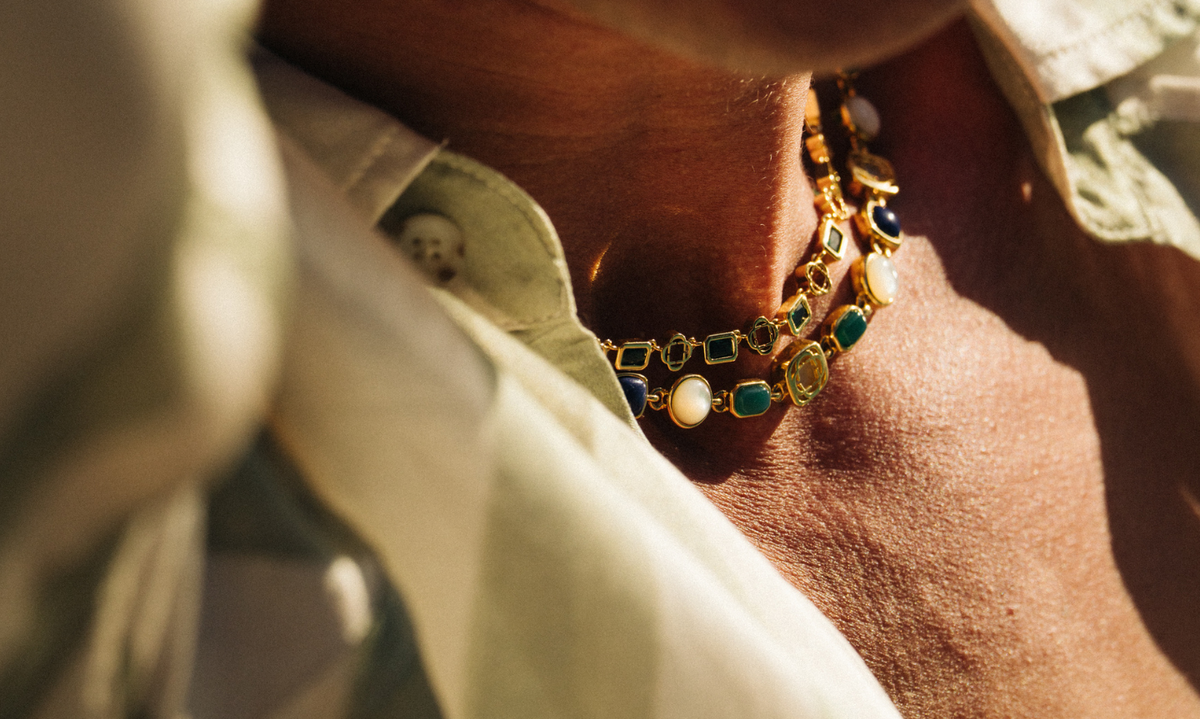
Men’s Holiday Jewellery: What to Wear, What Lasts and How to Style It
Not sure what jewellery to wear on holiday? Here’s what lasts in heat, water and sweat, plus the best men’s holiday jewellery pieces and how to style them.
Read more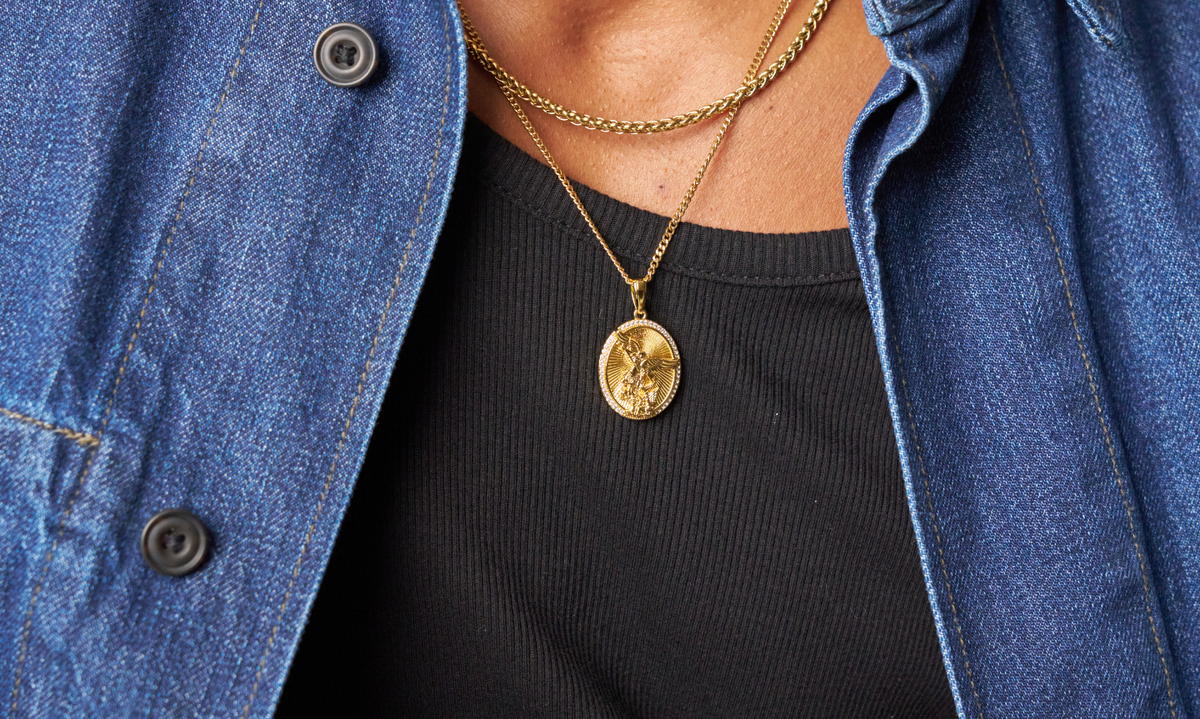
What Does Wearing a St. Michael Pendant Mean?
Who is Saint Michael, and why do so many men wear him for protection? Here’s the legend behind the archangel, and how to choose yours in silver, gold, or rose gold.
Read more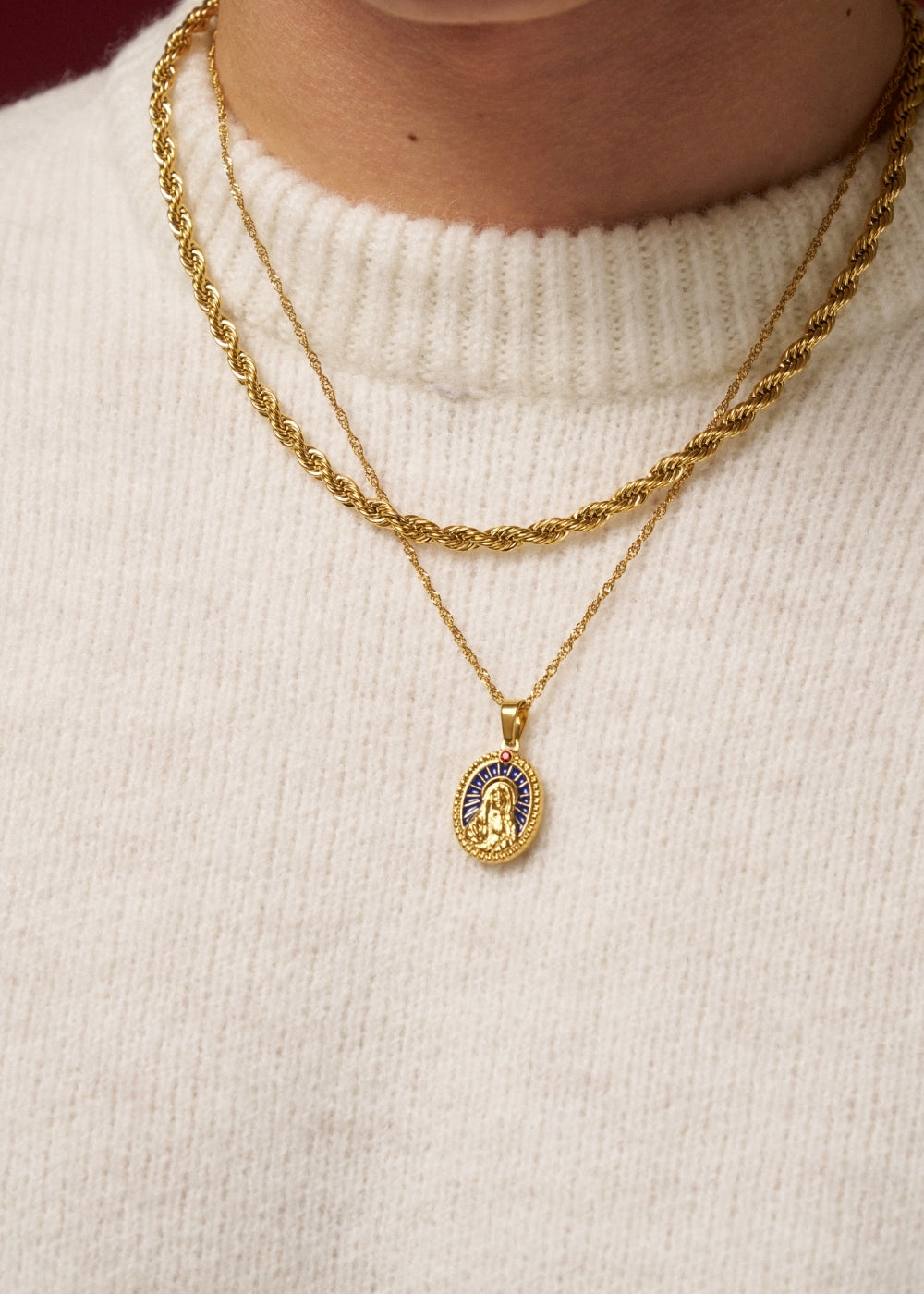

Leave a comment
This site is protected by hCaptcha and the hCaptcha Privacy Policy and Terms of Service apply.