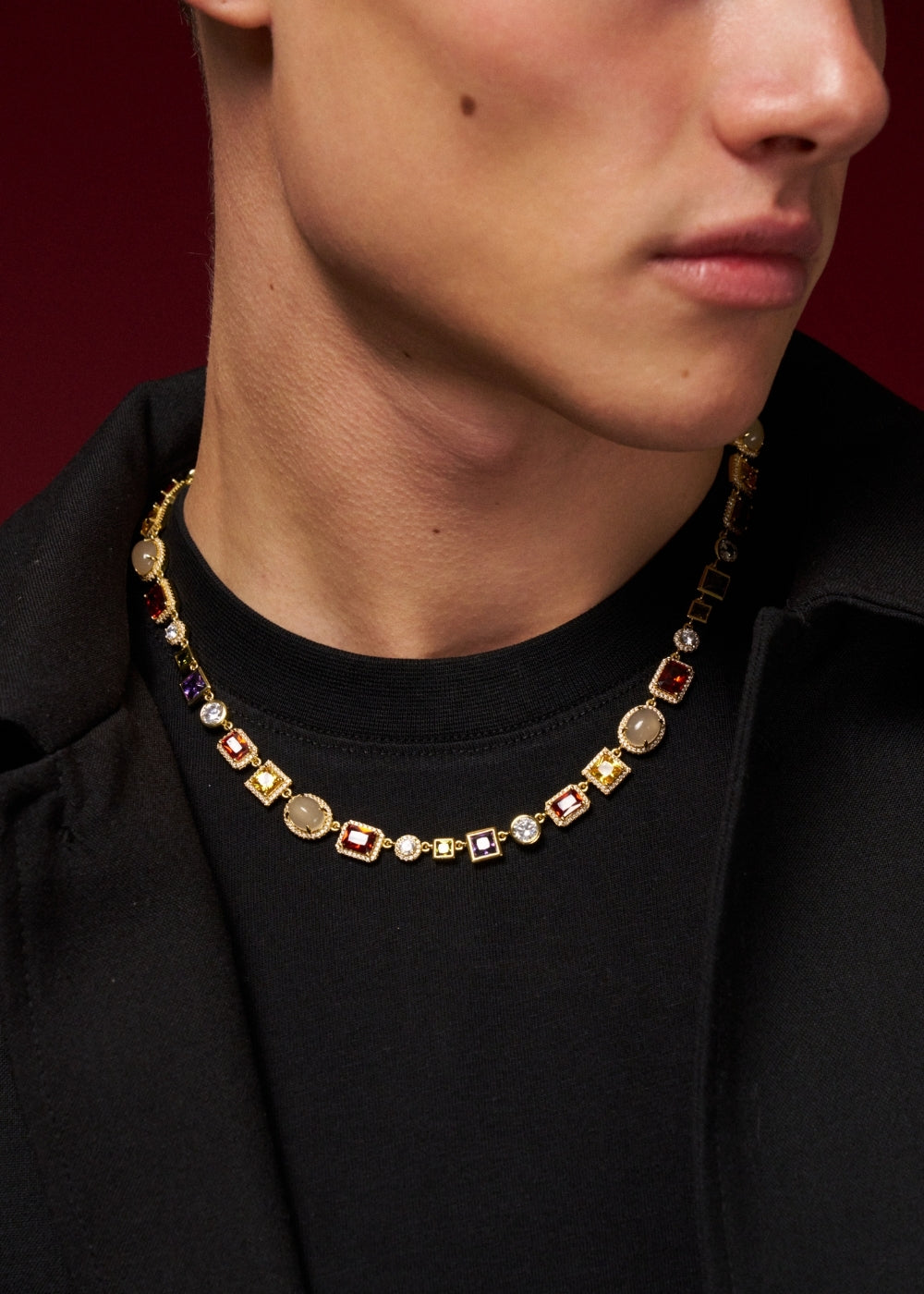
GEMSTONES
SHOP NOW


Cart
Your cart is empty
Your gifting options
Make your gift extra special with our luxury packaging options. Select a gift bag, gift box or a combination to create the perfect presentation.

Luxury Gift Box, Gift Bag & Wrapping Kit ($16.00)
Includes: CRAFTD Luxury Gift Box, Gift Bag, Tissue Wrapping Paper & Ribbon

Meaning Card ($4.00)
Add more meaning to your gift with a meaning card included with your order.
15 variations available

Gift Bag, Ribbon & Wrapping ($10.00)
Ideal for items that already include a gift box.
Includes: Premium CRAFTD Gift Bag, Ribbon & Tissue Wrapping. Doesn’t include: Luxury Gift Box.

Luxury Gift Box ($10.00)
Present your gift in our signature gift box, designed to impress before it’s even opened.
Includes: Premium gift box
Choose your option
To My Boyfriend

To My Husband

To My Soulmate

To My Son

To My Grandson

To My Brother

To My True Friend

To My Dad

A Symbol Of Strength

A Symbol Of Faith

A Symbol Of Protection

A Symbol of Luck

A Symbol Of Safe Travel

A Symbol Of Self Belief

A Symbol Of Adventure

The wedding ring finger is the one between your middle finger and your little finger. On the left hand, if you're in the UK. On the right, in about half of Europe.
Almost everything written about it is aimed at brides. This is the men's version. Which finger, which hand, how the tradition got there, and what to do when that finger doesn't suit the way you work.
Jump to:
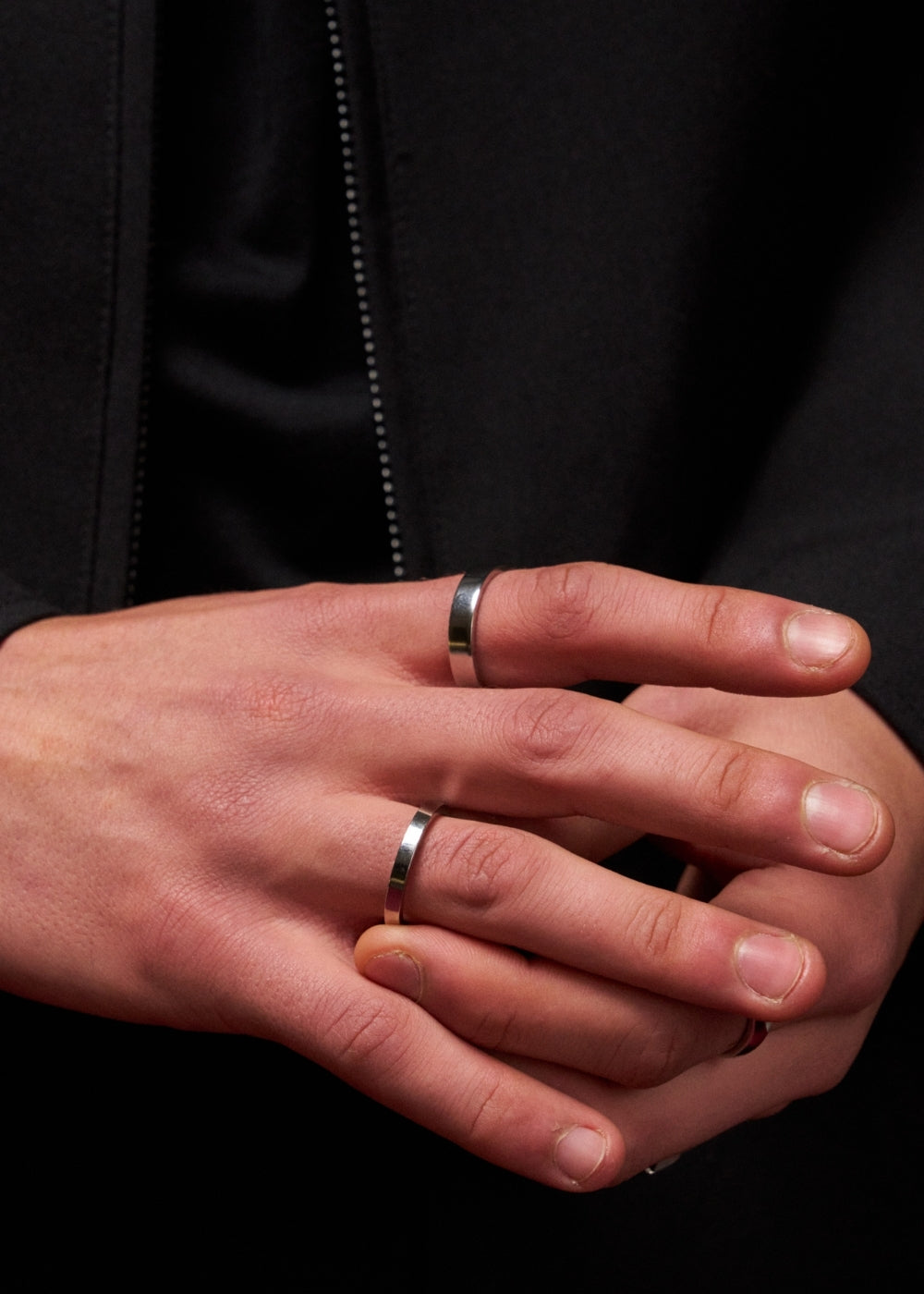
Count from your thumb and it's the fourth. Count from your index finger and it's the third. Either way, it's the one sitting between your middle finger and your little finger, and in the UK it goes on your left hand.
That's the whole answer. The interesting part is why.
Which hand does a wedding ring go on? It depends where you are, and neither is more correct than the other.
Left hand is the norm in the UK, Ireland, the US, Canada, Australia, New Zealand, South Africa, France, Italy, Portugal, Sweden and Finland.
Right hand is the norm across much of central and eastern Europe: Germany, Austria, Poland, Norway, Denmark, Greece, Hungary, Russia, Ukraine, Serbia and Bulgaria, along with Colombia, Cuba, Peru and Venezuela. Spain wears it on the right, except in the Catalan-speaking regions, where it goes left.
Then there are the countries where the ring changes hands. In Brazil, Turkey, Lebanon, Syria and Romania it's commonly worn on the right during the engagement and moves across to the left on the wedding day.
If your marriage sits across two of those traditions, pick the one that means more to you. There's no wrong hand.
The old explanation is the vena amoris, the vein of love. The belief was that a single vein ran from the fourth finger of the left hand straight to the heart, so a ring worn there sat closer to it than a ring worn anywhere else.
The anatomy is wrong. Every finger has veins running back to the heart, and how circulation actually works wasn't settled until William Harvey's work in the seventeenth century. The idea is older than the Latin phrase, though. Isidore of Seville wrote in the seventh century that men had begun wearing a ring on the fourth finger because a vein there linked it to the heart, and the phrase itself turns up in English writing on marriage in the 1600s.
So the reason was wrong and the tradition outlived it. That's usually how these things go. The finger stayed because people liked the idea, not because the idea held up.
There is a practical case as well. The fourth finger is the least used on most hands, and it's shielded on both sides by the fingers either side of it. A ring worn there takes fewer knocks than one on an index finger or a thumb.
Later than most people assume. For most of the tradition's history the ring went on the bride and that was the end of it. Men's bands only became widespread in the twentieth century, spreading around the World Wars when soldiers wore them abroad as a reminder of who was waiting at home.
Which means that as a man choosing a wedding ring, you're working inside a tradition a few generations old, not a few thousand years. There's no long rulebook to break. The band you choose says more about you than about the convention.
The same finger, on the same hand. Where both are worn together, the wedding band usually goes on first, closest to the base of the finger, with the engagement ring stacked above it. The logic being that the band sits nearest the heart.
Men's engagement rings are becoming more common and follow the same convention. If you'd rather keep the two separate, wearing one on each hand is a perfectly normal choice.
A lot of men can't wear a ring on that finger every day. Trades, machinery, climbing, contact sport, hospital shifts, hands that swell in the heat. None of that means the ring lives in a drawer.
The finger question settles in a line. The harder one is what you'll still want on your hand in thirty years.
Our wedding bands are tungsten, which is roughly four times harder than titanium. It holds its finish through daily wear rather than picking up a mark every time you catch a door handle. The trade-off is that tungsten can't be resized, so getting the size right at the start matters more than it would with a softer metal.
We've covered both sides of the tungsten question: why tungsten rings can't be resized and how to measure your ring size at home.
Width is the other call. 7mm reads classic on most hands. 8mm with a bevelled edge sits heavier and catches more light. If you're stuck between the two, our wedding ring width guide works through it properly.
Four bands, all tungsten, all built for a finger you don't take a ring off. You can see the full range in our men's wedding rings collection.
The default. A smooth rounded profile with no edges to catch, in a silver tone that sits with everything else you wear. If you've never worn a ring before, this is the one that disappears onto the hand fastest. Take a look at the Rounded Ring (Silver) 7mm | Tungsten.
Same profile, warmer finish. 18ct gold tungsten reads well against a watch or a gold chain, and it's the easier choice if the rest of your jewellery is already gold. Worn on the ring finger it stays quiet, which is what you want from a band you're not taking off. Take a look at the Rounded Ring (Gold) 7mm | 18ct Gold Tungsten.
A millimetre wider with angled edges, so it catches light along the shoulders rather than sitting flat. It carries more presence on a broader hand and holds its own next to a signet on the other side. Take a look at the Bevelled Ring (Silver) 8mm | Tungsten.
Also available in 18ct gold tungsten.
For men who'd rather the band read as part of the outfit than as jewellery. Black tungsten goes with everything and shows less of the day's wear than a polished finish. It pairs cleanly with silver elsewhere on the hand. Take a look at the Rounded Ring (Black) 7mm | Tungsten.
The same one it goes on for anyone else. The fourth finger counting from the thumb, on the left hand in the UK, the US and most English-speaking countries. Men's bands follow the same convention as women's.
No. The idea that one vein connects the fourth finger of the left hand to the heart was believed for centuries, but every finger has veins leading back to the heart. The tradition survived the science.
Usually, yes. The wedding band typically goes on first, closest to the base of the finger, with the engagement ring above it. Wearing them on separate hands is common too, particularly if the fit is uncomfortable stacked.
You can. The left hand is the convention here, but plenty of men wear it on the right for cultural reasons, because they're left-handed, or simply because it's more comfortable. Nobody reads it as a statement.
Yes, and it's common among men whose work makes rings unsafe or impractical. A ring on a chain under a shirt is worn just as much as one on a finger, and often more, because it never comes off for the working day.
No. Tungsten is too hard to be cut and reshaped the way gold or silver can be. That hardness is why the finish lasts, and it's why measuring properly before you order matters. If your size changes significantly, the ring is replaced rather than altered.
The finger is the easy part. It's the fourth one, on whichever hand your side of the world uses, and it's been that way long enough that nobody needs a reason any more.
What matters more is picking something you'll still want on that finger in twenty years. Have a look through our men's wedding rings, or the wider men's rings collection if the band isn't the only ring you're after.

The Figaro bracelet is defined by its repeating pattern of short and long links, giving it more character than a plain chain without adding bulk. Here’s how it’s made, how to wear it and what makes...
Read more
Men's Jewellery Trends: What Lasts and What Doesn't
In 2021 we called six men's jewellery trends. Four held, one faded, one changed shape entirely. Here's what actually lasted, and the pattern that explains why.
Read more

Leave a comment
This site is protected by hCaptcha and the hCaptcha Privacy Policy and Terms of Service apply.