GEMSTONES
SHOP NOW


Cart
Your cart is empty
Your gifting options
Make your gift extra special with our luxury packaging options. Select a gift bag, gift box or a combination to create the perfect presentation.

Luxury Gift Box, Gift Bag & Wrapping Kit (¥1,800)
Includes: CRAFTD Luxury Gift Box, Gift Bag, Tissue Wrapping Paper & Ribbon

Meaning Card (¥500)
Add more meaning to your gift with a meaning card included with your order.
15 variations available

Gift Bag, Ribbon & Wrapping (¥1,100)
Ideal for items that already include a gift box.
Includes: Premium CRAFTD Gift Bag, Ribbon & Tissue Wrapping. Doesn’t include: Luxury Gift Box.

Luxury Gift Box (¥1,100)
Present your gift in our signature gift box, designed to impress before it’s even opened.
Includes: Premium gift box
Choose your option
To My Boyfriend

To My Husband

To My Soulmate

To My Son

To My Grandson

To My Brother

To My True Friend

To My Dad

A Symbol Of Strength

A Symbol Of Faith

A Symbol Of Protection

A Symbol of Luck

A Symbol Of Safe Travel

A Symbol Of Adventure
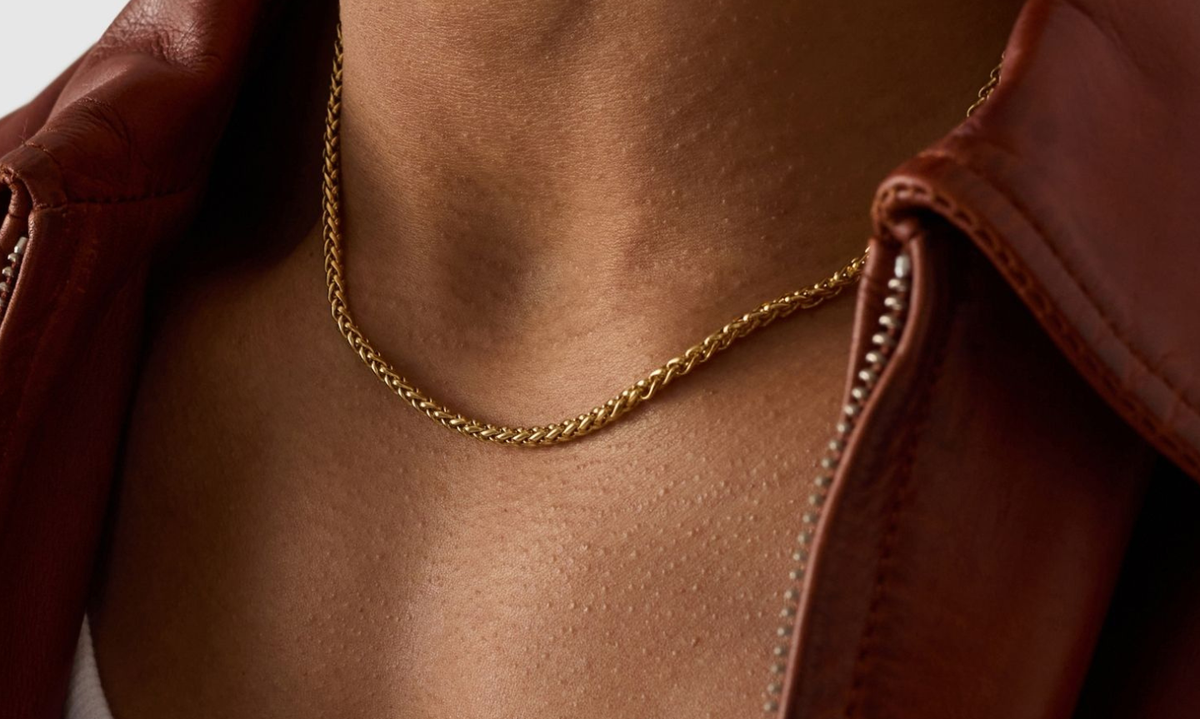
A wheat chain is a men's necklace built from four strands of small oval links braided together, so the finished chain looks like a stalk of wheat translated into metal. It's also known as a Spiga chain, and it's one of the most durable and refined chain shapes you can wear day to day. Where a rope catches light in a wide, unruly spiral, a wheat catches it in a tighter, more controlled repeat.
Below, we'll cover what defines a wheat chain, how it's actually made, whether it's the same thing as a Spiga, how it wears and how it compares to the Cali (which is CRAFTD's other woven chain), and where to look inside our range if you want a chain with quiet character rather than a statement one.
Jump to:
A wheat chain is defined by its four-strand braid. Four small oval links interlock into a repeating pattern of angled V shapes that stack along the length of the chain, and the finished piece looks like a slim stalk of wheat lying against the neck. The construction is tighter than a rope and wider than a snake, which is what gives the wheat its distinctive middle-ground feel.
Because the strands are so closely packed, the chain reads almost as one continuous line of metal at a glance. Get closer and the V pattern reveals itself, adding character without demanding attention. That's the shape's whole appeal: refined at distance, detailed up close.
The wheat has been in continuous rotation in men's jewellery for centuries and remains one of the most durable everyday chain shapes on the market. If you want to see how it slots in alongside the other eight main chain shapes we make, our Types of Men's Chains guide lays them all out.
A wheat chain starts with hundreds of small pre-formed oval links, arranged into four continuous strands. Those four strands are then braided together in a fixed pattern, and the whole chain is soldered at each interlock to lock the braid in place. The result is a chain built for tension: pulling any single link in the finished piece transfers load into three surrounding links, which is what makes the wheat so hard to break.
Three things worth knowing when you're comparing wheats from different makers:
Solid vs hollow. A solid wheat uses solid metal links across all four strands. A hollow wheat uses tubed links to shave cost. The difference in strength is significant, and hollow wheats often lose the tightness of the braid within a couple of years of daily wear. Solid is the version worth investing in.
Braid tightness. A well-made wheat holds identical braid tightness from clasp to clasp. Cheaper wheats drift, sitting looser at some points and tighter at others, which shows visibly in the way the chain lies against the neck.
Finish along the V pattern. The four-strand braid creates dozens of small V shapes per inch. On a well-finished wheat, those V shapes catch light identically all the way along; on a cheaper one, some are polished flat and others read as raw edges.
Wheat and Spiga are the same chain. Spiga is the Italian trade name, "spiga" being the Italian word for an ear of wheat, and it entered the market via Italian jewelers who used the term to describe the four-strand braided shape. Wheat is the English equivalent, and it's the term used more commonly in British and American men's jewellery.
You'll see both used interchangeably online. If a jeweler markets a Spiga chain, it's the same shape as a wheat chain of the same width. There's no meaningful design difference between the two labels; only a linguistic one.
Our wheat is made in two widths: 3mm for everyday wear, and 5mm for when you want the chain to carry a little more presence. Both are solid construction, both hand-finished along the braid, and both are available in silver, gold, and rose gold.
The 3mm wheat is the width most men land on. Slim enough to slip under a shirt collar, wide enough for the braid pattern to read clearly against a plain tee. It's the version that works across daily rotation without overreaching.
The 5mm wheat is the statement version. Worn over a tee or a fine knit, the wider braid catches more light and reads as a considered piece rather than a bought-first-chain piece. Not the choice for under-collar wear.
Rose gold in particular suits the wheat's warm-toned character. If you're picking between finishes and you don't have a strong lean toward silver or gold, rose gold on a wheat is the least common combination in men's jewellery and one of the most flattering across a wider range of skin tones. See the full wheat chain collection for widths and finishes.
The wheat sits comfortably in the middle of the styling range. It's not as statement as a Cuban, not as understated as a Connell, and reads best in outfits that share that middle-ground quality.
With a fine knit at the neckline in autumn or winter, the wheat's braided texture plays against the wool's texture in a way that reads considered rather than accidental. Same rule applies to lightweight linen shirts in summer: the wheat holds character against soft fabric better than a plain chain does.
Under a shirt collar, the 3mm slips cleanly. The braid catches on nothing because the surface is smooth despite the visible pattern. That's part of what makes the wheat a good chain for men whose day involves a shirt at some point.
Solo over a plain tee, the wheat works but reads a shade quieter than a rope of the same width. If you want maximum solo impact, size up to the 5mm. If you're happy with the chain being a considered supporting piece rather than the outfit's lead, the 3mm holds its own.
Layered, the wheat plays best under a plain top chain. A snake or a Connell above, a wheat below, and the eye reads the plain chain first and the braid second. Two textured chains on the same stack tends to feel visually crowded, so avoid layering a wheat with a rope or a figaro.
We make two woven chains in the range, and they get confused more than any other pair. Worth clearing up.
The wheat is a four-strand braid running symmetrically along the chain's length. Its pattern is a stacked repeat of V shapes, and the chain reads as a slim braided line.
The Cali sits in the Byzantine and Franco family, with a woven appearance built on diagonal ridged strands twisted through each other. Its pattern reads as a diagonal ridged texture rather than a repeating V, and the chain reads slightly wider and denser than a wheat of the same measured width.
They're worn similarly and both sit in the "chain with quiet character" category, but they read visually distinct once you've seen them side by side. If you want a slimmer, more braided-looking chain, wheat. If you want a slightly more textural, diagonal-ridged chain, Cali. Same finish family (silver, gold, rose gold), different aesthetic.
Against the other main chain shapes, the wheat is the middle option. Short answers on each comparison:
Wheat vs Cuban. Different families. The Cuban has flat, sculpted, heavier links that lead an outfit. The wheat has a slim braided line that supports one. Cuban says "chain"; wheat says "considered chain."
Wheat vs Curb. The curb (our Connell) has flat twisted uniform links that read as a defined edge; the wheat has a four-strand braid that reads with quiet character. Both work for daily wear. The Connell is quieter; the wheat is slightly more textured.
Wheat vs Rope. The closest comparison in visual terms because both are woven from strands, but the two feel different. A rope's twist is wider and less controlled; a wheat's braid is tighter and more refined. Rope reads alive with movement; wheat reads warm and understated.
Most men land on the wheat for one of two reasons. They already own a plain chain and want a second chain that has more visual interest than a Cuban or Connell. Or they specifically want a warm, understated everyday piece that reads considered rather than statement.
For a first wheat, the 3mm in gold is the classic entry. Warm finish, slim daily-wear width, the braid reads clearly without dominating. It's the setup most wheat buyers return to when they replace or add to their rotation.
For a statement wheat, the 5mm carries the braid at a scale that reads from across a room. Best worn solo over a tee.
For a gift, rose gold on a wheat is the answer more men land on than they expect. The warm rose finish suits the wheat's naturally soft character, and rose gold jewellery sits in a smaller gifting category than gold or silver, which makes it easier to buy without overlapping with something the wearer already owns.
A wheat needs a little more attention than a plain link chain because the four-strand braid creates a lot of small crevices for residue to settle into. The good news: the same braid also disguises light wear better than a snake or curb, so the chain reads clean longer between deep cleans.
Post-wear. Soft cloth, one pass along the length. Ten seconds. Skin oils and cologne collect between the V shapes over months, and the wipe removes them before they set.
Every two to three weeks. Warm water, a drop of mild soap, five minutes soak, then a soft-bristled brush worked gently along the direction of the braid (not across it). Rinse and pat dry with a lint-free cloth. Because a wheat is more geometry per inch than most chains, the brush matters more here than for a plain link chain.
Water, sweat, and heat. The wheat handles daily water exposure fine. What actually shortens a wheat's finish life is chlorinated pool water sitting in the braid without a rinse, so a freshwater wash after the pool extends the piece meaningfully.
Storage. Flat, laid out, ideally in its own soft pouch. The wheat's braid is tight enough that it doesn't tangle as readily as a rope, but it will absolutely knot itself around a curb chain in a jewellery tray.
Silver. Sterling silver wheats tarnish naturally when they aren't worn. Regular wear prevents it. A specialist silver polishing cloth restores the finish inside a minute if the chain has darkened.
A wheat chain is a men's necklace built from four strands of small oval links braided together in a repeating V pattern, so the finished chain looks like a stalk of wheat in metal. It's also called a Spiga chain (Italian for wheat) and it's one of the most durable everyday chain shapes on the market.
Yes. Wheat is the English name for the chain shape; Spiga is the Italian equivalent, meaning "ear of wheat." Different labels, identical construction. If a jeweler advertises a Spiga chain, it's the same shape as a wheat chain at the same width.
Yes, particularly at solid builds. The four-strand braid distributes load across multiple links, so pulling any single link transfers stress into three surrounding links rather than concentrating it in one place. A solid 3mm to 5mm wheat is one of the toughest everyday chains you can wear.
3mm is the daily-wear pick. Slim enough to sit under a shirt collar without catching, wide enough for the braid to read clearly against a plain tee. Step up to 5mm when you want the braid to lead the outfit; that's a chain worn over a tee or a knit rather than under a shirt.
50 to 55cm covers the majority of men. A 50cm sits closer to the collar, a 55cm drops onto the chest. If you're between the two, go longer. A wheat cinched tight against the throat loses some of the braid definition, which is exactly the detail you paid for.
Both are woven chains, but they read visually distinct. The wheat is a four-strand braid with a stacked V pattern; the Cali is a Byzantine/Franco-family chain with a diagonal ridged pattern. If you want a slimmer, more classically braided-looking chain, wheat. If you want a slightly denser, more textural chain, Cali. Same finish family across both.
Yes, though the wheat's own visual character means small to medium pendants read best. Anything heavier tends to pull the braided chain out of its neat line, and a larger pendant on the wheat can also make the chain look busier than it needs to.
Both wear them. Wider widths at 3mm and 5mm sit firmly in men's territory; slimmer widths and shorter lengths lean toward women's jewellery. The braid geometry is neutral either way.
Both work, though the wheat's warm braided character tends to suit warmer finishes slightly better than cooler ones. Gold or rose gold reads especially well; silver reads cleaner and more everyday. If you're picking a single finish, the tone of the rest of the wearer's jewellery (watch, rings) is a better guide than any general rule.
Look at the braid tightness along the length. A well-made wheat has identical tightness from clasp to clasp, with no loose or gappy sections. Look also at the V pattern under bright light; a well-finished wheat has evenly polished V shapes, while a cheap one has visibly rougher points along the pattern.
If you're new to the wheat, the 3mm in gold is where we'd start. Slim, warm, and the width where the braid reads clearly without dominating.
For the wider view of how the wheat compares to the other main chain styles, our Types of Men's Chains guide walks through each one. Or, if you'd prefer to see the range in full, our chain collection lists every style side by side.
This guide was put together by the CRAFTD team, from years of fitting, sizing, and shipping wheat chains to men who want a chain with quiet character.
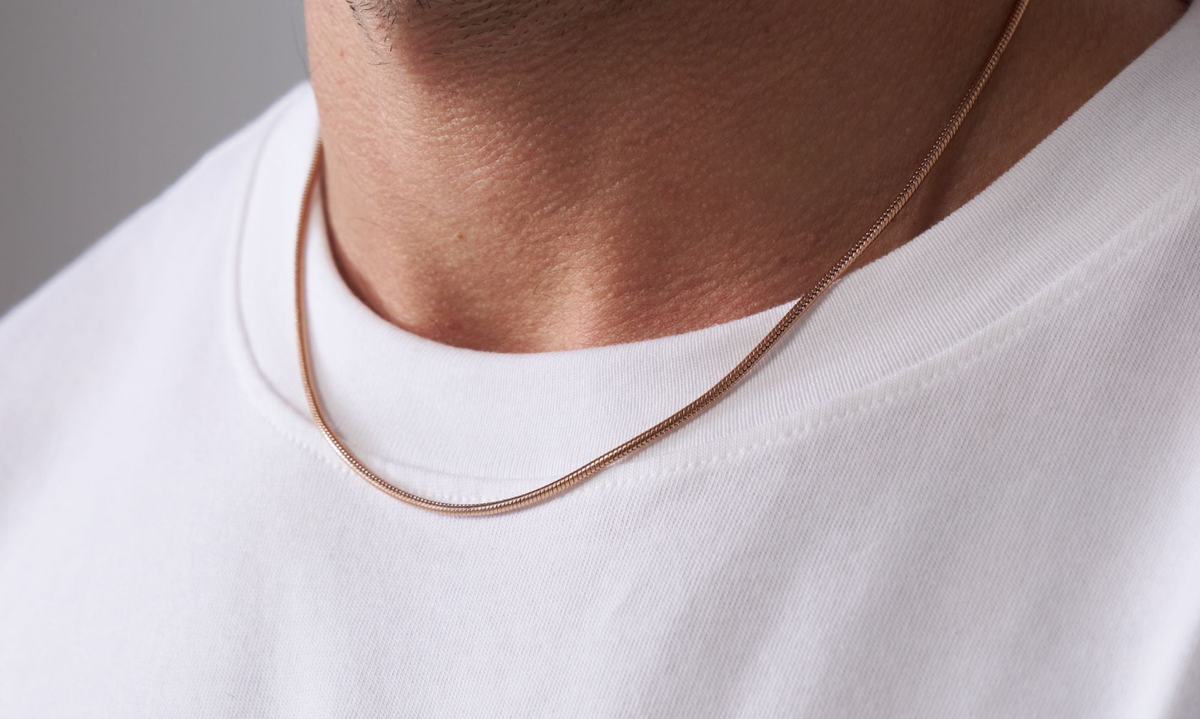
What Is a Snake Chain? The Chain With No Links
The snake chain stands apart for its smooth, seamless finish and barely visible links. Here’s how it’s made, what makes it different, whether it can kink and how to wear one well.
Read more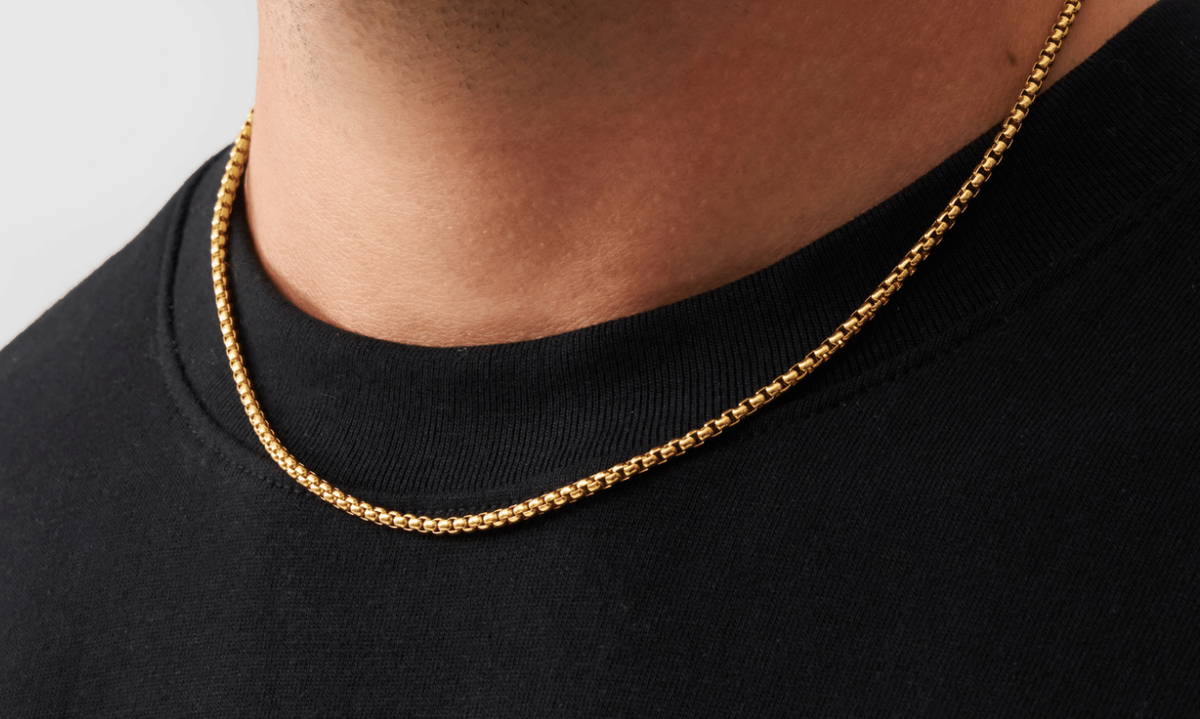
What Is a Box Chain? Round vs Square Box Chains
Defined by its tightly connected geometric links, the box chain has a clean, understated look that sets it apart. Here’s how it’s made, the difference between round and square styles, and how to we...
Read more

Leave a comment
This site is protected by hCaptcha and the hCaptcha Privacy Policy and Terms of Service apply.