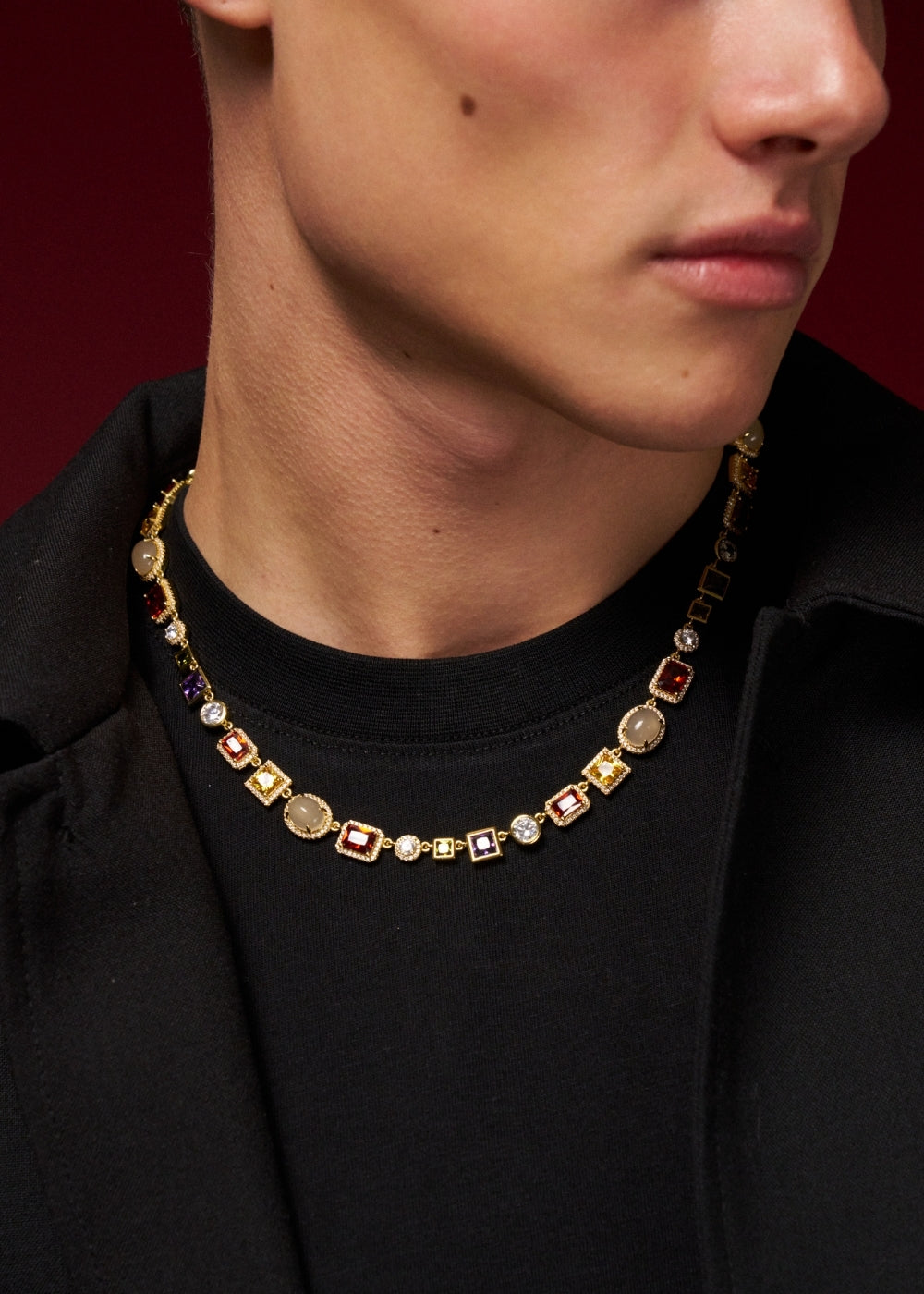
GEMSTONES
SHOP NOW


Cart
Your cart is empty
Your gifting options
Make your gift extra special with our luxury packaging options. Select a gift bag, gift box or a combination to create the perfect presentation.

Luxury Gift Box, Gift Bag & Wrapping Kit (¥1,800)
Includes: CRAFTD Luxury Gift Box, Gift Bag, Tissue Wrapping Paper & Ribbon

Meaning Card (¥500)
Add more meaning to your gift with a meaning card included with your order.
15 variations available

Gift Bag, Ribbon & Wrapping (¥1,100)
Ideal for items that already include a gift box.
Includes: Premium CRAFTD Gift Bag, Ribbon & Tissue Wrapping. Doesn’t include: Luxury Gift Box.

Luxury Gift Box (¥1,100)
Present your gift in our signature gift box, designed to impress before it’s even opened.
Includes: Premium gift box
Choose your option
To My Boyfriend

To My Husband

To My Soulmate

To My Son

To My Grandson

To My Brother

To My True Friend

To My Dad

A Symbol Of Strength

A Symbol Of Faith

A Symbol Of Protection

A Symbol of Luck

A Symbol Of Safe Travel

A Symbol Of Adventure

To layer necklaces well, wear two or three chains of clearly different lengths and weights, let one piece lead, and keep the gaps between them even. Start with a fine chain close to the neck, add a slightly longer one with more weight or texture, and finish with a pendant if you want a focal point.
That's the method in two sentences. Below, we take it step by step: the rules that hold a layered look together, how much space to leave, how to mix textures and metals, where a pendant belongs, and combinations you can copy straight away.

Two lengths, two textures and one pendant leading. Featured: Wing Set (Gold).
Jump to:
Get those three right and almost any combination holds together. Miss one and even good pieces look as though they ended up on you by accident.
The base is the shortest, simplest layer: the one closest to your neck. It sets the starting line for everything beneath it, so it should be fine and quiet: 2mm to 3mm wide, with a smooth or tightly woven link.
Our Connell Chain (Gold) 2mm and Wheat (Silver) 3mm are made for the job. Both lie flat, catch a little light and leave room for whatever you add next. If there's a chain you wear daily already, that's probably your base; the only question is what goes below it.

A fine, flat chain to build everything else on. Featured: Connell Chain (Gold) 2mm.
Spacing is where most layered looks go wrong. As a working rule, leave about 5cm between each chain. Any closer and the layers drift into one another as you move; much further and they stop looking like a set.
| Length | Where it usually sits | Its role in a layer |
|---|---|---|
| 45cm | Close to the neck, above the collarbone | A tight first layer that suits open collars most |
| 50cm | On the collarbone or slightly under it | The most common starting chain |
| 55cm | Below the collarbone, above the chest | A natural second layer, or a home for a pendant |
| 60cm | Upper chest | A third layer, or a longer pendant drop |
Where a chain lands depends on your build and neck size, so treat these as starting points. Our chain length guide looks at each length in more depth.
Remember that a pendant adds drop. It hangs below the line of its chain, so give a pendant layer a little more room from the chain above it.

A pendant hangs below its chain, so give that layer extra room. Featured: Compass Set (Gold).
Once the lengths are spaced, vary what each chain looks like. The simplest win is width: run a 2mm chain above a 3mm or 4mm one, so the weight builds as it moves down your chest.
Texture does the rest. A few pairings that sit well together:
Not sure how each link looks? We show every main chain style next to each other, and our chain width guide explains how each width wears.
Go for it. Mixed metals succeed when the mix looks like a choice. Keep the balance clear, say two gold chains and one silver, and repeat the second metal somewhere else, on your wrist or a finger, so it feels connected. What jars is an even split with nothing tying the two together. Torn between the two overall? Our guide to choosing between silver and gold can help.

Alternating links give a lower layer some rhythm. Featured: Figaro (Gold) 3mm.
A pendant usually works best as the lowest layer. It's the natural focal point, so give it the longest chain and keep the chains above it plain.
Prefer to build your own? The Make Your Own Set (Silver) starts with a pendant and chain of your choice, then adds a second chain to layer with it. Every design is in our pendants collection.

Two pendants, two lengths and plenty of space between them. Featured: Make A Pendant Set (Gold).
Every set we make lives in our sets collection, with the pieces already matched in finish.

A pendant set does the matching for you. Featured: Crucifix Set (Silver).

The same idea in silver: a plain chain above, the pendant below. Featured: Wing Set (Silver).

An open collar gives layers room to show. Featured: Compass Set (Silver).
Layers that keep knotting are the main reason people give up on them. A few habits keep them apart:
If they do knot, resist pulling. Work them free slowly with the untangling methods in our guide.

A tight, smooth weave that slides past heavier links. Featured: Wheat (Silver) 3mm.
Two is a comfortable first step, and three is plenty for most days. Beyond that, each chain gets harder to see and the look starts to feel busy rather than built.
Leave about 5cm between each chain, and a little more above a pendant, because a pendant hangs below the line of its own chain.
A good first chain is around 50cm, which rests on the collarbone or slightly under it, then each further layer goes a step longer.
Yes. Keep the balance clear, such as two chains in one metal and one in the other, and repeat the second metal somewhere else, on your wrist or a finger, so it reads as deliberate.
Yes, if they differ in size or shape and hang at clearly different lengths, with the larger one lower. Two similar pendants at similar lengths will clash and knock together.
No. Stepping up in width as the chains go down, from 2mm to 3mm or 4mm for example, lets each one stand out and helps stop them knotting.
Space them evenly, pair smooth chains with textured ones, put them on shortest first, and keep each in its own space with the clasp fastened.
It's the quickest, because the pieces are already chosen to work together. Our sets pair two chains, or one pendant and one chain, in matching finishes.
Start with the chain you already wear, add a second that's a touch longer and heavier, and live with that for a week before thinking about a third. Layering rewards patience more than quantity.
Ready for the next piece? Our chains and sets make it simple, and a look at today's popular styles might spark the next idea.
Broken Chain? What to Do Before You Replace It
A snapped chain is rarely the end of it. Here’s what to do straight away, how to spot what actually broke, what a jeweller can fix and when our lifetime warranty covers the lot.
Read more
Which Ear Should a Man Wear an Earring In? Left, Right or Both
Left, right or both? There’s no wrong answer. Here’s how the idea of a correct ear began, how to pick the side that suits you and whether to wear one earring or two.
Read more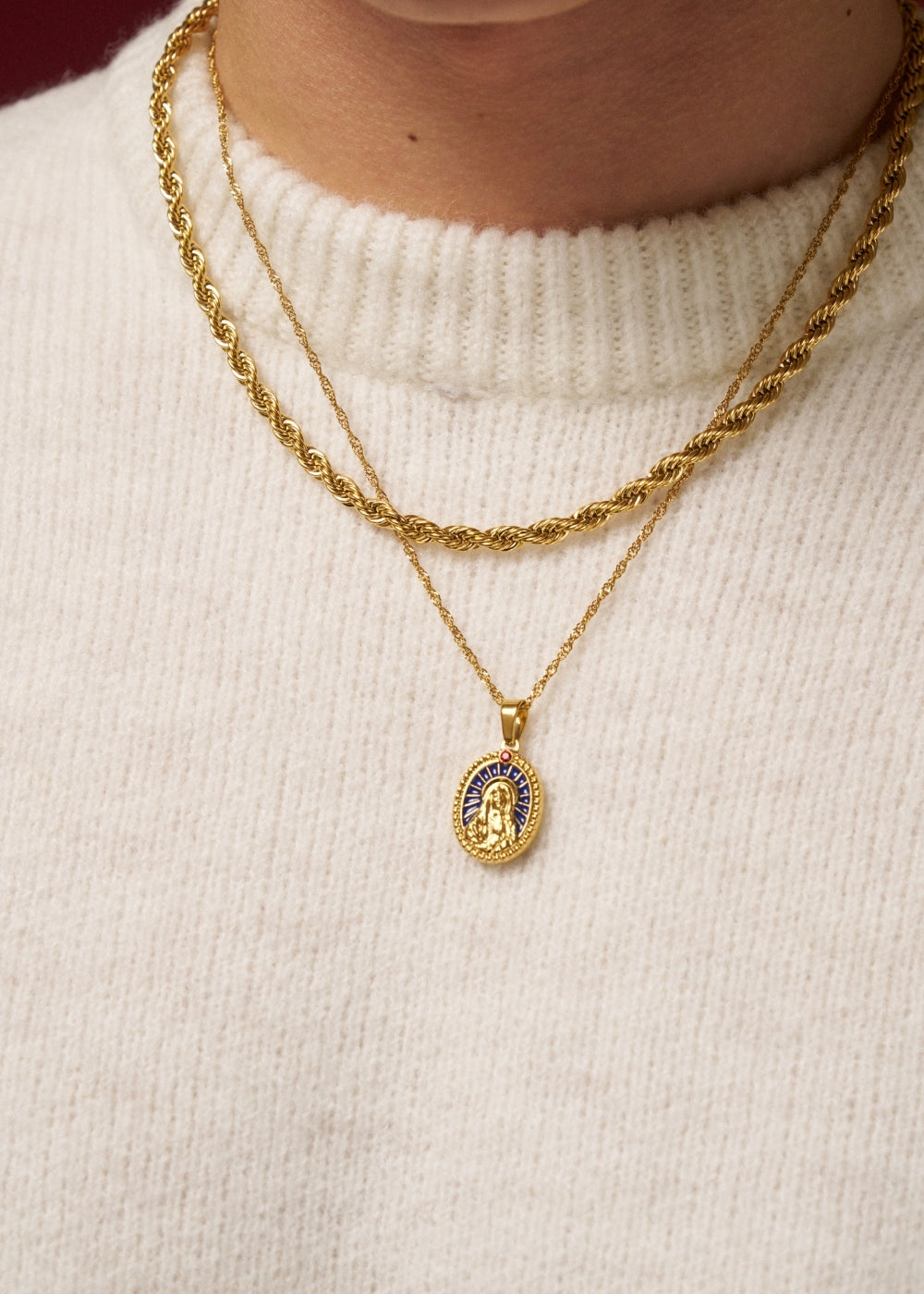

Leave a comment
This site is protected by hCaptcha and the hCaptcha Privacy Policy and Terms of Service apply.