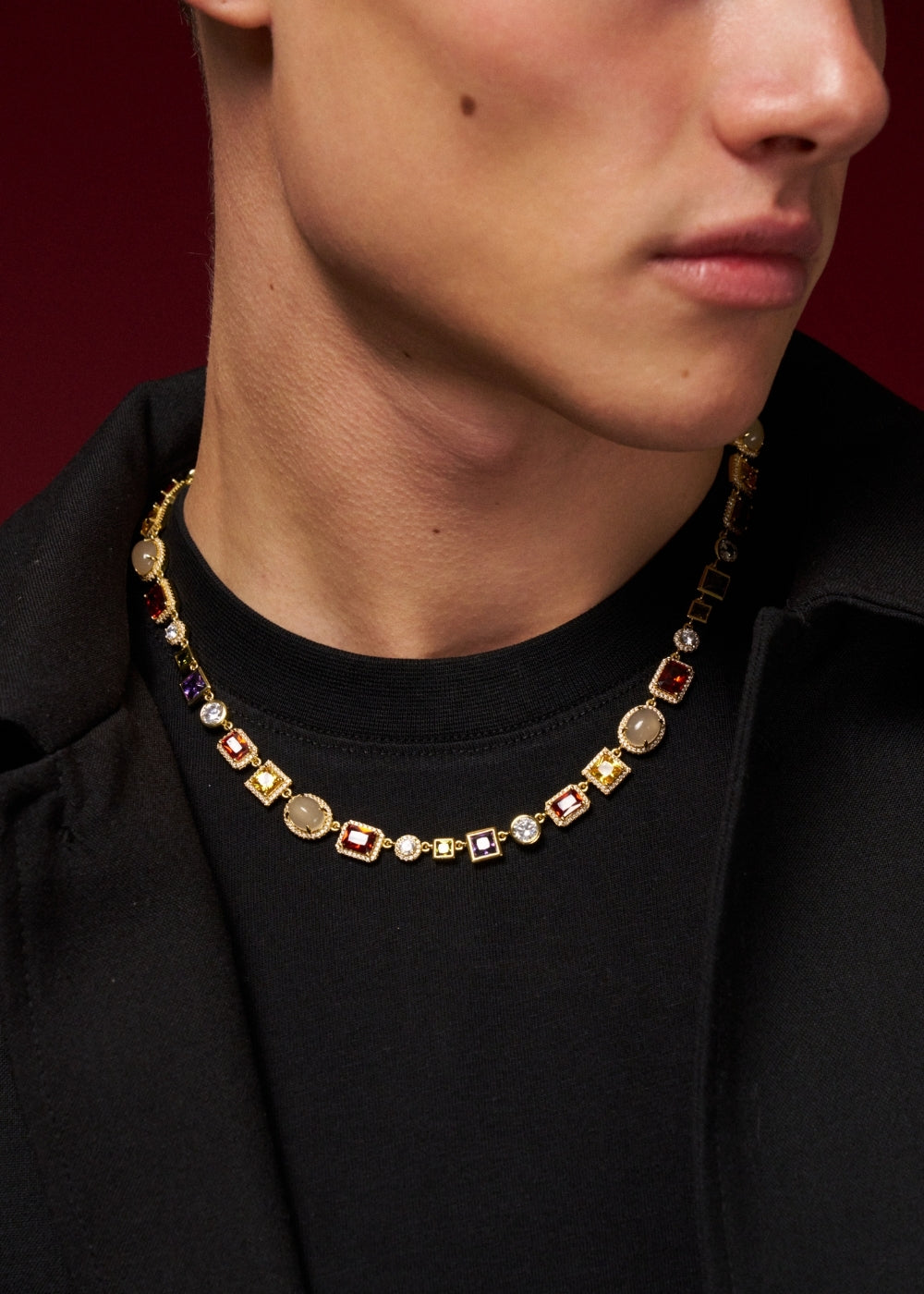
GEMSTONES
SHOP NOW


Cart
Your cart is empty
Your gifting options
Make your gift extra special with our luxury packaging options. Select a gift bag, gift box or a combination to create the perfect presentation.

Luxury Gift Box, Gift Bag & Wrapping Kit (£7.99)
Includes: CRAFTD Luxury Gift Box, Gift Bag, Tissue Wrapping Paper & Ribbon

Meaning Card (£1.99)
Add more meaning to your gift with a meaning card included with your order.
15 variations available

Gift Bag, Ribbon & Wrapping (£4.99)
Ideal for items that already include a gift box.
Includes: Premium CRAFTD Gift Bag, Ribbon & Tissue Wrapping. Doesn’t include: Luxury Gift Box.

Luxury Gift Box (£4.99)
Present your gift in our signature gift box, designed to impress before it’s even opened.
Includes: Premium gift box
Choose your option
To My Boyfriend

To My Husband

To My Soulmate

To My Son

To My Grandson

To My Brother

To My True Friend

To My Dad

A Symbol Of Strength

A Symbol Of Faith

A Symbol Of Protection

A Symbol of Luck

A Symbol Of Safe Travel

A Symbol Of Adventure
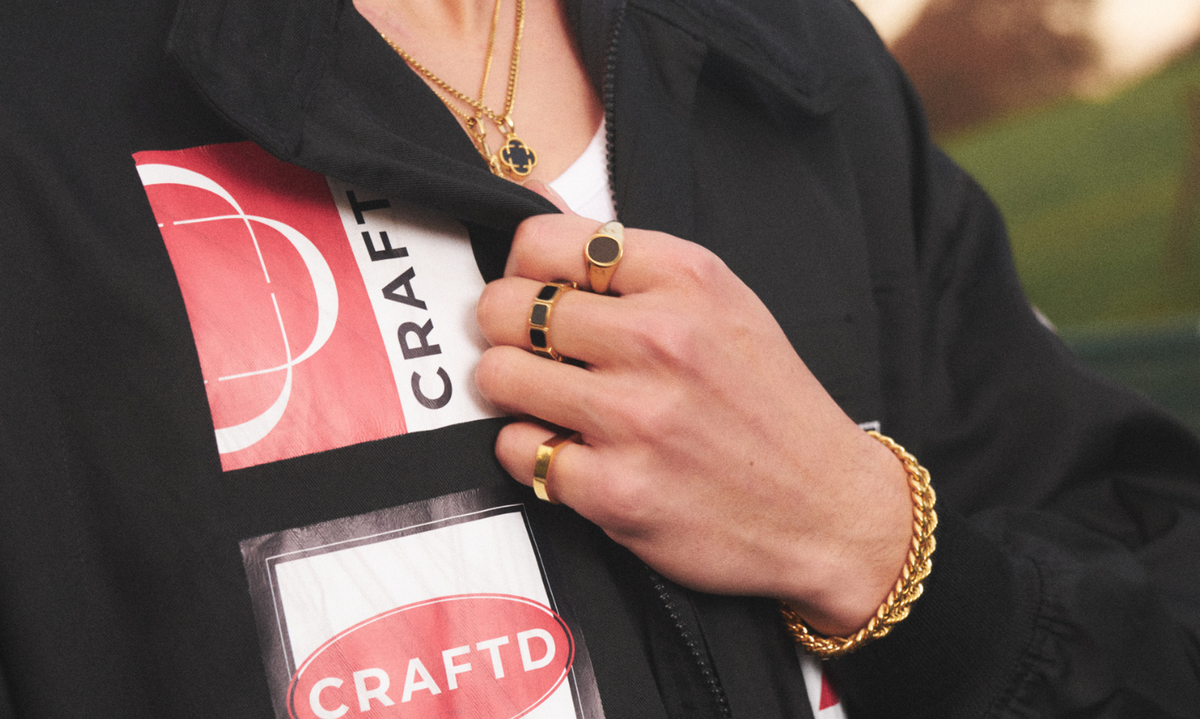
Most gold-plated jewellery doesn't wear out. It gets cleaned out.
The advice you'll find in most places, toothpaste on a toothbrush, a baking soda paste, a dip in whatever's marketed as a jewellery cleaner, is written for solid gold. On a plated piece, all three do the same thing: they take a little of the gold with them every time. Do it often enough and you'll wear through a finish that had years left in it.
Below we'll cover why plated gold needs a gentler hand, the method that actually works, what to avoid and why, how often to bother, and how to tell the difference between a piece that's dirty and a piece that's worn.
Jump to:
A plated piece isn't gold all the way through. It's a base metal with a layer of real gold bonded over the top.
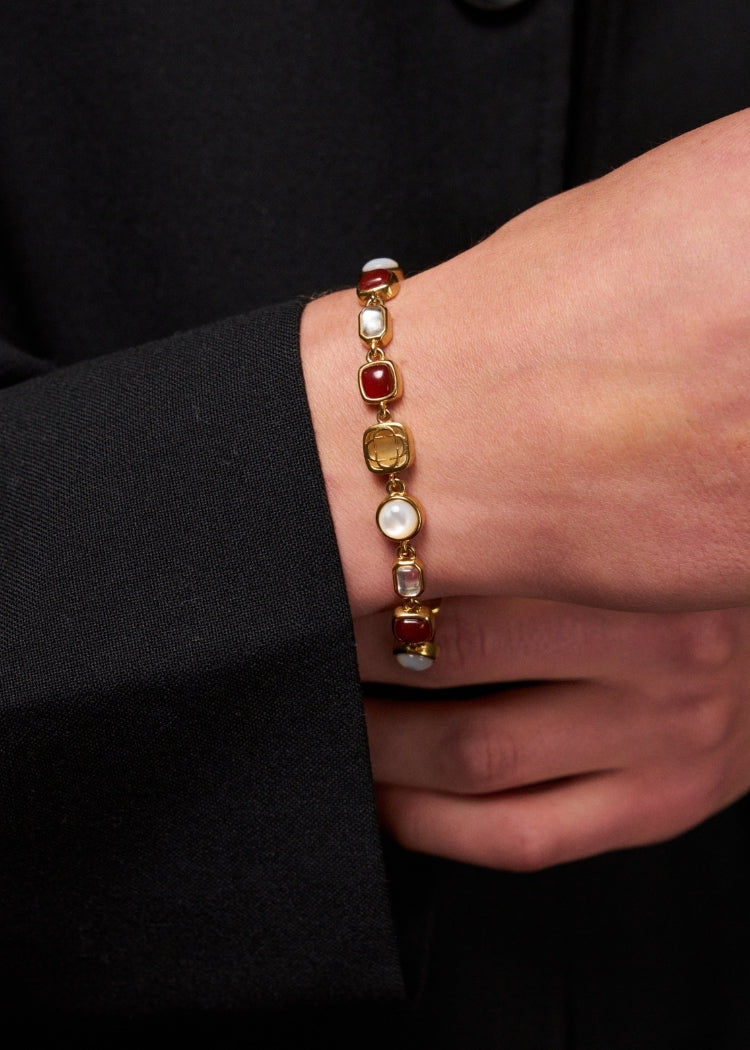
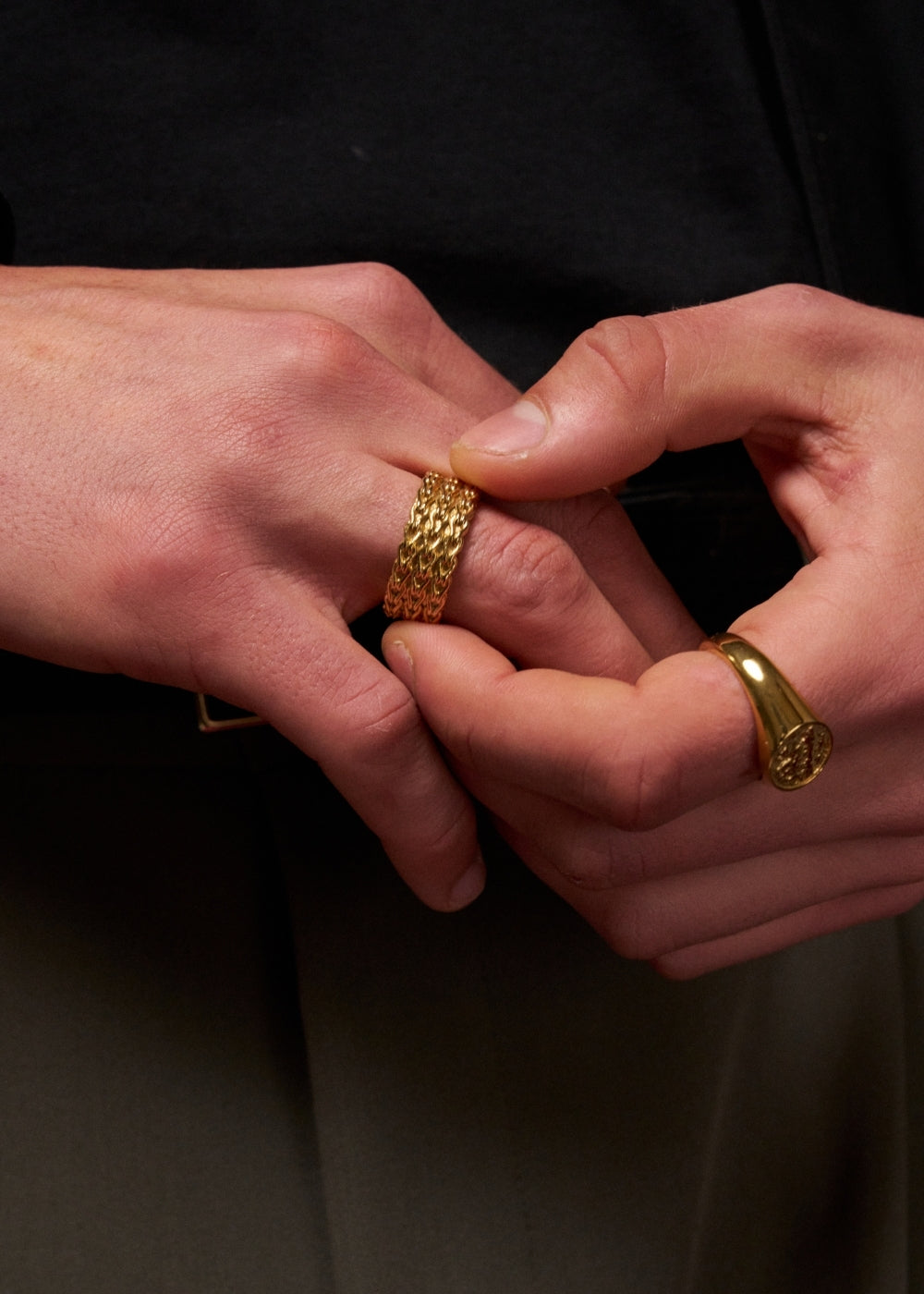
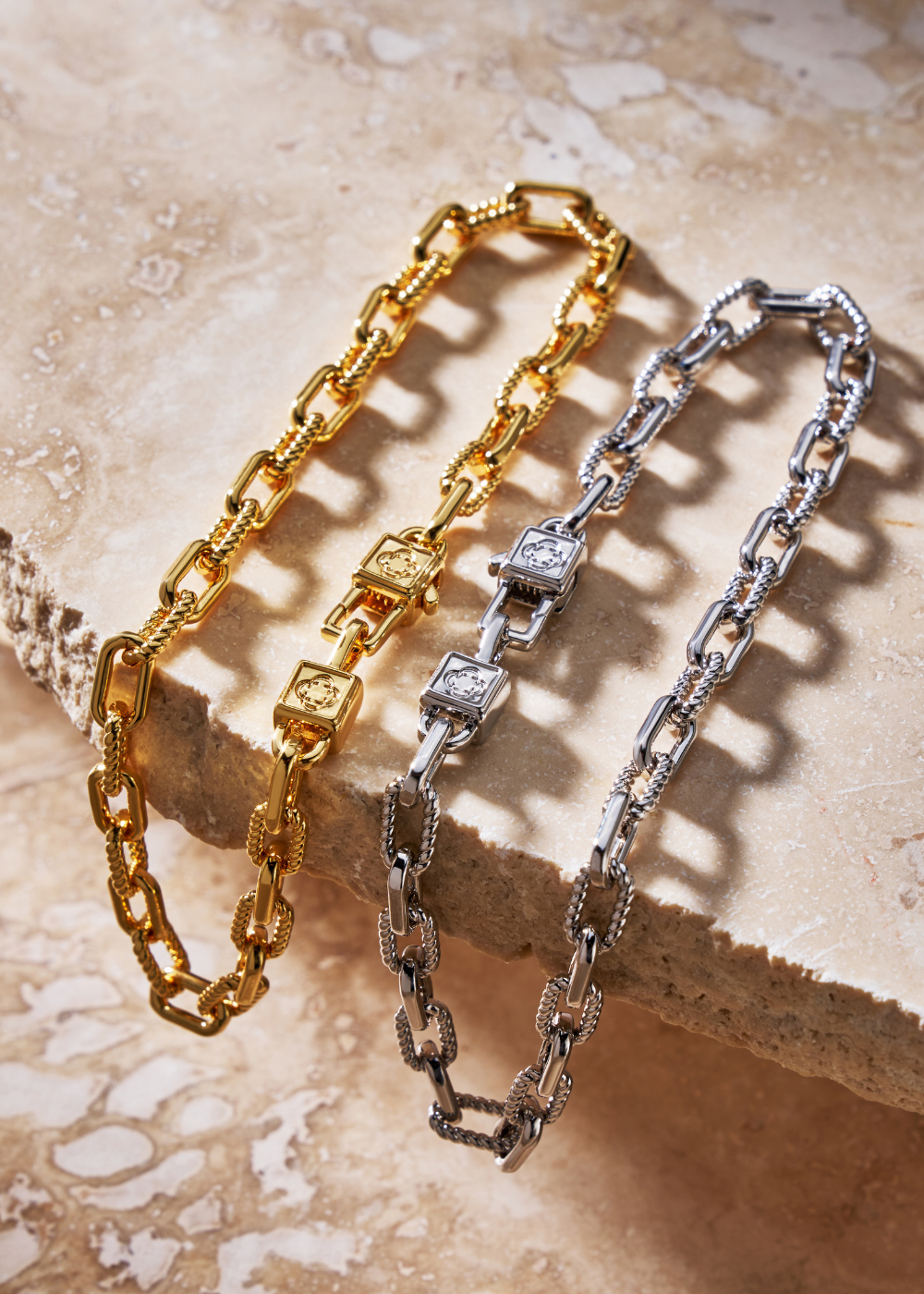
Ours is 316L stainless steel, finished in 18K gold with a layer of rhodium underneath for durability. The steel core is the part doing the hard work: it doesn't rust, corrode or tarnish, which is why these pieces handle daily wear better than a solid precious metal would. The gold layer on top is what you can damage, and it's thinner than most people picture.
That's the whole thing to understand. You're not cleaning gold. You're cleaning a surface that has gold on it. Everything below follows from that.
Warm water, mild washing-up liquid, a soft cloth. That's it.
The drying step matters more than people expect. Water sitting in a clasp or against a link is what dulls a finish over time, and it's the easiest part to skip.
If the piece has a stone in it, keep it out of the soak and wipe the stone separately with a dry cloth. Softer and more porous stones don't want a soaking, and a setting doesn't want to be worked at.
Toothpaste. The most common tip online, and the one most likely to cost you. It's a mild abrasive by design, which is the point on enamel and the problem on gold.
Baking soda paste. Works on solid sterling silver. Too rough for a plated surface.
Ultrasonic cleaners. The vibration is the selling point and also the issue. Over time it can work plating loose at the edges.
Chlorine, bleach and salt water. Pools, hot tubs and the sea. All three attack the finish faster than anything you'd do at home.
Hot water. Warm is enough. Heat does nothing useful here.
There's a pattern in that list. Every one of them is a stronger clean, and a stronger clean is exactly what a thin layer of gold doesn't want. Mild soap and a soft cloth is not the cautious option. It's the correct one.
Less often than you'd think, and more consistently than most people manage.
A piece you wear most days is worth a wipe with a dry cloth when you take it off, and a proper wash every few weeks. A piece that mostly lives in a drawer needs a wipe before it goes back on rather than a scheduled clean.
The wipe is the part that does the work. Sweat, aftershave and hand cream sitting on a finish overnight cause more dulling than a month of ordinary wear.
Worth knowing before you scrub at something that isn't dirt.
Build-up looks like a general dullness across the whole piece, often with darker patches where a clasp or a link traps residue. It comes off with the method above and the piece looks like itself again.
Wear looks different. It shows up in specific places first, the high points of a link, the inside of a band, the edge of a clasp, and it looks like a change of colour rather than a layer of grime. That's the base metal starting to show. No amount of cleaning brings it back, because nothing is on top of it to remove.
That's not a fault, and it's not a sign you've done something wrong. It's what plating does eventually. How long it takes is mostly down to how the piece is treated, which our guide to how long gold plating lasts goes into properly.
Four habits, and the first two matter most.
Take it off before the pool, the sea and the gym. Chlorine and prolonged sweat are the two biggest causes of a plated finish going early.
Let everything dry before you put it back on. Aftershave, moisturiser, sunscreen. Give them a minute to settle on your skin first.
Store it dry and on its own. A soft pouch keeps moisture off it. Keeping it away from tungsten or anything harder stops the surface picking up scratches it didn't need.
Wipe it down after wear. Ten seconds with a soft cloth, and most of the everyday dulling never starts.
Different piece, different rules, and it's worth knowing which one you own.
Gold vermeil is real gold bonded over a solid sterling silver base rather than steel. It sits closer to fine jewellery, and it wants an even gentler hand than plated steel does: cool or lukewarm water, a soft cloth rather than a brush, and drying immediately, because the silver underneath dulls if it sits wet.
If a product page says vermeil, treat it as the softer of the two. Anything in our range not marked vermeil, sterling silver or tungsten is gold-plated stainless steel. Our 18K gold vs gold vermeil guide covers how each is actually made, and for rings specifically, how to clean gold rings breaks the two apart in more detail across our gold rings range.
No. It's abrasive enough to leave fine scratches and to take gold off a plated surface over time. It's the most repeated tip online and the one worth ignoring. Mild soap and warm water does the job without the cost.
The gold layer itself doesn't tarnish, and a stainless steel core doesn't rust or corrode. What people usually mean by tarnish on a plated piece is either surface build-up, which cleans off, or the plating wearing thin enough to show the metal underneath, which doesn't.
That's usually a reaction between skin and a base metal showing through where plating has worn, often on a cheaper piece with copper in the alloy. It's harmless, and it's a sign the finish has gone rather than a sign the piece is dirty.
You can, and it won't ruin it, but soap residue and repeated water contact dull a finish faster than dry wear does. Taking it off is a small habit that adds up over years.
Check the product page or the hallmark. Solid gold carries a karat stamp such as 9K, 14K or 18K on the piece itself. Plated pieces are usually described as gold-plated or gold vermeil rather than carrying a solid-gold hallmark.
Gold-plated jewellery asks for very little. Warm water, a soft cloth, and taking it off before the pool covers almost all of it.
Look after the finish and it holds its own for years. If you're adding to yours, the full men's gold jewellery range is the place to start, or go straight to gold chains and gold bracelets. Our guides to the types of men's chains and types of men's bracelets are worth a read if you're deciding what comes next, and what gold represents covers why it's worth wearing in the first place.

The tennis bracelet is defined by a single, continuous row of matched stones, creating a clean line of sparkle around the wrist. Here’s where the name came from, how it’s made and how to wear one.
Read more
How to Untangle a Necklace: Every Method That Works
A knotted chain always looks worse than it is. Open the clasp, lay it flat, and push rather than pull. Here's every method that works, in order, plus what to do differently depending on your chain.
Read more

1 comment
Just had necklace from yourselves very impressed with quality and shipping hope my necklace stays looking like it does now
John
Leave a comment
This site is protected by hCaptcha and the hCaptcha Privacy Policy and Terms of Service apply.