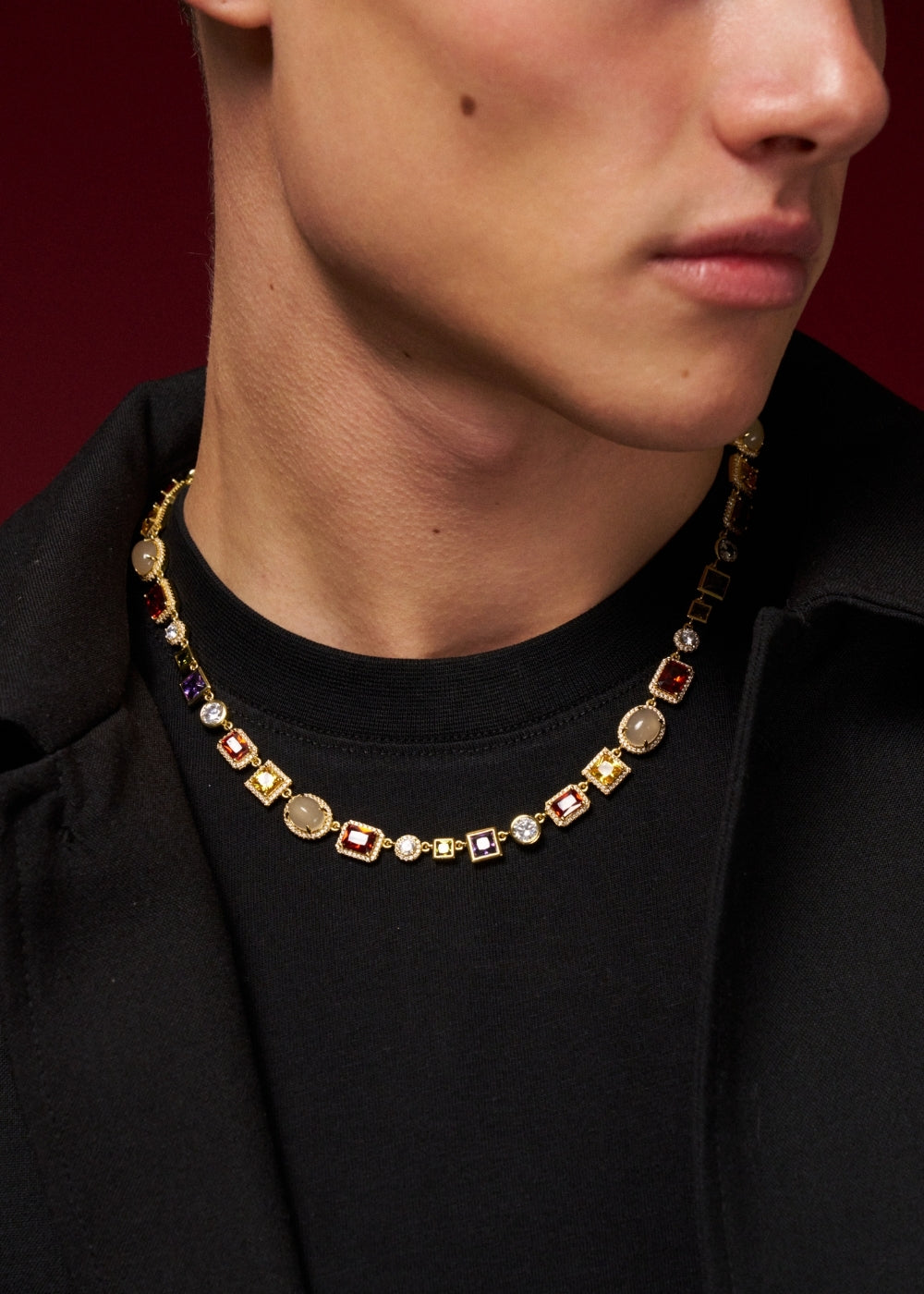
GEMSTONES
SHOP NOW


Cart
Your cart is empty
Your gifting options
Make your gift extra special with our luxury packaging options. Select a gift bag, gift box or a combination to create the perfect presentation.

Luxury Gift Box, Gift Bag & Wrapping Kit (£7.99)
Includes: CRAFTD Luxury Gift Box, Gift Bag, Tissue Wrapping Paper & Ribbon

Meaning Card (£1.99)
Add more meaning to your gift with a meaning card included with your order.
15 variations available

Gift Bag, Ribbon & Wrapping (£4.99)
Ideal for items that already include a gift box.
Includes: Premium CRAFTD Gift Bag, Ribbon & Tissue Wrapping. Doesn’t include: Luxury Gift Box.

Luxury Gift Box (£4.99)
Present your gift in our signature gift box, designed to impress before it’s even opened.
Includes: Premium gift box
Choose your option
To My Boyfriend

To My Husband

To My Soulmate

To My Son

To My Grandson

To My Brother

To My True Friend

To My Dad

A Symbol Of Strength

A Symbol Of Faith

A Symbol Of Protection

A Symbol of Luck

A Symbol Of Safe Travel

A Symbol Of Adventure

The chain named most often is Rick Ross's self-portrait piece, at a reported $1.5 million. The chain anyone can actually prove a figure for is Lil Jon's, at $500,000, because Guinness World Records measured it.
Those two sentences are the whole problem with this subject. Nearly every price you'll read about a famous chain came from an interview or an estimate rather than a sale, and then got copied between articles until nobody remembered where it started.
Below is the list everyone is looking for, the one figure on it that's documented, and an honest account of where the rest came from. The prices are given in dollars throughout, because that's the currency they were reported in and converting a number nobody has verified would only add false precision to it.
Jump to:
Ordered by the figures that circulate. Every one of these is a reported price, not a sale price, and we've written them that way deliberately.
A Cuban link carrying a diamond-set portrait of Ross's own face, usually set with yellow diamonds in the retellings. It heads almost every list of this kind. It is also the figure with the least traceable origin on the whole page, which we come back to below.
Made by Jacob the Jeweller in the early 2000s: a cartoon-style N.E.R.D logo in coloured stones, from the era when Jacob Arabo was effectively the house jeweller to hip hop. The most historically significant piece on the list, whatever it cost.
A pendant for his Ice Age label, and a period piece in the most literal sense. It belongs to the mid-2000s moment when the chain was the record label's logo and the logo was the advertising.
Two panther heads, commonly reported at 4,600 stones and around 165 carats in total. Gucci Mane has owned several pieces that appear on lists like this; the panthers are the one that stuck.
A box of 64 crayons rendered in coloured stones. Silly in the best way, and a reminder that the point of these pieces was never restraint.
The only piece on this list with a documented figure rather than a reported one, because Guinness World Records measured it. Full detail in the next section.
Built by Elliot Avianne, with the planets set to orbit a central sun. Takeoff died in 2022, and the piece is now read differently than it was when it was made.
Named with total accuracy. A pendant reading exactly that, and heavy enough that T-Pain has talked publicly about what wearing it did to his neck.
An Egyptian falcon-god pendant that appeared around 2010, also attributed to Jacob the Jeweller. One of the few on the list built around an image older than hip hop.
A small enamelled Quavo wearing his own chains, which may be the most hip hop object ever manufactured. A chain depicting the wearing of chains.
| Piece | Commonly reported at |
|---|---|
| Lil Uzi Vert, the Marilyn Manson chain | $220,000 |
| Jay-Z, the 11lb Cuban link | $200,000 |
| Drake, the OVO owl | $120,000 |
Worth pausing on the last one. Drake's OVO owl is the most recognisable piece in this entire territory and the cheapest thing on this page. If you only take one idea away from here, make it that fame and price have almost nothing to do with each other in this world.
On 13 December 2006, Guinness World Records certified Lil Jon's Crunk Ain't Dead pendant as the largest non-religious pendant in the world.
The record entry is specific in a way that nothing else on this page is. 3,576 white diamonds. The pendant alone weighs 977.6 grams, and 2.3 kilograms with its chain. Guinness recorded its value at $500,000 at the date of the record.
That is the better part of two and a half kilos hanging from someone's neck, which is why Lil Jon has said in interviews over the years that he could barely wear it. The record wording is worth quoting for the category alone: the largest non-religious pendant, which implies a religious one somewhere that's bigger.
The point isn't that Lil Jon's chain is the most expensive. On the circulating figures it's joint fifth. The point is that it's the only one where a third party turned up, weighed the object, counted the stones and wrote the number down. Everything above it on this page is a number someone said.
We went looking for the source of the $1.5 million attached to Rick Ross's chain, because it tops nearly every version of this list.
What we found was other lists. The figure appears on jewellery retailers' blogs, on aggregator sites, and in social posts, and each one states it flatly without attribution. There is no sale, no auction, no appraisal document and no statement from Ross that anyone points to. Follow it back far enough and you arrive at somebody saying a number out loud, once.
That isn't unique to that chain. Here's the thing that made it obvious: two competing jewellery retailers publish this same list, in nearly the same order, with the same eleven chains at identical figures, to the dollar. $1,500,000, $1,000,000, $1,000,000, $500,000, $500,000, $500,000, $500,000, $410,000, $300,000, $250,000, $200,000. Neither cites a source. That isn't two sources agreeing. That's one source, copied.
We've reproduced those figures above because they're what people are searching for, and pretending they don't exist would be its own kind of dishonesty. But they're folklore, and they should be read as folklore.
Auction results work differently, and it's worth understanding why. At auction, two people who both want the same object bid against each other in public, and the price is wherever the losing bidder stopped. That number is real because somebody paid it and somebody else nearly did. A custom chain has no second bidder. It has a commission price, agreed between one person and one jeweller on one day, and even that assumes the reported figure is the commission rather than a guess. We go further into that distinction, and into the jewellery records that are verified, in our guide to the most expensive jewellery ever sold.
Strip out the celebrity and the story, and four things decide what a chain costs.
1. Weight. Gold is sold by mass. A 12mm Cuban link holds several times the metal of a 4mm one, and that difference is most of the price gap before anything else is considered. The least glamorous factor and the biggest.
2. Carat. 9ct is 37.5% gold, 14ct is 58.3%, 18ct is 75%, 24ct is pure. Raise the carat and you raise the metal cost proportionally for the same weight. The number in a hallmark is a purity statement, and what those marks mean is the most useful thing to know when someone quotes you a price. Our guide to the different types of gold covers why 9ct and 18ct behave so differently for the same shape.
3. Stones, and how they're set. This is where the money goes on iced pieces, and it's mostly labour rather than materials. Every stone is set individually by hand, and a fully iced chain can hold several hundred. Prong setting costs more than channel setting because more of each stone is left exposed, which takes longer and leaves less margin for error.
You can see that cost without leaving our range. A half iced Cuban and a fully iced one are the same links in the same finish. The gap between them is almost entirely setting work.
4. Whose name is on it. A commission from a jeweller with a reputation carries a premium that has nothing to do with materials. That's not a criticism, it's just worth knowing which part of an invoice is metal and which part is signature. Jacob the Jeweller appears twice on the list above for exactly this reason.
Everything else is finishing. And it's worth knowing that plated and solid gold can look identical across a room while differing by a factor of twenty in price, which is why what gold plated actually means repays ten minutes. If you want the pure metal version of the question, how much a gold bar is worth works it out from first principles.
Once you know what actually drives the cost, the useful question changes. It stops being which chain is most expensive and becomes which part of an expensive chain you actually want, because those parts can be bought separately and most of them are not expensive at all.
| If what you want is | The famous version | What actually delivers it |
|---|---|---|
| Sheer weight and presence | Jay-Z's 11lb Cuban | The 12mm Cuban, the heaviest link we make |
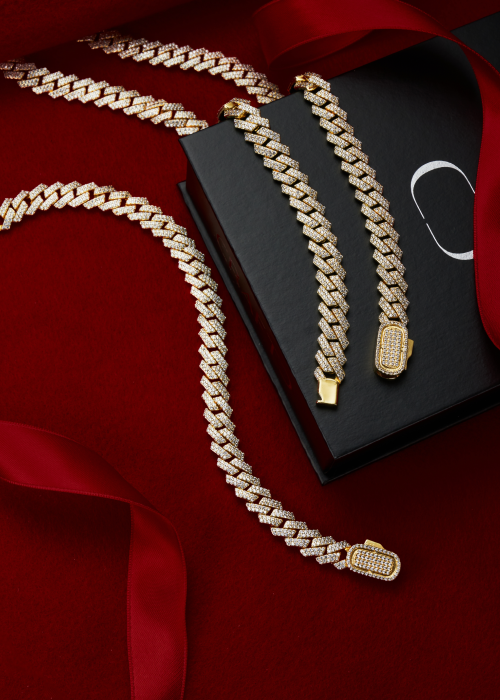
| Full stone coverage | The iced pieces across this list | The Prong Link Iced Cuban, handset throughout |
| Stone coverage without going all the way | Any of the above, dialled back | The Half Iced Cuban, same links, half the setting work |
| Light and movement rather than mass | Tennis-set stones | The Tennis Chain, four-prong 18ct settings |
| A pendant that means something | Takeoff's Solar System | The Iced North Star |
| Colour and stone, not just ice | Gucci Mane's panthers | The Sapphire Gemstone Necklace |
Read down the middle column and you'll notice none of those effects depend on the price tag. Weight is weight. A prong setting throws light the same way whoever made it. What a million dollars buys on top of that is rarity, provenance and a name, and none of those three are visible from across a room.
We're not on that list and we're not going to pretend otherwise.
What we'd say is that almost everything people respond to in an expensive chain is setting and light rather than paperwork. Nobody across a room can tell a natural diamond from a well-set stone. What they can tell is whether the stones sit flat, whether the links catch light evenly, and whether the thing looks like it belongs on the person wearing it.
So that's where the work goes. The Prong Link Iced Cuban is handset with hundreds of AAA-grade stones in sharp, clean-cut links built to sit flat on the neckline. The Tennis Chain uses a four-prong 18ct gold setting that protects each stone and maximises the light it throws back. Both carry our snap-proof clasp and scratch-resistant protection.
If you want presence rather than sparkle, the 12mm Cuban is the heaviest link we make, and the same weight logic that sits at the top of this page applies to it. If you're still working out which style suits you, types of men's chains goes through them all.
Rick Ross's self-portrait chain, at a reported $1.5 million, is the piece named most often. That figure has never been confirmed by a sale or by Ross, and every source for it traces back to another blog rather than to anything primary. The most expensive chain anyone can actually document is a different piece entirely.
By the figures that circulate, Rick Ross. By the only figure with a record behind it, Lil Jon, whose Crunk Ain't Dead pendant was measured and valued by Guinness World Records in 2006. Which answer is right depends on whether you'll accept a number nobody has checked.
Guinness World Records lists the Crunk Ain't Dead pendant at $500,000 as of December 2006, with 3,576 white diamonds. The pendant alone weighs 977.6 g, and 2.3 kg with its chain. It holds the record for the largest non-religious pendant.
The OVO owl is generally reported at around $120,000. It's the most recognisable piece in this whole territory and one of the cheapest, which is a useful thing to know about the relationship between fame and price.
Mostly no. Almost none came from a sale. They came from an interview, a jeweller's press release, or an estimate made from a photograph, and then got copied between articles until the original source disappeared. Auction results are different, because two people bid in public and somebody actually paid.
Our fully iced pieces sit at the top of the range, and the difference between a half iced and a fully iced Cuban in the same links and finish is almost entirely the hand-setting labour. That's the honest version of what makes any chain expensive.
Generally no. Custom pieces are hard to resell, stones in them are set for effect rather than graded for resale, and the gold is worth its weight and carat whatever the design is. The metal holds value. The commission and the name usually don't.
The list at the top of this page is real in the sense that the chains exist and the figures genuinely circulate. It isn't real in the sense that anybody checked. Both things are worth knowing before you repeat a number at a party.
What survives the scrutiny is the part that was always true: weight, carat, and how many hours someone spent setting stones by hand. Have a look through the iced range or the full chain collection if you're deciding what's yours.

How to Clean Earrings: A Step-by-Step Guide
Earrings sit against skin all day, which is why they build up faster than anything else you wear, and why the post and the back are always dirtier than the part you can see. Here's the ten-minute m...
Read more
Men's Jewellery Styles: The Most Popular Looks and Who They Suit
"Jewellery styles" means three different things at once, which is why searching it gets you nowhere. It can mean the look you're going for, the type of piece, or the pattern of links on a chain. He...
Read more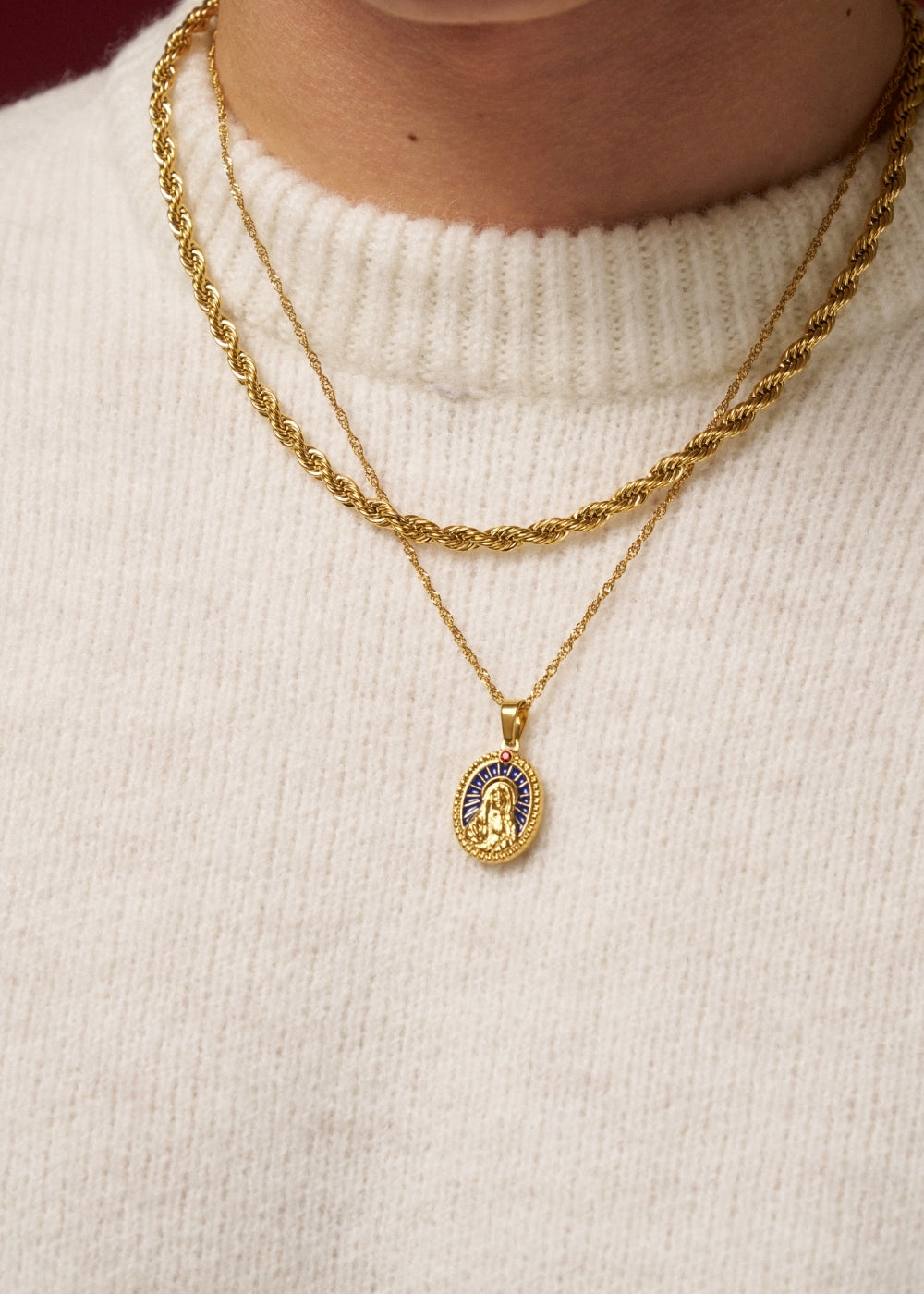

Leave a comment
This site is protected by hCaptcha and the hCaptcha Privacy Policy and Terms of Service apply.