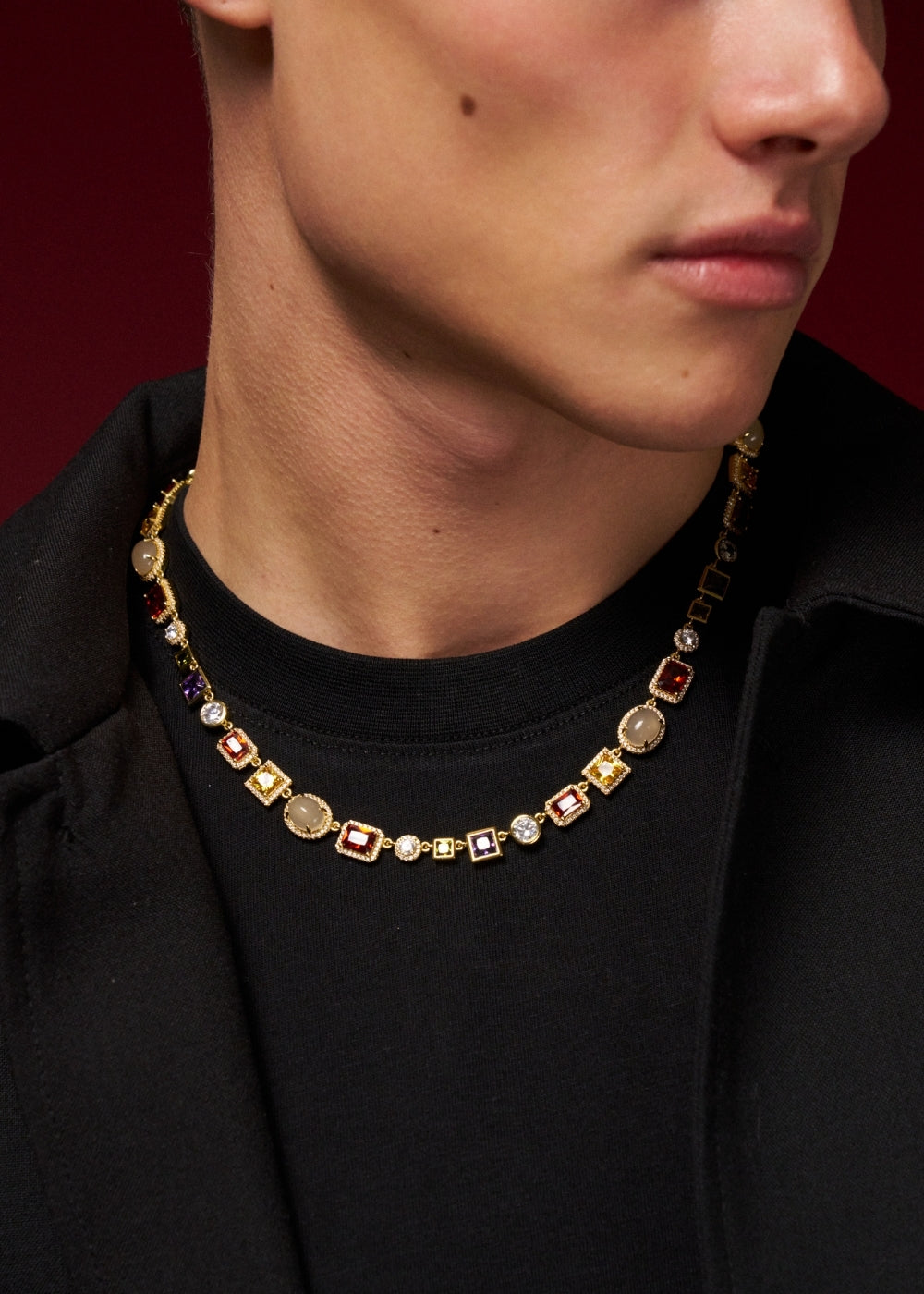
GEMSTONES
SHOP NOW


Cart
Your cart is empty
Your gifting options
Make your gift extra special with our luxury packaging options. Select a gift bag, gift box or a combination to create the perfect presentation.

Luxury Gift Box, Gift Bag & Wrapping Kit (¥1,800)
Includes: CRAFTD Luxury Gift Box, Gift Bag, Tissue Wrapping Paper & Ribbon

Meaning Card (¥500)
Add more meaning to your gift with a meaning card included with your order.
15 variations available

Gift Bag, Ribbon & Wrapping (¥1,100)
Ideal for items that already include a gift box.
Includes: Premium CRAFTD Gift Bag, Ribbon & Tissue Wrapping. Doesn’t include: Luxury Gift Box.

Luxury Gift Box (¥1,100)
Present your gift in our signature gift box, designed to impress before it’s even opened.
Includes: Premium gift box
Choose your option
To My Boyfriend

To My Husband

To My Soulmate

To My Son

To My Grandson

To My Brother

To My True Friend

To My Dad

A Symbol Of Strength

A Symbol Of Faith

A Symbol Of Protection

A Symbol of Luck

A Symbol Of Safe Travel

A Symbol Of Adventure

Cufflinks and tie clips are the two pieces of men's jewellery that come with the most rules attached, and most of those rules exist for a practical reason. One holds your cuff shut. The other stops your tie swinging into your soup. Once you know why each one is there, wearing them well stops being guesswork.
This guide covers both from the shirt up: which cuffs take a link, how to fasten one without fumbling, how the main styles differ, where a tie clip should sit, and when either piece belongs in the drawer instead.

A rope-twist barrel with a warm gold finish. Featured: Rope Cuff Links (Gold).
Jump to:
Both started as hardware. Before shirts had sewn-on buttons at the wrist, sleeves were tied with ribbon or string, and the cufflink replaced that string with something sturdier and more presentable. The tie clip came later, once long ties became everyday wear, to pin the tie to the shirt so it stays straight when you lean over a desk or a table.
That history is useful, because it explains the modern etiquette. A cufflink only makes sense on a cuff designed for one. A tie clip only makes sense when there's a loose tie to hold down. Wear them where they have a job and they look natural; wear them where they don't and they look like decoration for its own sake.
Turn your sleeve over and look at the cuff. There are three types you'll come across:
If you're buying a shirt with cufflinks in mind, a double cuff gives the fuller look, with the link pinching the two folded edges together so they meet like a closed book.
It feels fiddly the first few times. This order makes it easier:
Do your weaker hand's cuff first, while your stronger hand is free to work. And fasten both links before the jacket goes on; with a sleeve in the way, the job gets twice as hard.

That flat bar on the back is what locks each link in place. Featured: Rope Cuff Links (Gold).
Most cufflinks share one basic build: a decorative face, a short post and a bar behind. From one design to the next, what changes is the outline of the face and the way the back moves.
Face shapes. A barrel or bar face reads as more sculptural and picks up the light along the whole twist. A flat round face sits closer to the cuff and looks quieter. Square and oval faces fall somewhere between the two.
Backs. The most common back has a flat bar that turns or flips in line with the post to go through the holes, then turns back to lock. Older designs use a chain linking two faces, and some use a fixed back with no moving part at all, which is sturdy but slower to get in.
Our two designs cover the two main looks. The Rope cufflinks have a twisted barrel face, available as a gold pair or a silver one. The Round cufflinks have a flat engraved face and come in silver. Every pair sits with the tie clip on one cufflinks and tie clips page.

A flat, engraved round face that sits low on the shirt. Featured: Round Cuff Links (Silver).
The names get swapped around a lot, but there are three distinct pieces:
For everyday wear, a clip or bar is the practical choice: nothing pierces the silk, and it takes seconds to fit. Our Rope tie clip comes in silver, with the same twisted detail as the Rope cufflinks.

Slim enough to sit well inside a standard tie. Featured: Rope Tie Clip (Silver).
Height. Aim for the middle of your breastbone, which on most shirts lands somewhere around the fourth button down. The test is your jacket: with it buttoned, the clip should show in the V or sit just inside the opening. Too high and it looks like it's holding up your collar; too low and it vanishes behind the jacket and stops doing its job.
Angle. Level is the safe choice. A very slight downward slope towards one side is a deliberate style some men like, but a clip that's clearly crooked just looks knocked.
Width. The bar should never be wider than the tie at the point where it sits. Somewhere between half and three quarters of the tie's width looks right, so a narrow tie needs a shorter clip.
Grip. The clip needs to hold the front and back blades together with the button strip of your shirt. If it only grabs silk, it can't anchor anything, and the tie will still swing.
Skip the clip with a bow tie, with a knitted tie that's too thick to grip, or when a waistcoat or a jumper already holds the tie flat.

The rope detail up close. Featured: Rope Tie Clip (Silver).
At the office. One or both is fine with a suit, especially for meetings, interviews and presentations. Keep the designs simple, keep the metal consistent, and let 1 to 1.5cm of shirt cuff peek out past the jacket sleeve, or the link stays hidden.
Black tie. Cufflinks, yes: a black tie shirt is built for them. A tie clip, no, because a bow tie has nothing to clip. For what else works with a dinner jacket, see how we'd approach black tie jewellery.
Weddings. As a guest, a smart pair of cufflinks and a slim clip suit almost any dress code short of white tie; our wedding guest advice covers everything else you'll wear. If it's your own wedding, the groom's jewellery guide takes you through the day itself.
Smart casual. A convertible cuff with links, no tie, and the jacket over an open collar can work, but it's a bolder look. If you're unsure, save the cufflinks for days with a tie.
Your cufflinks and tie clip sit close to two other metal things you're probably already wearing: the watch at your wrist and, for many men, a ring. The easy rule is to let them agree. A steel watch points to silver links and a silver clip; a gold case, or a two-tone one, points to gold.
Your belt buckle counts too, as it sits in the same line of sight as the tie clip. If the buckle, the watch case and the clip all share a finish, the outfit holds together without anyone noticing why.
Mixing can work in everyday wear, but with a suit and tie it tends to look accidental. Which of the two metals flatters you more is a bigger question we answer elsewhere, and our take on how many pieces a man should wear at once applies here too.
A pair of cufflinks is one of the easier jewellery gifts to get right. There's no ring size to guess or chain length to choose, and nearly any man in a suit has a reason to wear them: a promotion, a graduation, a big birthday, a friend's wedding.
A few tips for buying them for someone else:
Each of ours comes in its own presentation box, so there's no wrapping problem to solve. If you're shopping for a whole wedding party, our groomsmen gifts guide has more ideas.
Underneath the plating, ours are 316L steel, which most skin is comfortable with: this grade releases very little nickel. That outer layer of plating is made to resist scratches, and a handful of small habits keep it sharp for longer:
When the finish needs more than a wipe, this deep-clean method for gold plating is the one we recommend.
Only if the cuff has holes on both sides. A standard cuff has a button sewn to one edge and a single buttonhole opposite, so a cufflink has nothing to pass through. You need a double cuff or a convertible cuff, which has both buttons and holes.
The decorative face goes on the outside of the cuff, the side people see when your arms are by your sides. The bar sits on the inner side, against your wrist.
They don't need to be a set, but they should share a metal. Gold links with a silver clip can look like a mistake, while two pieces in the same finish look intended.
They are, provided the clip is slim and placed with care. A narrow bar that holds the tie in place looks tidy and practical; a wide, heavy one tends to look dated.
Ideally it shows in the V of the jacket, or sits just inside it. If it disappears completely behind the buttons, it's placed too low.
Yes, but choose a short clip. The bar should never be wider than the tie; on a narrow tie that means picking the slimmest, shortest design you can find.
Yes. A dress shirt for black tie usually has double cuffs, so cufflinks are expected. A tie clip is not, because a bow tie has nothing for it to hold.
Both are built on 316L steel and plated in your choice of 18K gold or rhodium; the coating is designed to stand up to scratches. Every one comes boxed, with a lifetime warranty.
Neither piece is compulsory, and neither has to be loud. Pick links for the shirts that take them and a clip narrower than your tie, match both to your watch, and they'll quietly earn their place for years.
Our Rope cufflinks and Rope tie clip are a good place to begin.
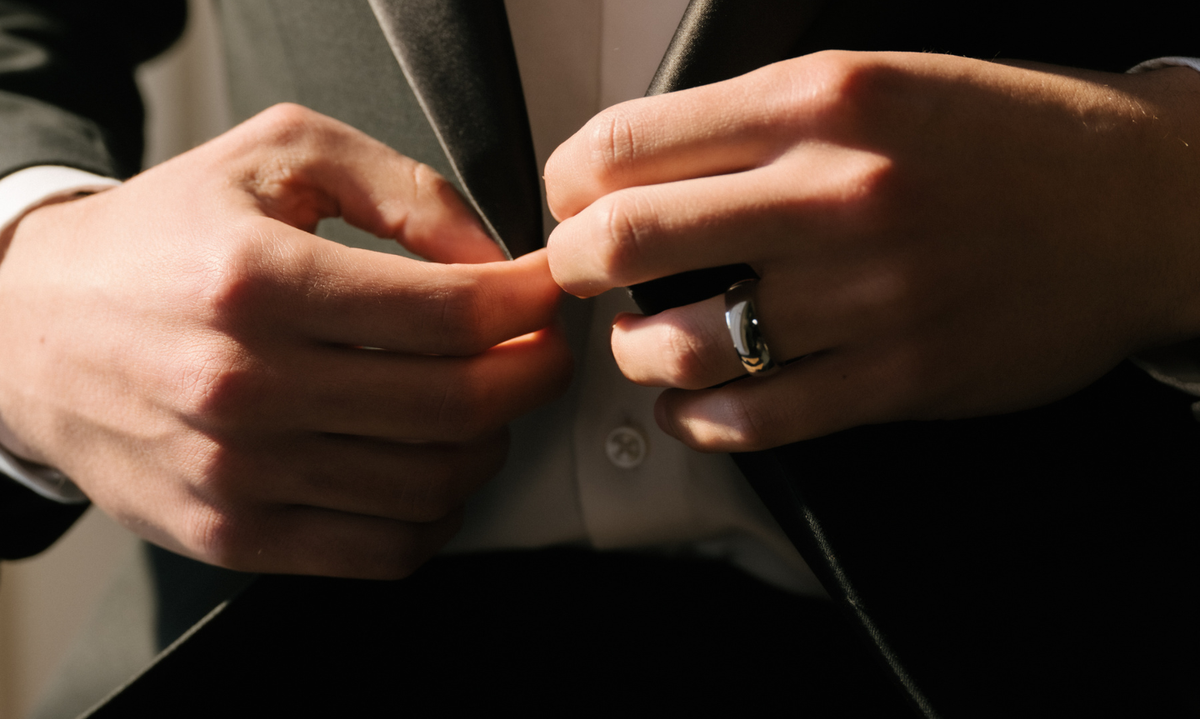
Wedding Day Jewellery for the Groom: What to Wear and When
The ring gets the attention, but it isn’t the only piece a groom wears. Here’s what to wear, what to leave off and when each piece goes on, from first light to last dance.
Read more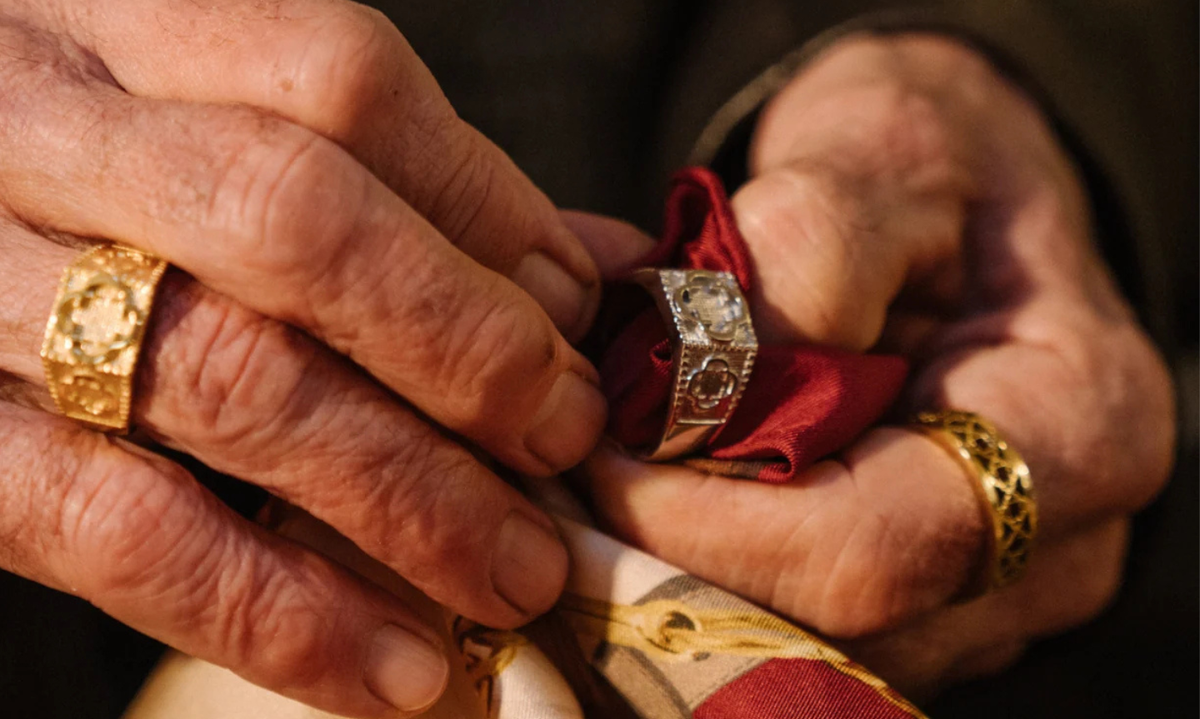
The Sovereign Ring: A British Classic Explained
Where did the sovereign ring come from, and does it still work on a modern hand? We trace it from a gold coin to a British classic, then show how to wear one now.
Read more

Leave a comment
This site is protected by hCaptcha and the hCaptcha Privacy Policy and Terms of Service apply.