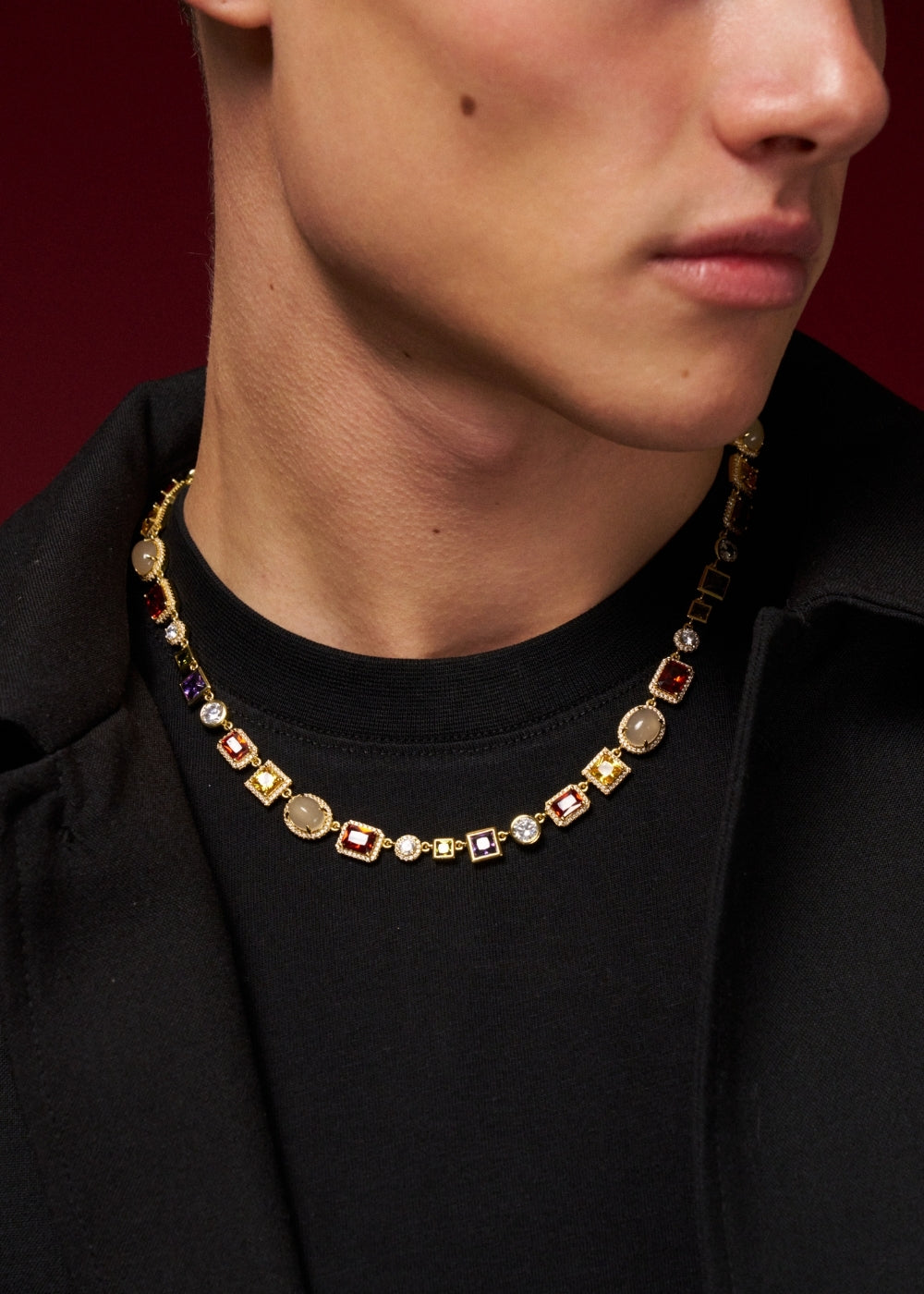
GEMSTONES
SHOP NOW


Cart
Your cart is empty
Your gifting options
Make your gift extra special with our luxury packaging options. Select a gift bag, gift box or a combination to create the perfect presentation.

Luxury Gift Box, Gift Bag & Wrapping Kit (¥1,800)
Includes: CRAFTD Luxury Gift Box, Gift Bag, Tissue Wrapping Paper & Ribbon

Meaning Card (¥500)
Add more meaning to your gift with a meaning card included with your order.
15 variations available

Gift Bag, Ribbon & Wrapping (¥1,100)
Ideal for items that already include a gift box.
Includes: Premium CRAFTD Gift Bag, Ribbon & Tissue Wrapping. Doesn’t include: Luxury Gift Box.

Luxury Gift Box (¥1,100)
Present your gift in our signature gift box, designed to impress before it’s even opened.
Includes: Premium gift box
Choose your option
To My Boyfriend

To My Husband

To My Soulmate

To My Son

To My Grandson

To My Brother

To My True Friend

To My Dad

A Symbol Of Strength

A Symbol Of Faith

A Symbol Of Protection

A Symbol of Luck

A Symbol Of Safe Travel

A Symbol Of Self Belief

A Symbol Of Adventure

Every time you polish silver, a little of the silver leaves with the tarnish.
That's what polishing is. An abrasive lifts the dark film off the surface and takes a microscopic layer of metal with it. Do it occasionally and it's nothing. Do it monthly for a decade on the same piece and you'll wear through detail that was meant to last.
There is one method that doesn't do this. It uses aluminium foil, bicarbonate of soda and boiling water, it takes about three minutes, and rather than removing the tarnish it converts it back into silver. That reaction is real chemistry rather than a kitchen myth, and almost nobody writing about silver mentions it.
Below: what tarnish actually is, all eight methods from best to worst including the three that do nothing at all, the foil method step by step, and the pieces you should never use any of this on.
Jump to:
Worth a minute, because it explains why some methods work and others are theatre.
Silver tarnish is silver sulphide. Silver reacts with sulphur compounds in the air, principally hydrogen sulphide, and forms a thin dark film on the surface. It is not rust, and despite what almost every article calls it, it is not really oxidation either, because oxygen is barely involved.
Three useful things follow from that.
Tarnish is a film sitting on top of the metal, not damage to it. The silver underneath is untouched and completely recoverable, however black a piece has gone.
It happens without air circulation. A piece tarnishes in a closed drawer, which surprises people. Keeping silver near wool, rubber bands, latex or in a bathroom accelerates it, because those are sulphur sources.
It is the copper doing most of it. Sterling is 92.5% silver and 7.5% other metals, usually copper, and that copper is a large part of why sterling tarnishes when near-pure silver barely does. Pure silver is too soft to wear, which is the whole reason the alloy exists. What 925 means on jewellery covers the hallmark and the alloy in full.
None of this makes tarnish a fault. It is a property of the metal, and it is entirely reversible.
| Method | What it actually does | Best for | The catch |
|---|---|---|---|
| Foil and bicarbonate of soda | Converts the tarnish back into silver | Heavy tarnish, detailed pieces, anything you don't want abraded | Nothing. It's the only method that adds silver back rather than taking it off |
| Silver polishing cloth | Lifts tarnish with a mild abrasive and leaves an anti-tarnish residue | Light tarnish and weekly upkeep | Removes a microscopic layer each time. Fine occasionally, not daily |
| Mild soap and warm water | Removes dirt and skin oils. Does nothing to tarnish | Everyday grime, and always the first thing to try | Won't touch actual tarnish, which is a chemical film rather than dirt |
| Bicarbonate of soda paste | Scrubs the tarnish off | Solid sterling with no detail, when you have nothing else | Abrasive. Scratches polished surfaces and strips oxidised finishes |
| Commercial silver dip | Dissolves the tarnish chemically | Heavily tarnished solid sterling, used briefly | Harsh. Can pit the surface, and it destroys vermeil and oxidised detail |
| Vinegar and bicarbonate of soda | Nothing useful. The two cancel each other out | Nothing | An acid and a base neutralising. The fizz is the reaction ending, not working |
| Lemon juice and olive oil | Acid plus a residue that looks like shine | Nothing | The oil coats rather than cleans, and the acid does not belong on silver |
| Toothpaste | Abrades the surface | Nothing | Harsher than a polishing cloth and not formulated for metal |
The pattern worth noticing: only one method on that list adds silver back. Everything else either takes a little away or does nothing at all.
This is the one to know.
Tarnish is silver sulphide. Aluminium has a stronger affinity for sulphur than silver does, so when the two metals are in contact in a hot electrolyte solution, the sulphur migrates from the silver to the aluminium. The equation is 3Ag2S + 2Al giving 6Ag + Al2S3.
Read that left to right and you'll see the point. The silver that was locked up in the tarnish is returned to the piece as metallic silver. Nothing is scrubbed away. Compare that to a polishing cloth, which removes the silver sulphide and the silver bound up in it permanently.
The two supporting ingredients each have a job. Bicarbonate of soda strips the layer of aluminium hydroxide that naturally coats foil, which otherwise blocks the reaction before it starts. Salt acts as a salt bridge, carrying charge between the two metals so the reaction can keep going rather than stalling.
That's also why the method fails when people try it: dry foil, no bicarbonate of soda, water that isn't hot enough, or a piece that never touches the foil.
A proper silver polishing cloth is two layers. An inner layer carrying a very mild abrasive and a tarnish inhibitor, and an outer buffing layer. It's the right tool for light tarnish and for keeping a piece bright between deeper cleans.
Work in straight lines rather than circles, which keeps any fine marks consistent with the grain of the finish. Don't wash the cloth, since washing removes the compound that makes it work, and a cloth that has gone black is still working.
The limit is simple. It's mildly abrasive, so it costs you a tiny amount of silver each time. Weekly is fine. Daily, over years, is not.
Always try this first, because a good share of what looks like tarnish is skin oils, soap residue and product build-up sitting on the surface.
Warm water, a few drops of mild washing-up liquid, a ten minute soak, a soft cloth or soft-bristled toothbrush on detail, a thorough rinse and an immediate dry. If the piece comes out bright, it was dirty rather than tarnished and you've saved yourself an abrasive.
For a chain specifically, the links need more patience than a flat surface. How to clean a silver chain goes through that step by step.
These three come up constantly and are worth naming.
The most confidently repeated bad advice about silver. Vinegar is an acid, bicarbonate of soda is a base, and combining them neutralises both. You get sodium acetate, water and carbon dioxide. The dramatic fizz that makes the method look effective is the sound of the two ingredients cancelling out.
Any cleaning you notice comes from undissolved bicarbonate grit scratching the surface, which is the abrasive method with extra steps and a worse result. Use one or the other with purpose, not both together.
The oil leaves a film that reads as shine in the moment, then collects dust. The lemon juice is acidic, and acid on silver does nothing helpful and can mark alloys containing copper. It's a furniture polish recipe that migrated to jewellery.
Abrasive by design. It's harsher than a polishing cloth, not formulated for metal, and on a detailed or oxidised piece it flattens the very contrast you wanted. There is no case where it beats the alternatives.
Four cases. On all of them, stop at mild soap and water.
You can slow it a great deal, and the habits cost nothing.
Wear it. Silver worn regularly tarnishes more slowly than silver in a drawer, because the friction of contact keeps the film from settling. This is the rare case where use is better than storage.
Wipe it when you take it off. Ten seconds with a soft cloth removes the sweat and skin oils that accelerate everything.
Store it sealed and dry. A sealed bag with the air pressed out beats an open jewellery box by a wide margin. Add an anti-tarnish strip or a silica gel sachet if you have one.
Keep it away from sulphur sources. Wool, rubber bands, latex, and bathrooms. Those are the things quietly darkening a piece you haven't worn.
Put it on last. After aftershave, sun cream and moisturiser have dried.
For actual tarnish, the aluminium foil and bicarbonate of soda method, because it converts the tarnish back into silver instead of scrubbing it off. For light tarnish and weekly upkeep, a silver polishing cloth. For ordinary dirt and skin oils, mild soap and warm water. Those three cover almost everything, and the first is the only one that doesn't cost you a little metal each time.
Yes, and it's the one home method with real chemistry behind it rather than folklore. Tarnish is silver sulphide. Aluminium wants sulphur more than silver does, so in hot water with bicarbonate of soda the sulphur transfers to the aluminium and the silver is left behind on your piece. The reaction is 3Ag2S + 2Al giving 6Ag + Al2S3. You end up with more silver on the piece than you started with, which no polish can claim.
Because they cancel each other out. Vinegar is an acid, bicarbonate of soda is a base, and mixing them produces sodium acetate, water and carbon dioxide. That dramatic fizz is the two reagents neutralising, not cleaning. Whatever mild effect you notice comes from undissolved bicarbonate scratching the surface, which you could get without the vinegar and shouldn't want anyway.
You can, and you shouldn't. Toothpaste is an abrasive designed for tooth enamel, and it's harsher on silver than a proper polishing cloth. It leaves fine scratches across a polished surface and strips any deliberately darkened detail. It's the most repeated tip online and it's a downgrade on every alternative.
Black is just heavier tarnish, and it's the case the foil method handles best. Line a bowl with aluminium foil, add a tablespoon of bicarbonate of soda and a teaspoon of salt, pour over boiling water, and sit the piece on the foil so it's touching the metal. Two to five minutes is usually enough. Heavy tarnish is exactly where abrasive methods do the most damage, because you'd have to scrub hardest.
No, and this is the mistake worth avoiding above all the others. Vermeil is gold over a sterling silver base, so a dip or polish reaches the gold first and takes it off. A dip that would rescue a solid silver chain will strip a vermeil one in seconds, and re-plating costs more than most pieces. On vermeil, use mild soap and water only.
Wipe it with a soft cloth every time you take it off, use a polishing cloth every week or two if you wear it regularly, and reach for the foil method only when there's real tarnish to deal with. Most people clean silver too aggressively and not often enough. A ten second wipe prevents far more than a deep clean fixes.
Faster than gold or stainless steel, yes, because of the 7.5% copper that makes up the rest of the alloy. Pure silver barely tarnishes at all, but it's too soft for jewellery, which is why sterling exists. Tarnishing is a property of the alloy rather than a sign of poor quality, and it's entirely reversible.
Try soap and water first, keep a polishing cloth for weekly upkeep, and save the foil method for when there's real tarnish to reverse. Skip the vinegar, the lemon and the toothpaste entirely. And check what you're holding before you reach for a dip, because vermeil and plate don't survive it.
Our 925 Collection is genuine solid sterling, which means it will tarnish and it will clean back up indefinitely, the way silver is supposed to. If you'd rather not think about it at all, the rest of our silver-tone range is rhodium-finished stainless steel, which doesn't tarnish in the first place. How to clean metal jewellery covers everything else you own.

How to Clean Copper Jewellery: Tarnish, Patina and Green Skin
The lemon and salt trick works, and that is exactly the problem. It cannot tell the difference between the tarnish you want gone and the patina you paid for. Copper goes through four states, two of...
Read more
The Different Types of Gold: Colour, Carat and Construction Explained
"Types of gold" has three different answers and most guides only give you one. It can mean the color, the purity, or how the gold is attached to the thing you're buying. Three colors, six karat gra...
Read more

Leave a comment
This site is protected by hCaptcha and the hCaptcha Privacy Policy and Terms of Service apply.