GEMSTONES
SHOP NOW


Cart
Your cart is empty
Your gifting options
Make your gift extra special with our luxury packaging options. Select a gift bag, gift box or a combination to create the perfect presentation.

Luxury Gift Box, Gift Bag & Wrapping Kit (¥1,800)
Includes: CRAFTD Luxury Gift Box, Gift Bag, Tissue Wrapping Paper & Ribbon

Meaning Card (¥500)
Add more meaning to your gift with a meaning card included with your order.
15 variations available

Gift Bag, Ribbon & Wrapping (¥1,100)
Ideal for items that already include a gift box.
Includes: Premium CRAFTD Gift Bag, Ribbon & Tissue Wrapping. Doesn’t include: Luxury Gift Box.

Luxury Gift Box (¥1,100)
Present your gift in our signature gift box, designed to impress before it’s even opened.
Includes: Premium gift box
Choose your option
To My Boyfriend

To My Husband

To My Soulmate

To My Son

To My Grandson

To My Brother

To My True Friend

To My Dad

A Symbol Of Strength

A Symbol Of Faith

A Symbol Of Protection

A Symbol of Luck

A Symbol Of Safe Travel

A Symbol Of Adventure
Most men already wear blue every day. Navy suits, denim, an Oxford shirt, a dark knit. That's why sapphire is the coloured stone that asks the least of you: it agrees with what's already in your wardrobe. A sapphire pendant or necklace adds colour without having to work out what goes with it.
Below, we look at what makes sapphire blue, the other colours it comes in, the sapphires with the best stories, what the stone has stood for, and how we'd wear it.

Deep blue, worn simply. Featured: Sapphire Stone Pendant (Silver).
Jump to:
Two trace elements do the work. When small amounts of iron and titanium sit side by side inside the crystal, they absorb the warmer end of the light and let the blue through. A little gives a pale cornflower; more gives the dark, velvety navy most people picture.
Where a sapphire was mined changes its character, and buyers still talk about stones by their origin:
Sapphire is also hard enough that only diamond will scratch it, which matters more than you might think. More on that below.

A rectangular cut keeps the blue clean. Featured: Sapphire Stone Pendant (Silver).
Blue is the colour everyone knows, but sapphire comes in almost every shade. The trade calls the rest fancy sapphires: pink, yellow, green, violet and colourless white. The rarest is padparadscha, a soft mix of pink and orange whose name comes from the Sinhalese word for a lotus flower.
Then there's the star sapphire. Fine needles of rutile inside some stones catch the light, and when the stone is polished into a smooth dome rather than cut with facets, a six-rayed star drifts over the dome as you turn it. It looks like nothing much until the light catches it, and then it's hard to look away.
Sapphire's meanings have stayed remarkably consistent across cultures. As always, these are beliefs passed down, not powers anyone can promise.
Medieval bishops were traditionally given sapphire rings, and the stone came to stand for honesty and keeping your word. It's one reason sapphire has been such a natural choice for engagement rings.
Blue has long gone hand in hand with calm thinking, and sapphire was believed to steady the mind and sharpen judgement. Rulers were said to wear it when they wanted to look wise as well as powerful.
An old Persian legend held that the world rested on a vast sapphire, and that its reflection was what turned the sky blue. Across Europe, the stone was tied to heaven for much the same reason.
Sapphire has long been given between people who intend to stay together, and it marks long service as much as long marriage. It's a quiet stone for a quiet kind of promise.

Navy on black, set in silver. Featured: Sapphire Stone Pendant (Silver).
Here's the bit most men don't know: if you own a decent watch, you're probably already wearing sapphire. The glass over the dial on most quality watches is a crystal of lab-grown sapphire, chosen because keys, desks and door frames can't scratch it.
It's the same mineral as the gem, just clear and grown in a factory rather than dug from the ground. Watchmakers have relied on it for around half a century, and it's why "sapphire crystal" appears on almost every spec sheet worth reading. A blue sapphire pendant, in a sense, is just the decorative cousin of something practical you already rely on.
A fine natural blue sapphire is priced per carat and climbs quickly with size and colour, and the great majority are heated to deepen their blue. For a piece you want to wear every day, that's a lot to carry around your neck.
So we don't sell natural sapphire. Our sapphire pieces use sapphire-hued stones, chosen for that deep, clean blue and framed in silver or gold, with a protective finish against scratches and fading. The symbolism and the colour come with it; the anxiety doesn't.
If you do go looking for a natural stone, get it graded by an independent gem lab. The report should say whether the sapphire came out of the ground or a laboratory, whether it's been heated, and often where it was mined.
Wear sapphire with navy, denim, chambray or grey and it looks as if it was always part of the outfit. With a white shirt it becomes the one point of colour. It's hard to get wrong, which is the whole appeal.
Silver keeps sapphire cool and crisp, and it's the easier match if your watch is steel. Gold makes the blue look richer and a touch more formal, and the contrast is stronger on darker skin. Choose by whichever metal is already on your wrist, not by the stone.

Gold warms the blue up. Featured: Sapphire Stone Pendant (Gold).
A single sapphire pendant has more presence than several blue pieces fighting each other. To add a second piece, keep it plain metal, or go much lighter in tone so the two blues don't compete.
A small rectangular stone looks best resting on the breastbone, above a crew neck or with the top button undone. Under a buttoned shirt it simply disappears, which isn't a bad thing for the office.
Ranked by what's sold most over the last twelve months. Each uses sapphire-hued stones, and each is made in both metals.
The best seller of the range, and the obvious first piece. The Sapphire Stone Pendant sets a single rectangular blue stone high in four claws, with engraved-looking detail around the base of the mount and a solid bail onto a Cuban chain. Silver is the bigger seller; the gold version is set in 18K gold. For other single stones, see our stone pendants.

Look closely at the gallery. Featured: Sapphire Stone Pendant (Gold).

One stone, front and centre. Featured: Sapphire Stone Pendant (Gold).
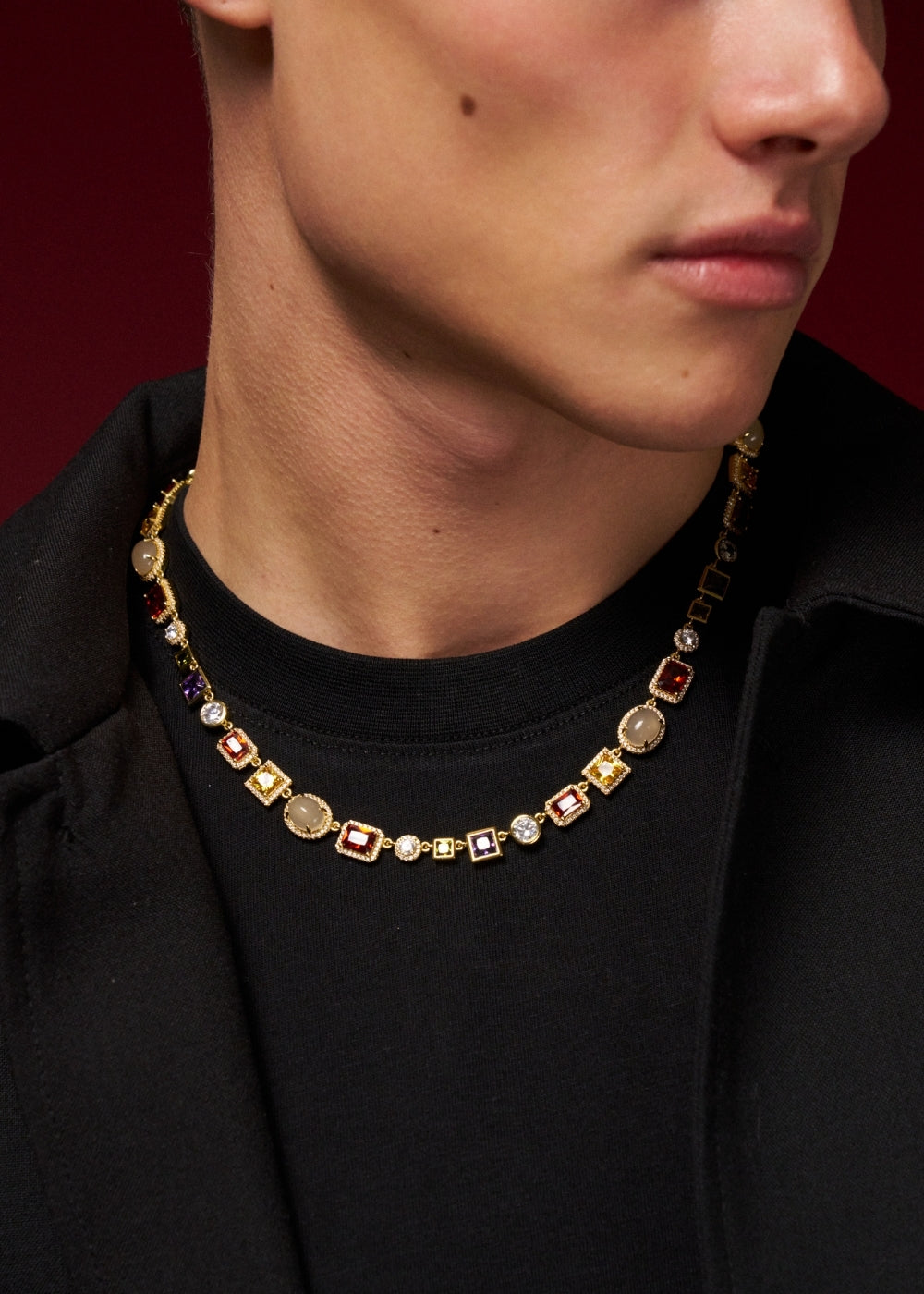
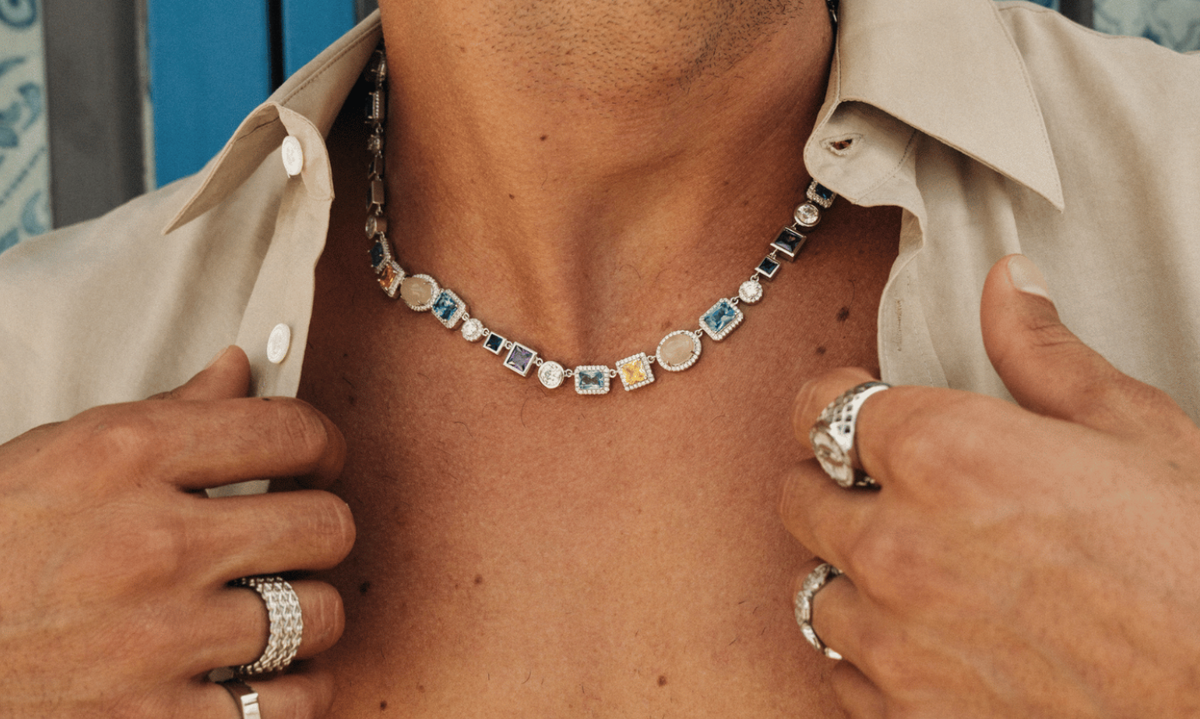
More colour, still led by blue. The Sapphire Gemstone Necklace lines up sapphire-toned stones with amber and amethyst hues, each sitting in either a bezel or a set of four claws, with rounded opals spaced between them and small pavé details along the coupled links. It's shown at 50cm, sitting just under the collarbone, and closes on a snap-proof clasp. There's a gold version in 18K gold too.

Open collar, cool stones. Featured: Sapphire Gemstone Necklace (Silver).

Blue suits the summer too. Featured: Sapphire Gemstone Necklace (Silver).

Blue first, warmer colours in between. Featured: Sapphire Gemstone Necklace (Gold).

Every stone in its own frame. Featured: Sapphire Gemstone Necklace (Gold).
For every stone and colour we make, browse our gemstone jewellery.
Sapphire tennis bracelets have been a classic for decades, and our blue tennis pieces take that look in a lighter, brighter direction. They aren't sapphire-hued like the pieces above: the Blue Tennis Bracelet lines up 3mm brilliant-cut blue stones all the way round, each in its own four-prong silver setting, shown at 19cm. The Blue Tennis Chain carries the same stones around the neck at 50cm.
It's the more playful way to wear blue, and it sits well next to a steel watch. If tennis jewellery is new to you, our guides to the tennis bracelet and the tennis chain explain where the style came from. More pieces like it live in our iced range.

A brighter blue, all the way round. Featured: Blue Tennis Bracelet (Silver) 3mm.

The same blue at the neck. Featured: Blue Tennis Chain (Silver) 3mm.
Funnily enough, the ancient word that gave us "sapphire" most likely described lapis lazuli. The two have been confused for thousands of years, but they're very different stones: sapphire is a transparent crystal that throws light back at you, while lapis is an opaque, matte blue rock, often flecked with gold.
Both the Blue Clover Stone Necklace (also in silver) and the Blue Gemstone Clover Necklace belong to that lapis family, with a navier, earthier blue. Lapis has its own meanings, and you'll find them in the lapis lazuli section of our gemstone guide. Choose sapphire if you want sparkle; choose lapis if you want something flatter and more grounded.
Sapphire has been linked with truth, faithfulness and clear thinking for centuries, so you'll find it on medieval bishops' rings and royal engagement rings alike. Treat that as tradition rather than a promise. For most men, a sapphire marks a commitment or a birthday, or is simply the blue they like best.
No. We use sapphire-hued stones rather than natural sapphire, held in silver or gold settings with a finish that resists scratches and fading. You get the depth of blue for the price of a good shirt, and nothing to fret over if it takes a knock.
Under a loupe, natural sapphire usually shows small crystals, silk-like needles or uneven bands of colour. Curved growth lines suggest an older lab-made stone, and perfectly round bubbles suggest glass. Most natural sapphires are also heated to lift their colour, so for a valuable stone, insist on paperwork from a recognised gem lab.
Almost every colour except red, which is called ruby. Blue is the classic, but pink, yellow, green, violet, white and the pinkish orange padparadscha are all sapphires, which jewellers group together as fancy sapphires.
Yes. Sapphire is the birthstone for September, and it also marks the forty-fifth wedding anniversary.
It's probably the easiest of all. Blue is already the colour most men wear, so a sapphire pendant ties in with navy, denim and grey without any effort. It suits silver and gold equally, and almost any skin tone.
Sapphire is a clear, faceted crystal that sparkles. Lapis lazuli is an opaque rock, usually polished flat, with a matte, slightly chalky blue and often flecks of gold. Both have long been tied to wisdom and truth.
We'd keep it out of the water. Soap builds up behind the stone and clouds it, and chlorine and salt water are hard on settings and finishes. Put it on after the shower and fragrance, give it a quick polish on a soft cloth every so often, and keep it in its own pouch.
If you've never worn a coloured stone, sapphire is the one to try first. It works with clothes you already have, it carries centuries of meaning without shouting about it, and it looks as right at a desk as it does on a beach.
Begin with a single stone from our stone pendants, or take your time with the full gemstone range.
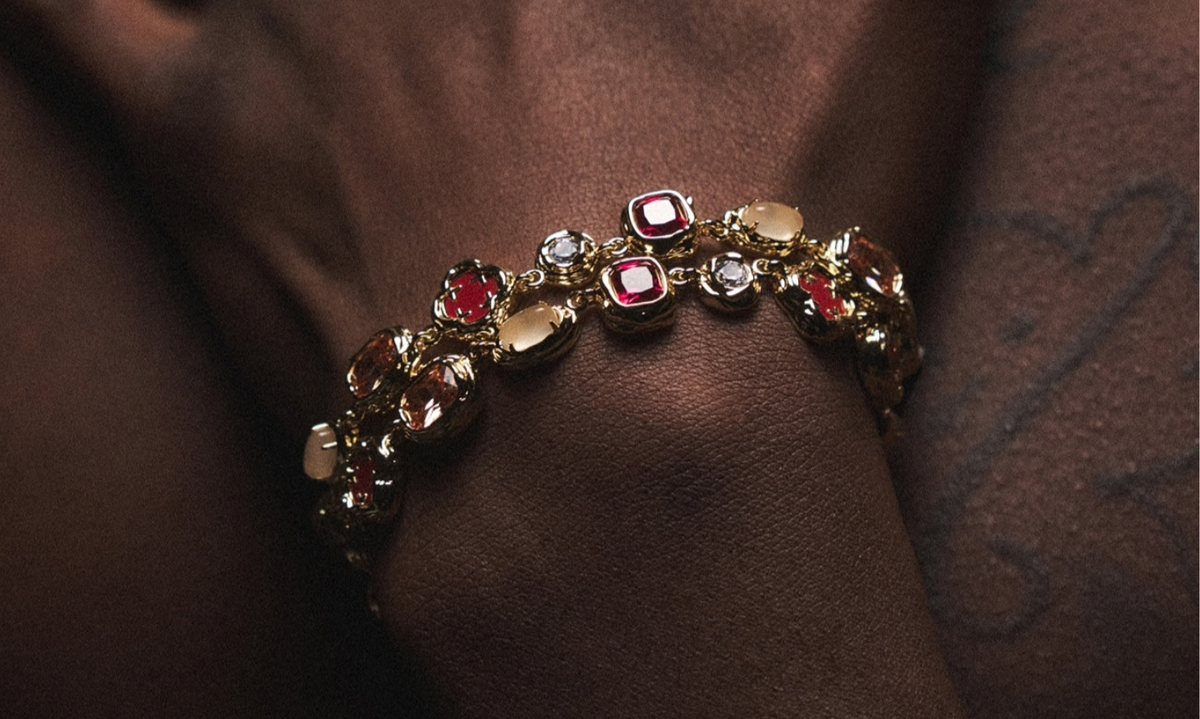
Ruby for Men: What the Red Stone Means and How to Wear It
Thinking about a red stone? Here’s what ruby has stood for since ancient times, how it differs from the stones mistaken for it, and how to wear a ruby pendant or bracelet with confidence.
Read more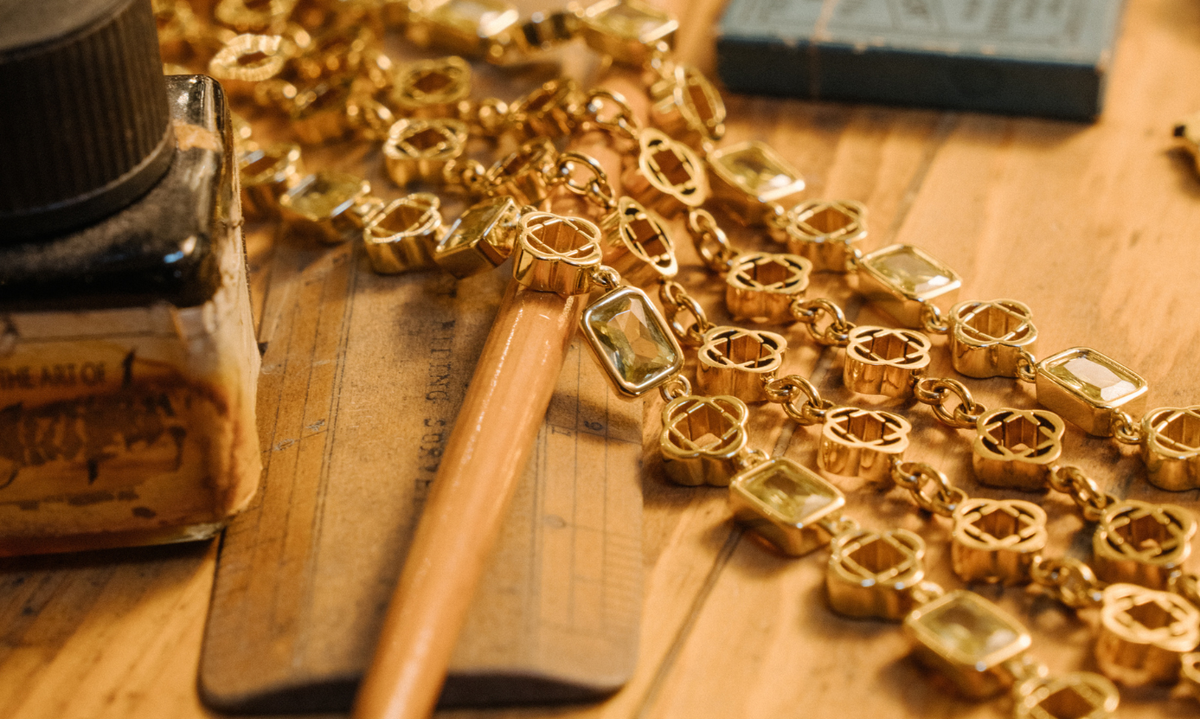
Citrine for Men: Meaning, Myths and How to Wear It
Yellow is the colour most men steer clear of, which is exactly why one citrine stands out. Here’s what citrine means, where its colour really comes from, and how to wear a yellow gemstone necklace ...
Read more

Leave a comment
This site is protected by hCaptcha and the hCaptcha Privacy Policy and Terms of Service apply.