



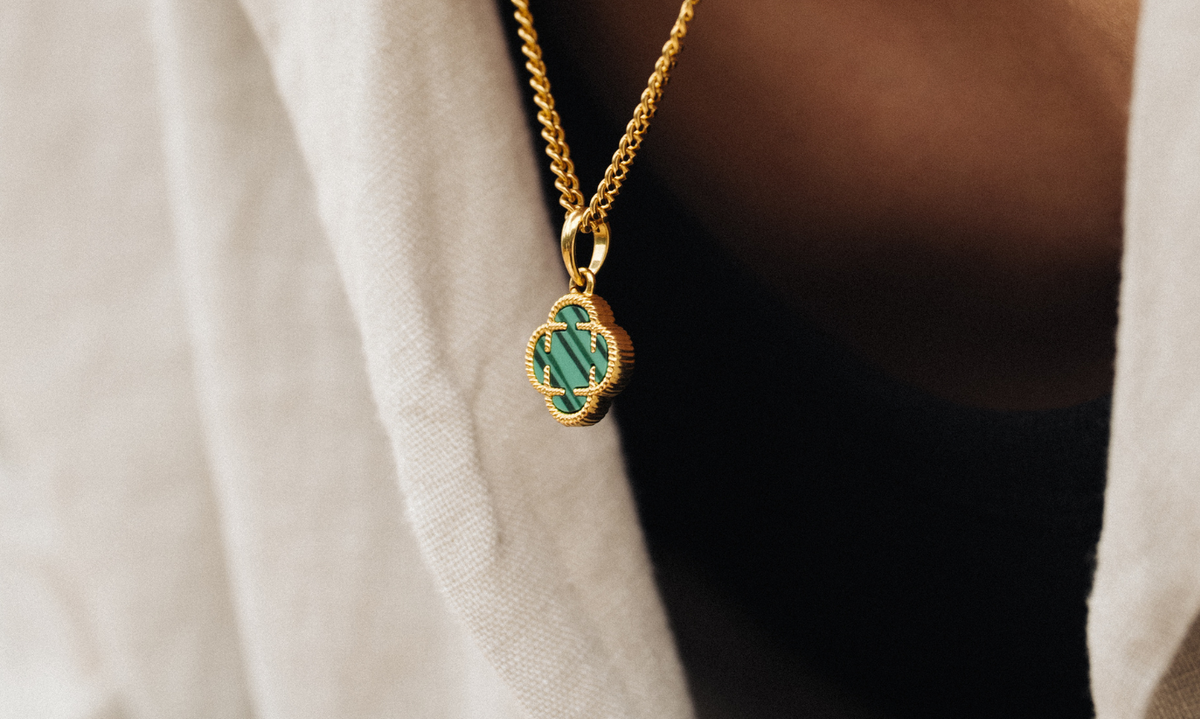
Why Men Wear Clover Bracelets and Necklaces for Luck
What a lot of people don't realise is that the four-leaf clover isn't just a symbol someone designed. It's a real thing. One rare shape in a field of ordinary ones, easy to miss unless you're paying attention. That's why it felt like luck long before it ever became jewellery: you had to find it first.
A clover bracelet or necklace carries that same feeling. Not the promise that luck is on its way, but the reminder that rare things do happen, chances are worth taking, and faith, hope, love and luck are still worth keeping close. Here's what the four-leaf clover means, why men are wearing it now, and how to choose a piece that feels like yours.
Jump to:
- What does a four-leaf clover mean?
- Why are clover bracelets everywhere?
- Can men wear clover bracelets?
- How to wear a clover bracelet or necklace
- The best clover bracelets for men
- The best clover necklaces and pendants for men
- Do clover bracelets actually bring luck?
- FAQs
What does a four-leaf clover mean?
Each leaf carries something. Faith. Hope. Love. And the fourth, the one that makes it rare: luck.
Worth being clear on a distinction first, because the two get mixed up constantly. The shamrock has three leaves and belongs to Ireland and its faith. According to Irish tradition, Saint Patrick used it to explain the Holy Trinity, one leaf per person, which is why it became a national symbol. The four-leaf clover is the rarer cousin, and it picked up a meaning of its own. Jewellery almost always uses the four.

Featured: Clover Bracelet (Silver), also in Gold
The symbolism runs further back than Saint Patrick. In Celtic tradition, druids were said to prize the four-leaf clover because it let the carrier see evil coming, an early warning system you could hold in your palm. Centuries later the Victorians folded it into the language of flowers, where a four-leaf clover pressed into a letter was said to mean think of me. And there are accounts of soldiers in the First World War carrying found clovers through the trenches, tucked into pay books and letters home, small green proof that their luck hadn't run out yet.
Different centuries, same instinct. When the odds are against you, you carry the thing that beat the odds.

Here's a detail most wearers don't know: science still can't fully explain it. Researchers have traced the fourth leaflet to a rare gene that only sometimes expresses, nudged by conditions nobody has completely mapped. Part inheritance, part environment, part chance. Even the people who study clover can't tell you when a fourth leaf will appear. For a luck symbol, that feels about right.
Why is everyone wearing a clover bracelet?
The short answer: a French luxury house made the shape famous on pieces that cost more than a car, social media pushed the silhouette from women's jewellery into menswear, and stone-set clovers became one of the most searched pieces in men's jewellery almost overnight. Footballers wear them at training grounds. Musicians wear them on stage. Your feed has been quietly filling with them for two years.

Featured: Clover Bracelet (Gold)
But the clover has been in jewellery far longer than the algorithm. Victorian jewellers worked it into lockets and brooches as a token of good fortune more than a century ago. What's changed is only who's wearing it.
And trends only carry a symbol so far. The clover stuck in menswear because it earns its place. It's geometric enough to feel masculine, soft enough to feel considered, and it means something without shouting about it. A cross makes a statement of faith. A clover makes a quieter one: I'll take my chances, and I fancy them.

Featured: Onyx Clover Stone Necklace (Gold)
Can men wear a clover bracelet?
Yes. Without qualification.
Men have worn talismans for as long as jewellery has existed. Saints for protection, compasses for direction, signets for identity. The clover sits in that same lineage, and it was never gendered to begin with. The druids who prized it, the soldiers who pocketed it, the travellers who pressed it into letters: the clover has been a working man's charm for most of its history. The jewellery cabinet came later.

If anything, it's one of the easier symbols to start with. It carries no religious weight unless you want it to, it works in silver or gold, and the shape reads clean at any size. The onyx and malachite versions in particular sit firmly on the masculine side of the line: dark stone, tight setting, no shine for the sake of it.
How to style a clover bracelet or necklace
On the wrist, stacked or solo. A clover stone bracelet works alone, but it's built for a stack. Pair an onyx clover with a plain Cuban chain bracelet and let the stones do the talking. Two clover bracelets in different stones, one dark, one pale, is the easiest two-piece stack in men's jewellery right now.
On the neck, keep the chain simple. A clover pendant wants a plain chain under it. Cuban or rope, 3mm or under. If you layer, put the clover on the shorter chain and something quieter below it, a plain chain or a small pendant with room to breathe.

Layer it with meaning. The clover sits naturally alongside our other meaning-led pieces. A clover and a cross reads as faith and fortune. A clover and a North Star reads as luck and direction. Keep it to two symbols. Three starts to look like a story you're telling everyone else.
The best men's clover bracelets
Our Clover collection runs across bracelets, necklaces, pendants, and rings, in silver and 18K gold. The bracelets are where most men start, so we'll start there too.
Clover Bracelet
The clean one. A series of four-leaf clovers in solid metal, each framed by beaded edges and subtle engraving. No stones, no colour, just shape. This is the version for the man who wants the symbol at its most understated, and it's the easiest entry point into the whole collection. Available in gold and silver, built on a stainless steel core with our scratch and fade-resistant finish.

Onyx Clover Stone Bracelet
The one most men start with. Deep black onyx set into each clover, framed in silver or 18K gold. Onyx has long been associated with focus and self-discipline, which sits well inside a luck symbol: fortune favours the prepared. Wears clean with a watch, disappears under a cuff, holds its own with a tee.

Green Clover Stone Bracelet
The green one, and the closest to the clover's roots. Malachite's banded green is traditionally linked with protection, and no two stones pattern the same way, so no two bracelets match exactly. Fitting, for a symbol you're supposed to find rather than buy. In gold, it's the richest colour combination in the collection. Also in silver for a cooler read.

Mother of Pearl Clover Stone Bracelet
The palest one, and the most understated in the stack. Mother-of-pearl set into each clover reads clean against silver or gold, closer to bone than shine, and it's the easiest stone to wear daily without a second thought. In silver or gold, it pairs naturally with either the onyx or malachite bracelet if you're building a stack, giving the contrast somewhere pale to land.

Clover Stone Bracelet Set
Two bracelets, one stack, better price than buying separately. The set pairs your choice of onyx, white, and malachite, so the contrast is built in from day one. Also in gold. If the stacked look is what brought you here, this is the shortcut.
You can see every stone and metal in the clover bracelet collection.
The best men's clover necklaces and pendants
Same symbol, worn where it gets noticed first. The clover necklace collection splits two ways: a single pendant on a chain, or a full run of stone-set clovers along the neckline.
Clover Pendant
A single four-leaf clover, perfectly weighted, with beaded edges that catch the light as you move. Suspended from a Cuban chain in gold or silver. This is the piece for the man who wants one symbol, worn daily, without rotation. Put it on once and forget about it. Until someone asks.


Onyx Clover Stone Necklace
The bracelet's counterpart for the neckline. A run of onyx-set clovers in silver or 18K gold, sitting at 50cm. More presence than a single pendant, still restrained enough for every day. If you've seen the clover necklaces everywhere lately, this is that look, CRAFTD to last.

Green Gemstone Clover Necklace
The elevated one. Radiant-cut emerald green stones, handset and framed within a bezel setting, each one anchored by a clover in silver or 18K gold. This is the piece that gets noticed across a table. Save it for open collars and good evenings.

Beyond those, the collection runs deeper: blue lapis, white mother-of-pearl, and red coral stone bracelets, the Clover Link Necklace, and the Mini Lucky Clover for a smaller-scale version.
Does a clover bracelet actually bring good luck?
We're not going to promise you that. Nobody honest can.
But there's a well-known experiment worth knowing about. Psychologists in Germany handed golfers a ball and told half of them it was lucky. The "lucky ball" group sank around a third more putts. Same ball, same green, same golfers. Later researchers struggled to repeat the result, which, for a study about luck, feels about right.

The point isn't that the ball did anything. It's that the belief did. A charm doesn't change your odds; it changes how you play them. Steadier hands, one more attempt, a bit more conviction in the moments that decide things. That's what a clover on your wrist is really for. Not magic. A reminder, worn where you'll see it, that fortune tends to find the people already moving.
FAQs
What does wearing a clover bracelet mean?
The four-leaf clover traditionally represents faith, hope, love, and luck, one meaning for each leaf. Wearing one is generally read as a quiet nod to good fortune. For most men it's less superstition, more reminder: rare things are worth looking for.
What does a four-leaf clover signify?
Rarity, above everything. At odds of roughly one in 5,000, a four-leaf clover can't be planted or bought, only found. Its four leaves are traditionally said to stand for faith, hope, love, and luck.

What are those clover necklaces everyone is wearing?
A run of stone-set four-leaf clovers spaced along a chain, usually in onyx, mother-of-pearl, or malachite. The style was popularised at the luxury end and has since become a menswear staple. Our Onyx Clover Stone Necklace is that exact look, built for daily wear.
Why are men wearing Van Cleef bracelets?
Van Cleef & Arpels' Alhambra bracelets became a status signal in menswear over the past few years, worn by athletes and musicians and amplified by social media. Most men drawn to the look aren't after the label, though. They're after the symbol, which existed for centuries before any brand set it in stone.
What brand is the clover bracelet from?
The most famous version is Van Cleef & Arpels' Alhambra, which starts in the thousands. But the four-leaf clover itself is a centuries-old symbol that no brand owns. Our Clover collection is our own take on it: stone-set clovers built for daily wear, covered by a lifetime guarantee.
Is the Van Cleef clover symbol religious?
No. The Alhambra motif is inspired by the four-leaf clover, a luck symbol rather than a religious one. The similar quatrefoil shape does appear in Gothic church architecture and Moorish design, so the association isn't baseless, but a clover piece carries no religious meaning unless you give it one.
How can you tell if a clover bracelet is real?
Check three things. The stones: real onyx, malachite, or mother-of-pearl has natural depth and variation, not a flat printed finish. The setting: quality pieces bezel-set or frame each stone rather than gluing it flat. The backing: look for hallmarks, stated materials, and a guarantee the brand is willing to put in writing.
Is a four-leaf clover a real thing?
Yes. A four-leaf clover is a real, naturally occurring variation of the common three-leaf clover, caused by a rare genetic mutation and the growing conditions around it. Nobody manufactures a four-leaf clover to order, which is exactly why finding one still means something: at odds of around one in 5,000, it comes down to chance, not choice.
Find the one that feels like yours
The clover has survived druids, saints, trenches, Victorian lockets, and the modern algorithm. Symbols don't last that long by accident.
You can't find a four-leaf clover on demand. You can wear the reminder. Whether you start with a single pendant or a stacked pair of stone bracelets, the full collection is here.

Your next reads
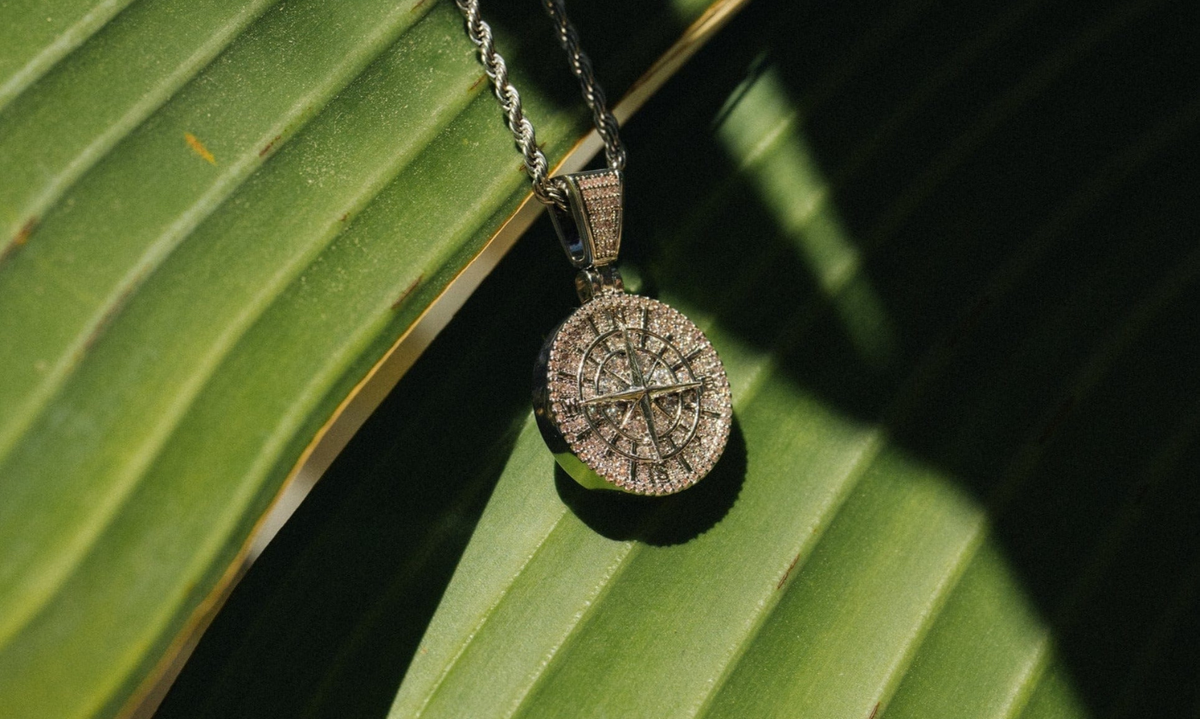
Compass Necklace Meaning: Why Men Wear the Symbol of Direction
A compass pendant says you’re moving towards something. A place, a purpose, a promise, or a quiet reminder not to lose your way. Here’s the story behind the symbol, and why men still wear it today.
もっと見る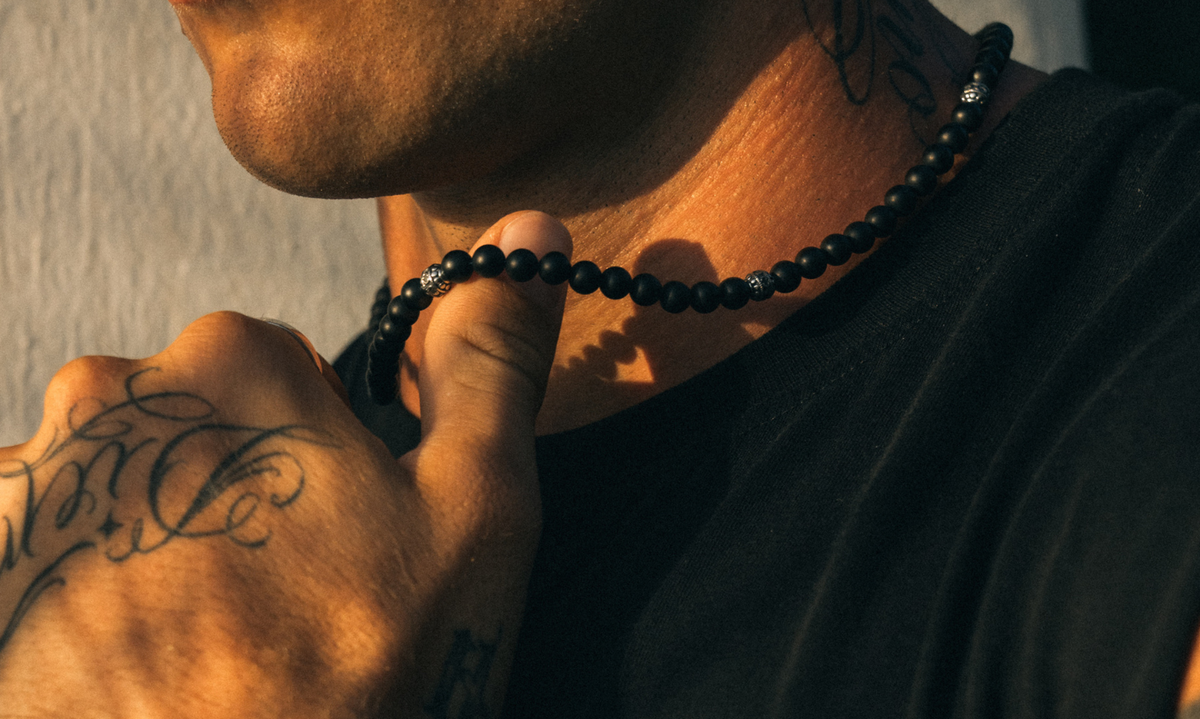
Black Onyx Jewellery for Men: Meaning, Benefits and How to Wear It
Black onyx has been worn for strength and focus for 2,000 years. Discover what the stone means, its benefits, and how to wear an onyx ring, necklace or bracelet.
もっと見る
コメントを書く
このサイトはhCaptchaによって保護されており、hCaptchaプライバシーポリシーおよび利用規約が適用されます。