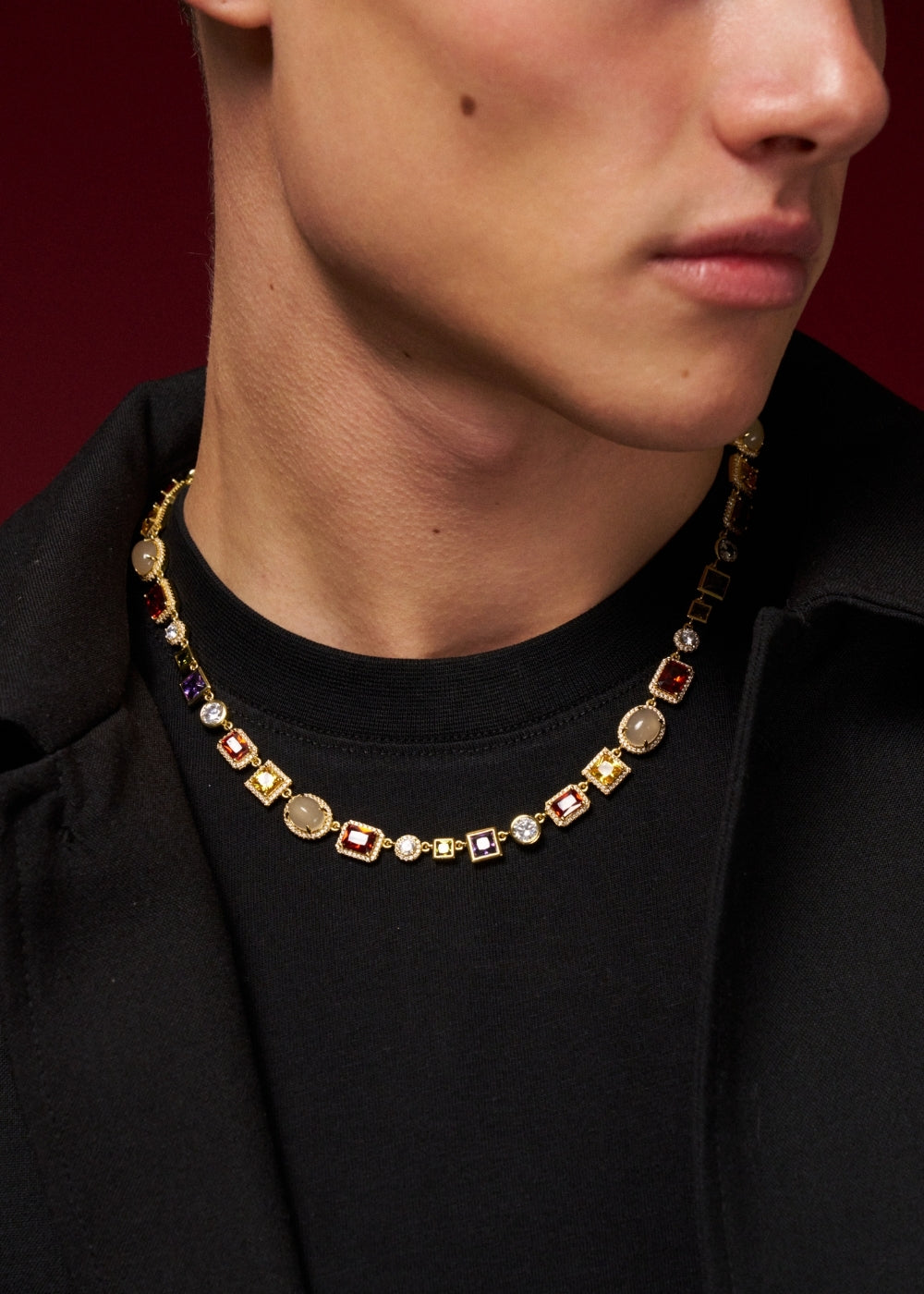
GEMSTONES
SHOP NOW


Cart
Your cart is empty
Your gifting options
Make your gift extra special with our luxury packaging options. Select a gift bag, gift box or a combination to create the perfect presentation.

Luxury Gift Box, Gift Bag & Wrapping Kit (£7.99)
Includes: CRAFTD Luxury Gift Box, Gift Bag, Tissue Wrapping Paper & Ribbon

Meaning Card (£1.99)
Add more meaning to your gift with a meaning card included with your order.
15 variations available

Gift Bag, Ribbon & Wrapping (£4.99)
Ideal for items that already include a gift box.
Includes: Premium CRAFTD Gift Bag, Ribbon & Tissue Wrapping. Doesn’t include: Luxury Gift Box.

Luxury Gift Box (£4.99)
Present your gift in our signature gift box, designed to impress before it’s even opened.
Includes: Premium gift box
Choose your option
To My Boyfriend

To My Husband

To My Soulmate

To My Son

To My Grandson

To My Brother

To My True Friend

To My Dad

A Symbol Of Strength

A Symbol Of Faith

A Symbol Of Protection

A Symbol of Luck

A Symbol Of Safe Travel

A Symbol Of Self Belief

A Symbol Of Adventure

The lemon and salt trick works. That's exactly why it's dangerous.
Every guide to cleaning copper reaches for the same three methods: lemon juice, vinegar, or ketchup, all with salt. They work, and the chemistry behind why is straightforward. What almost none of them tell you is that those methods cannot distinguish between the tarnish you want gone and the finish you paid for. Used on the wrong piece, they take sixty seconds to remove something that took the maker hours to put on, or that took your ring five years to develop.
So before any method, the question is what you're actually looking at. Copper goes through four distinct states, they look broadly similar to most people, and two of them should be left alone.
Below: how to tell them apart, how to check whether your piece is sealed, the methods and the chemistry, and the cases where the acid approach is the wrong call.
Jump to:
Copper is one of the most reactive metals people wear, and it doesn't react in only one way. Getting this right is most of the job.
| What it is | Colour | What's actually forming | How it sits on the piece | What to do |
|---|---|---|---|---|
| Tarnish | Brown, then darker brown to near black | Copper oxide, from air and moisture | Even across the whole piece, including raised areas | Remove it. This is the one everyone means |
| Patina | Deep brown through to dark chocolate | The same oxide, left to mature | Even, and it looks intentional and warm rather than grubby | Your call. Many pieces are sold for this |
| Verdigris | Blue-green, sometimes crusty | Copper carbonate, plus sulphates and chlorides | Patchy, usually in crevices and around settings | Remove it. It builds up and holds moisture |
| Applied patina | Black or deep brown in the recesses only | Chemically induced by the maker, then polished back | Only in the low points. Raised areas stay bright | Leave it. Cleaning flattens the design |
Two of those rows are the same chemistry viewed differently. Tarnish and patina are both copper oxide. The difference is time and taste: a few weeks of darkening reads as neglect, and a few years of it reads as character. Plenty of copper jewellery is sold specifically for the patina it will develop, and stripping it back to bright pink is a choice rather than a repair.
Verdigris is a different compound and a different problem. That blue-green crust is mostly copper carbonate, with sulphates and chlorides depending on what the piece has been exposed to. It's harmless on skin, but it collects in crevices and around stone settings, holds moisture against the metal and speeds up further corrosion. That one comes off.
An applied patina is the one to be careful with. Makers darken copper deliberately, then polish the raised surfaces back to bright so the recesses stay dark and the detail stands out. If the black sits only in the engraved lines and the high points are shiny, that's design. Clean it with soap and water and nothing else.
This is the step that no home-remedy guide includes and the one most likely to save your piece.
A lot of commercial copper jewellery is finished with a clear lacquer to stop it tarnishing, especially anything sold as low-maintenance or anything that arrived bright and stayed bright. Acid strips lacquer, and it strips it unevenly. You end up with a patchwork of bare copper and intact coating that looks considerably worse than the tarnish you started with, and the only fix is removing the rest of the lacquer and starting again.
A sealed piece has a faint gloss to it, slightly plasticky under a good light rather than the softer sheen of bare metal. It will also have stayed bright far longer than bare copper does. If a piece has been worn regularly for a year and has not darkened at all, it is sealed. Bare copper does not behave that way.
Worn lacquer gives itself away too: you'll see darkened patches in the places the piece rubs, like the underside of a ring or the inside of a bangle, while the protected areas stay bright. That patchiness is the coating failing rather than uneven tarnish.
For a sealed piece: mild soap, warm water, soft cloth, dry it. That is the whole method. No acid, no polish, nothing abrasive.
Assuming bare, unsealed copper with no applied patina and no soft stones, work up in strength rather than starting at the top.
Mild washing-up liquid in warm water, a ten minute soak, a soft cloth or soft-bristled toothbrush, a proper rinse and a thorough dry. A surprising amount of what looks like tarnish is skin oils and residue sitting on top of the metal, and this removes it without touching the copper at all. Always try this first.
If the metal underneath is genuinely dark, this is the method, and it's fast.
Make a paste with a tablespoon of salt and enough lemon juice or white vinegar to bind it. Work it over the piece with your fingers or a soft cloth. The change is immediate, usually under a minute. Rinse thoroughly under running water, then dry completely.
The chemistry is worth knowing because it tells you the limits. The acid dissolves the copper oxide layer, and the salt supplies chloride ions that speed the reaction up considerably. Neither ingredient is gentle and neither knows when to stop, which is why the rinse matters: acid left on copper keeps working after you have put the piece down.
Ketchup works, and it isn't a gimmick. It contains vinegar and salt, so it's the identical acid-and-salt reaction in a form that happens to cling to a surface. It's slower, messier and more expensive than mixing your own, and its advantage is that most people already have it. There's nothing special about the tomato.
Effective, and mildly abrasive by design, which means every use removes a very thin layer of metal. Fine occasionally on a solid copper piece. Not for anything plated, anything sealed, or anything with an applied finish.
Five cases. On any of these, stop at soap and water.
The most-asked question about copper, and the answer is more interesting than "it's cheap metal."
Copper reacts with moisture and with the acids in your sweat to form copper salts and chelates. Those compounds are green, they sit on the surface of the metal, and they transfer to your skin wherever the piece makes contact. It's harmless, it isn't an allergy, and it washes off with soap and water.
How fast it happens is mostly down to you rather than the piece. Skin pH varies between people, sweat composition varies, and hand creams, sun cream and even the local humidity all change the rate. The same ring will mark one person within a day and another not at all, which is why it's a poor test of quality on its own.
What it does reliably tell you is that there is copper in contact with your skin, and that's useful information on a piece that isn't sold as copper. On a plated chain or ring, green skin usually means the finish has worn through to a copper or brass base underneath. Our guide to cleaning metal jewellery covers that case, along with why copper alloys are also the main cause of the metallic smell people notice on jewellery.
You can't stop it. Tarnishing is simply what copper does in air, and any piece that never darkens has been sealed. What you can do is slow it considerably.
Keep it dry. Take it off before washing your hands, showering, swimming or the gym. Water and sweat are the accelerant here more than air is.
Put it on last. Hand cream, sun cream and aftershave all speed up the reaction. Let them dry first.
Store it sealed. A sealed bag with the air pressed out does more than a jewellery box. An anti-tarnish strip in the bag helps. Silica gel sachets are worth keeping for this.
Wipe it down after wearing. Ten seconds with a dry cloth removes the sweat and oils that would otherwise work on the metal overnight.
Consider a coating, with clear eyes about it. Renaissance wax or a clear jeweller's lacquer will keep a piece bright for months. Both eventually wear through in the high-contact areas, and then the piece needs stripping and redoing rather than touching up.
Copper has a real appeal. It's warm in a way that yellow gold isn't, it ages into something individual, and it's inexpensive enough to experiment with.
It's also the highest-maintenance metal you can wear. It tarnishes in weeks, it marks your skin, it reacts with almost everything, and every bright-copper photograph you've seen was taken shortly after a clean. If you enjoy the ritual, none of that is a problem. Plenty of people do.
If what you actually wanted was the warm tone rather than the upkeep, rose gold is the closer match than yellow gold is. Our rose gold is a blend of 18K gold and copper, so the copper is alloyed into gold rather than sitting on your skin as the whole piece, and it reacts far more slowly as a result. It's finished over a 316L stainless steel core and sealed, which slows it further again. Solid rose gold can still deepen very slightly over years, because the copper is still copper.
That's a genuine trade rather than an upgrade. You give up the patina that makes copper interesting and you get a metal you don't have to think about. Our rose gold range runs across chains, bracelets and rings, and our guide to cleaning gold jewellery covers how to look after it.
Start with mild washing-up liquid and warm water, which handles ordinary dirt and skin oils without touching the metal itself. If the piece is genuinely tarnished and you want it bright again, a paste of salt and lemon juice or salt and white vinegar removes copper oxide in under a minute. Rinse thoroughly and dry completely, because any acid left on copper keeps working.
Yes, and it isn't a novelty. Ketchup contains vinegar and salt, which is the same acid-plus-salt combination that dissolves copper oxide in every other home method. It is slower and messier than mixing salt into vinegar yourself, and it costs more. It works because of chemistry rather than anything special about tomatoes.
Yes, with salt added and only on bare copper. Vinegar alone is weak, and the salt is what makes the reaction work. Do not use it on a lacquered piece, on anything with a porous stone like turquoise, or on a piece where the dark tone is a finish the maker applied deliberately.
A sealed piece looks slightly glossy and stays bright long after an unsealed one would have darkened, and it may show a faint film or a dull patch where the coating has worn. If a piece has kept its shine for a year of wear with no cleaning, assume it is sealed. Acid methods strip lacquer unevenly, which leaves a piece looking worse than the tarnish did.
Copper reacts with moisture and the acids in sweat to form copper salts and chelates, which transfer onto your skin. It is harmless and it washes off with soap and water. How quickly it happens depends on your own skin chemistry, the weather and what you put on your hands, which is why the same ring behaves differently on two people.
No. Verdigris is largely copper carbonate and it is not hazardous in the quantities found on a piece of jewellery. It is worth removing anyway, because it builds up in crevices, holds moisture against the metal and accelerates further corrosion. Wash it off rather than worrying about it.
The evidence says no. A randomised controlled trial led by Dr Stewart Richmond at the University of York, published in PLOS ONE in 2013, tested copper bracelets and magnetic wrist straps against placebo devices on 70 people with rheumatoid arthritis. Neither produced any meaningful benefit beyond placebo. The researchers attributed reported improvements to belief in the device and to symptoms naturally fluctuating over time. If you like wearing copper, wear it. It is not a treatment.
You slow it rather than stop it. Keep it dry, take it off before washing your hands, store it in a sealed bag with the air pushed out, and wipe it down after wear. Some people apply a thin coat of clear lacquer or renaissance wax, which works until it wears through and then needs redoing. Tarnishing is what copper does, and a piece that never darkens is a piece that has been sealed.
Work out which of the four states you're looking at, check whether the piece is sealed, then start with soap and water and only reach for salt and acid if the metal underneath is genuinely dark. Rinse properly, dry completely, and store it in a bag rather than in the air.
If you're looking at moving away from copper, our rose gold pieces are the nearest tone, and bracelets and rings are where most copper wearers start looking. For care across other metals, how to clean metal jewellery covers the full range.

How to Clean Metal Jewellery: Tarnish, Oxidation and That Metallic Smell
The metallic smell on a piece of jewellery is not coming from the metal. It is a compound made out of the oils on your own skin, with the metal acting as the catalyst. That one fact changes how you...
Read more
How to Clean Sterling Silver Without Polishing It Away
Every time you polish silver, a little of the silver leaves with the tarnish. There is one method that does the opposite: it converts the tarnish back into silver and puts it on the piece. Here is ...
Read more

Leave a comment
This site is protected by hCaptcha and the hCaptcha Privacy Policy and Terms of Service apply.