GEMSTONES
SHOP NOW


Cart
Your cart is empty
Your gifting options
Make your gift extra special with our luxury packaging options. Select a gift bag, gift box or a combination to create the perfect presentation.

Luxury Gift Box, Gift Bag & Wrapping Kit (¥1,800)
Includes: CRAFTD Luxury Gift Box, Gift Bag, Tissue Wrapping Paper & Ribbon

Meaning Card (¥500)
Add more meaning to your gift with a meaning card included with your order.
15 variations available

Gift Bag, Ribbon & Wrapping (¥1,100)
Ideal for items that already include a gift box.
Includes: Premium CRAFTD Gift Bag, Ribbon & Tissue Wrapping. Doesn’t include: Luxury Gift Box.

Luxury Gift Box (¥1,100)
Present your gift in our signature gift box, designed to impress before it’s even opened.
Includes: Premium gift box
Choose your option
To My Boyfriend

To My Husband

To My Soulmate

To My Son

To My Grandson

To My Brother

To My True Friend

To My Dad

A Symbol Of Strength

A Symbol Of Faith

A Symbol Of Protection

A Symbol of Luck

A Symbol Of Safe Travel

A Symbol Of Self Belief

A Symbol Of Adventure

"Jewellery styles" means three different things, and that's why searching it is confusing. It can mean the overall look you're going for, the type of piece, or the pattern of links on a chain. This guide takes all three in that order, because you need the first one before the other two make any sense.
Below we'll go through the seven styles men actually wear, what each one looks like and who it suits, then the piece types and the link patterns underneath them.
Jump to:
Ask three people what jewellery style they wear and you'll get three different kinds of answer.
The aesthetic. Minimalist, classic, statement. This is the look you're going for, and it's the one that decides everything else. It's what the rest of this page is mostly about.
The piece type. Chain, pendant, ring, bracelet, earring. What you're actually buying. A minimalist and a statement wardrobe can contain exactly the same list of piece types and look nothing alike.
The link style. Cuban, Figaro, rope, box, wheat. The pattern of the metal itself, and only relevant once you've settled on a chain. It's the most technical of the three and the one people reach for last.
Get them in the wrong order and you end up comparing a rope chain to minimalism, which are not alternatives to each other. Settle the aesthetic first and the other two answer themselves.
These aren't trends. Every one of them has been worn continuously for decades, and none of them will look dated in five years.
Thin gauges, small pendants, and a lot of skin left showing. Minimalist isn't the absence of jewellery, it's the deliberate restraint of it, and the distinction matters. A man wearing nothing and a man wearing one 2mm chain are reading as two different things, and only one of them made a decision that morning.
It's the only style that never looks like it's trying, which is why it survives every wardrobe change you'll ever make and why it's almost impossible to get wrong. It's also the most underrated, because restraint photographs badly and looks right in person.
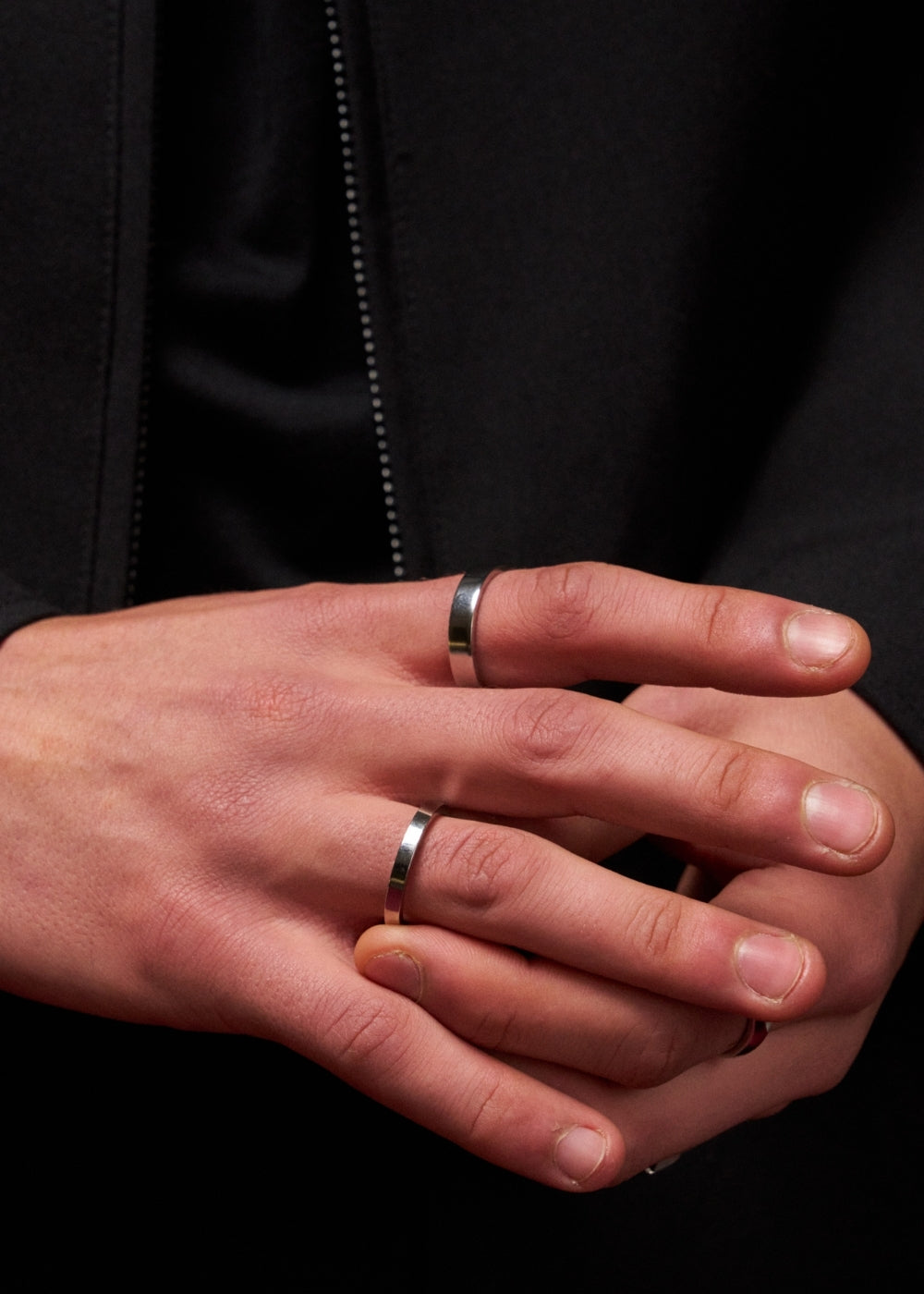
What it looks like: A 2mm chain that sits under a collar, a plain band, a small stud, a pendant you'd have to look twice to notice.
Who it suits: Anyone starting out, anyone who works somewhere conservative, and anyone who wants jewellery they'll stop noticing within a week. That last one is the highest compliment jewellery can get.
The mistake people make: Going too thin. There's a point below which a chain stops reading as minimal and starts reading as insubstantial, and on most men's necks that point is somewhere around 2mm. Restraint and flimsiness look different.
Where to start: the Minimals collection.
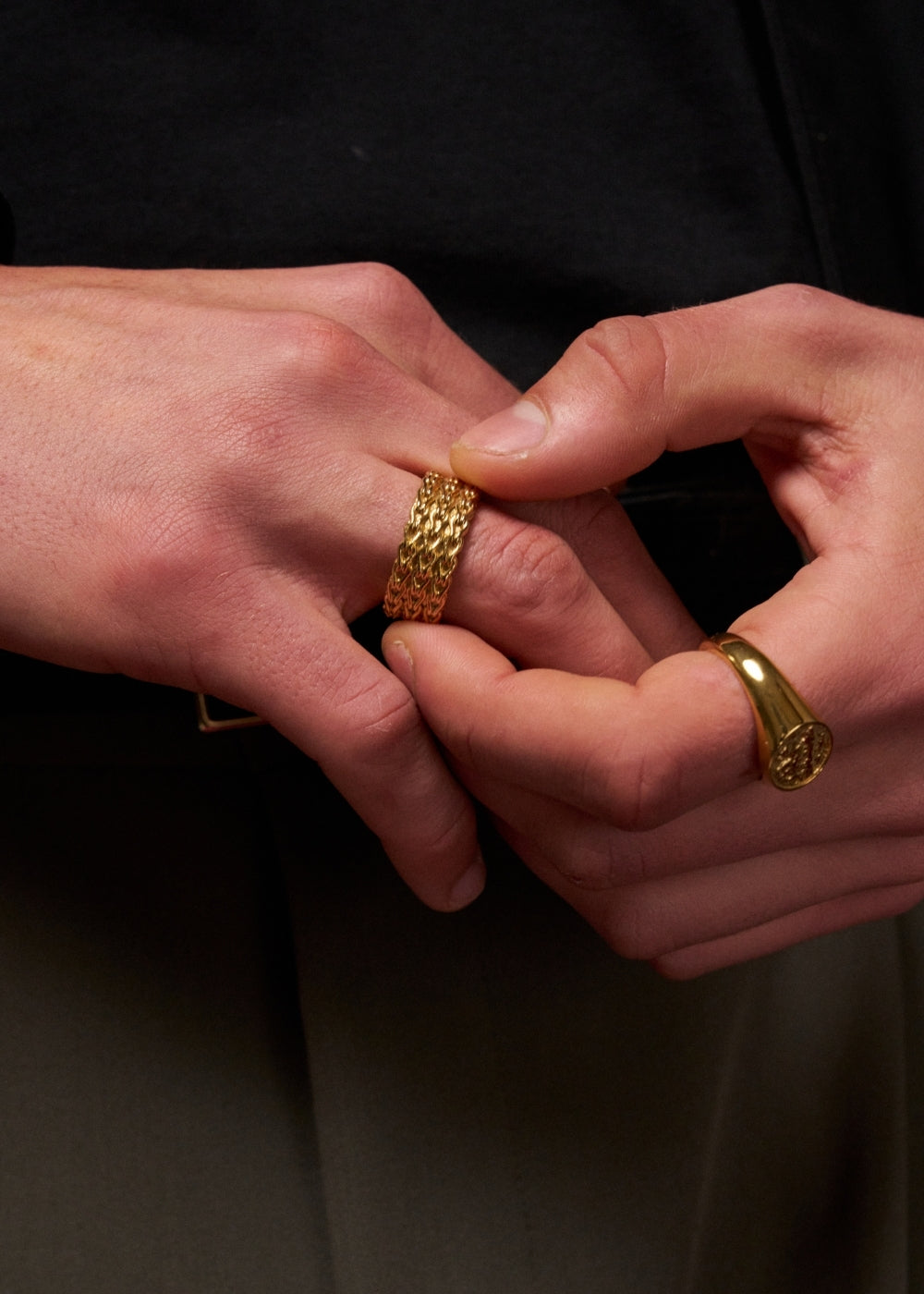
Classic and minimal get conflated constantly and they are not the same thing. Classic is a signet ring with real weight to it, one solid chain at a proper gauge, a watch that isn't attempting anything. The pieces are substantial. They just don't announce themselves.
It's understated because it's confident rather than because it's small, and it's the style with the least distance between how it looked in 1975 and how it looks now.
What it looks like: A signet ring, a 4 or 5mm Cuban worn on its own, a leather-strap watch.
Who it suits: Men who dress smartly most days, and anyone who wants jewellery that agrees with tailoring instead of arguing with it.
The mistake people make: Assuming classic means safe. A heavy signet ring is a bolder object than a thin chain is. It simply doesn't shout about it, and men who pick classic because they're nervous often end up wearing something more assertive than they realised.
Where to start: the bestsellers.
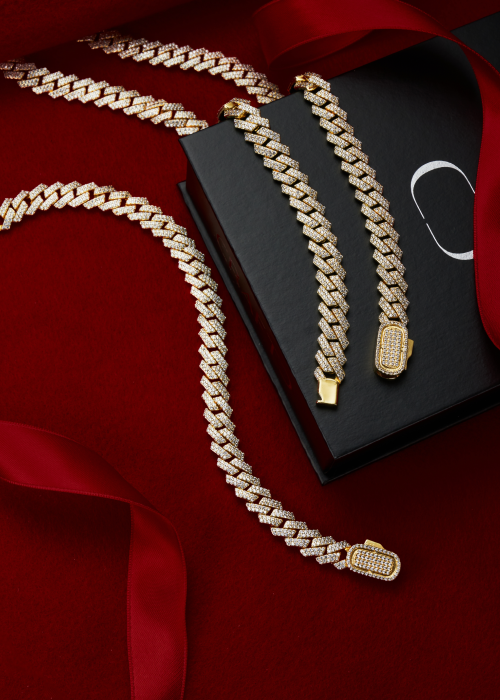
Heavy links, full stone coverage, presence you can see from across a room. This is the longest continuous tradition in men's jewellery, running from Mediterranean gold chains through to hip hop, and it's the style people are picturing when they say they couldn't pull it off.
Most of them could. What makes statement jewellery work is commitment rather than build or confidence, and the men it looks wrong on are almost always the ones who hedged.
What it looks like: A 12mm Cuban, a fully iced chain, a pendant with genuine scale to it.
Who it suits: Anyone who has decided to be seen, and anyone whose wardrobe is plain enough to carry it. Statement jewellery works best against simple clothes.
The mistake people make: Going big in increments. Working up from 4mm to 6mm to 8mm over two years reads as indecision, and you end up owning three chains you don't wear. Statement works when it's one decision, not a progression.
Where to start: the ICED range.
Crosses, saints, compass and star pendants, initials, anything you'd give a real answer about if someone asked what it was. This is the oldest reason anyone wore jewellery at all, older than decoration by a long way, and it's the only style whose appeal doesn't rest on an aesthetic argument.
It's also the most durable. Silhouettes date and metals go in and out of favour, but a piece that means something to you doesn't stop meaning it.
What it looks like: A cross, a St Christopher, a North Star, an initial, a piece someone gave you.
Who it suits: Anyone who wants a piece they won't get bored of, and anyone who finds the whole business of choosing jewellery slightly arbitrary. Meaning solves that problem.
The mistake people make: Buying the symbol because it looks good and hoping the meaning turns up later. It doesn't. Pick the one you'd actually explain, even if the one next to it is prettier.
Where to start: the pendants.
Signet rings set with a stone or cut with a crest, a pocket watch on a chain, pieces that look inherited whether or not they were. Vintage reads as heritage rather than fashion, which is why it sits so comfortably on men who'd never describe themselves as interested in jewellery.
It's the only style that actively improves with wear. Every other aesthetic on this page is at its best on day one and holds from there. A vintage piece gets better as the high points polish and the recesses darken, and that's the whole appeal.
There is also a practical advantage to buying vintage in Britain that does not exist everywhere: a British hallmark carries a date letter, so a genuinely old piece can be dated to the exact year it was assayed rather than guessed at. If you are buying second-hand, that mark is the difference between a piece with a history and a piece with a story. Our guide to wearing a pocket watch covers how to read one.
What it looks like: A black onyx signet, a pocket watch, a band worn thin enough to show its age.
Who it suits: Men who like objects with a story, and anyone whose wardrobe leans towards tweed, denim or workwear rather than sportswear.
The mistake people make: Over-polishing it back to new. The patina is the point, and a vintage piece cleaned to a factory finish has had the thing you bought it for removed.
Where to start: the onyx rings.
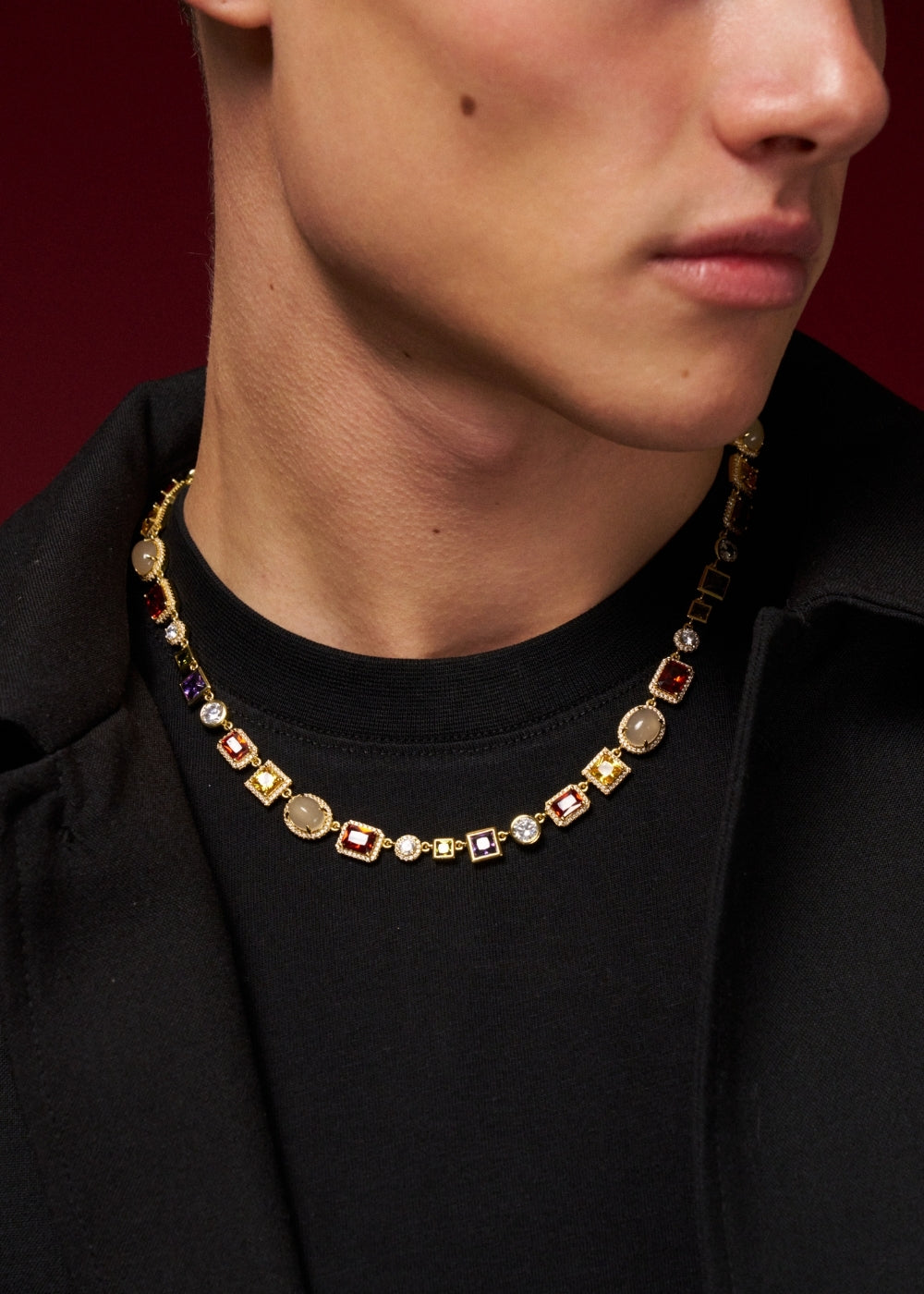
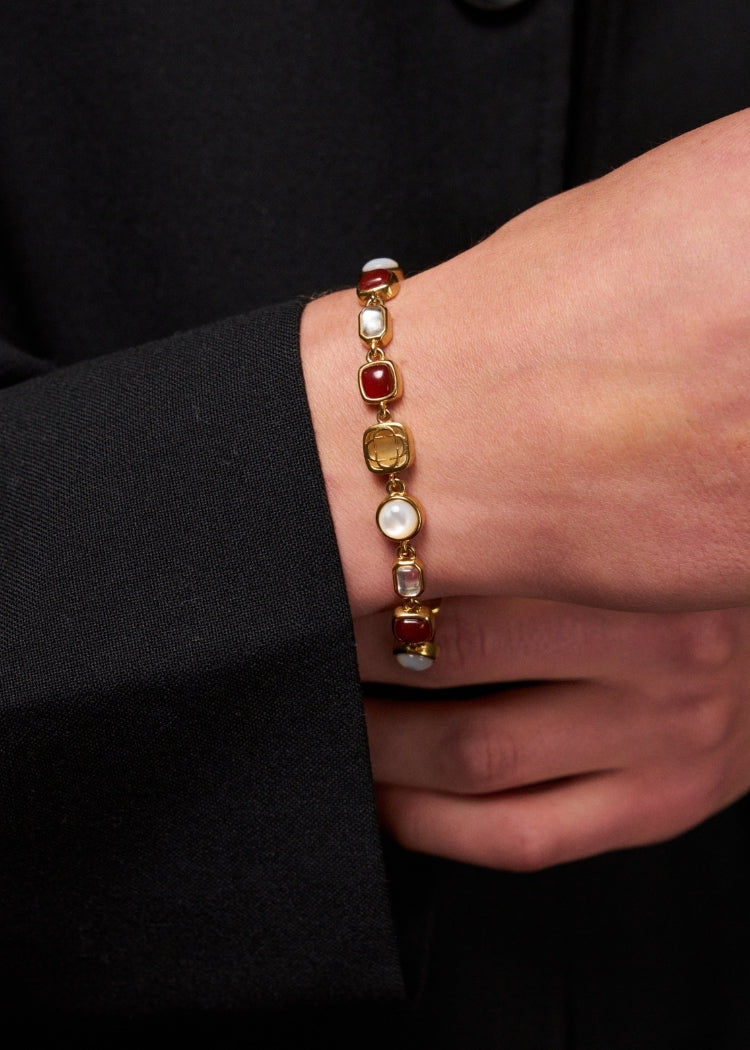
Onyx, tiger's eye, beaded bracelets, a single stone set in silver. This is how you bring colour into a look without leaving metal behind, and it's the most forgiving style on the page if you're still unsure between gold and silver, because the stone carries the piece and the metal becomes a frame.
It's also the style that does most for a stack, since stones give you variation that different chain weights can't.
What it looks like: A black onyx pendant, a beaded bracelet, a stone-set ring.
Who it suits: Anyone who wants texture rather than shine, and anyone building a stack where every piece needs to differ from the last.
The mistake people make: Treating all stones as equally hardy. Onyx takes daily wear without complaint; softer and more porous stones don't, and a ring takes more abrasion in a week than a pendant does in a year. Our guide to black onyx for men covers how a stone piece behaves day to day.
Where to start: the gemstone range.
Less an aesthetic than a method, and it belongs on this list because it's what people mean at least as often as any of the others. Two or three chains at different lengths, or a stacked wrist, worn together on purpose.
Done properly it's the clearest signal in men's jewellery that someone dresses deliberately, because matching is easy and layering takes a decision. Done badly it looks like you forgot to take something off.
What it looks like: Chains at 50, 55 and 60cm in varied gauges, or three bracelets that differ in weight.
Who it suits: Anyone who already owns three or four pieces and wants more out of them without buying anything new.
The mistake people make: Matching lengths and weights. Two chains at the same length and gauge read as one chain that's gone wrong. Vary both, or don't layer. The chain length guide has the spacing.
Where to start: the sets.
The useful question isn't which style is best, it's which one agrees with the clothes you already own and the amount of attention you actually want.
| If this sounds like you | Start here | Avoid for now |
|---|---|---|
| You've never worn jewellery and don't want to be noticed wearing it | Minimalist. A 2mm chain under a collar. | Iced anything. It's a big first step. |
| You wear a suit or smart clothes most days | Classic. A signet ring, one solid chain. | Stacking. It fights tailoring. |
| You want people to notice | Statement. Weight first, stones second. | Starting too thin and building up. Go once. |
| You want it to mean something rather than just look good | Symbolic. A pendant you'd explain. | Buying for the look and hoping meaning arrives. |
| You like things with a history to them | Vintage. Signet rings, a pocket watch. | Anything trend-led by definition. |
| You already own three or four pieces | Layering. Vary length and weight. | Adding a fifth piece in a new style. |
One thing worth saying that most style guides won't: if you've read down that table and one row made you slightly uncomfortable because it was accurate, that's the row. The style you keep looking at is usually a better guide than the style you've decided suits you.
Here's the thing almost no style guide will tell you, because it undercuts the premise of style guides: the right style at the wrong scale looks worse than the wrong style at the right one.
Width does more work than anything else on this page. The same Cuban chain at 2mm and at 10mm belongs to two entirely different aesthetics. One is minimalist and one is statement, and nothing about the design changed. If you've ever put on a chain and felt it wasn't you, the gauge was the culprit far more often than the style was.
Length decides where the eye goes. A 50cm chain sits at the collarbone and reads as neat. A 60cm chain sits mid-chest, shows above an open collar, and reads as deliberate. Same piece, different statement, and the difference is ten centimetres.
Build matters more than complexion does. A broader frame carries more metal comfortably; a narrower one gets overwhelmed by the same piece. This is a far more reliable guide than the undertone advice everybody leads with, and you can check it in a mirror in ten seconds rather than examining your wrist veins.
The practical version: pick the style you like, then spend the effort on getting the gauge and length right for you. That's where the result actually comes from, and it's the part people skip.
Once you know the look, this is what it's made of.
Only relevant once you've chosen a chain, but this is where a lot of people get stuck, because the names give nothing away.
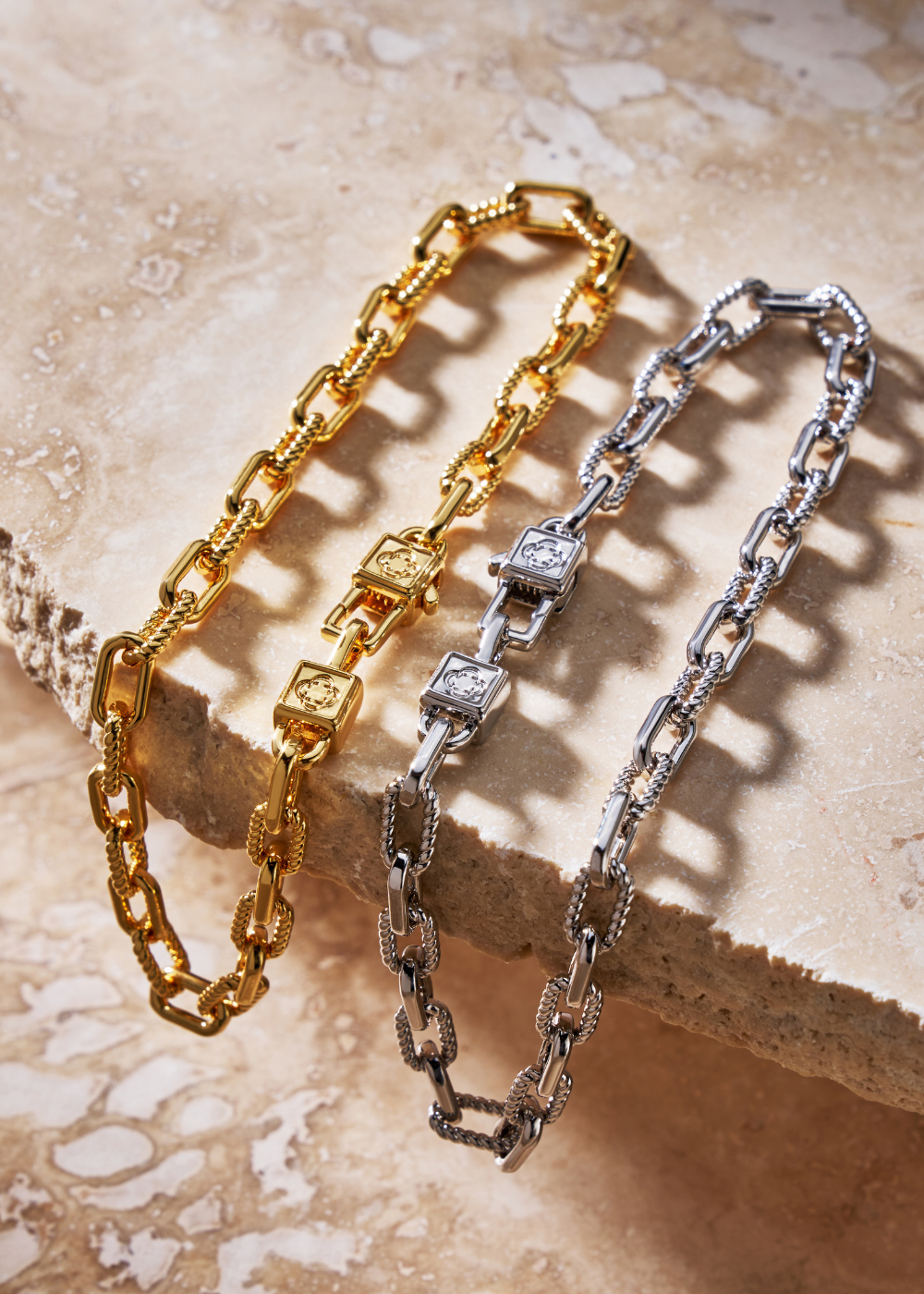
Cuban is the flat, interlocking one you picture when someone says gold chain, and it carries the statement style better than anything else. Figaro alternates long and short links, which gives it a rhythm Cuban doesn't have. Rope twists, so it catches light from every angle. Box and wheat are tighter and more even, which suits minimalist and classic. And the thinner, simpler weaves are the ones that disappear under a collar.
We've covered every one of them properly in types of men's chains, including how each behaves in daily wear, which is worth reading before you buy rather than after.
The metal is a separate decision again, and a smaller one than most people think. Silver or gold goes through what actually decides it, and it isn't your skin tone.
Four rules, and they're the whole of it.
Pick a dominant style and let it lead. One aesthetic should carry about seventy per cent of what you're wearing. A minimalist wardrobe with one iced piece in it looks like a mistake; a statement wardrobe with one thin chain in it looks like layering.
Repeat anything you introduce. One gold piece among four silver reads as accidental. Two reads as a choice. This applies to metals, to stones, to styles, to everything.
Vary the scale. Two chains at the same length and weight look like one chain that went wrong. Different lengths, different gauges, and the stack reads as deliberate.
Buy one piece at a time and wear it for a month. The single most useful habit in this whole subject. You'll learn more about what suits you from four weeks with one chain than from any guide, this one included.
This page is about deciding what you're going for. If what you actually want is the practical version, how to put the pieces on and what to wear them with, that's a separate guide: how to wear men's jewellery takes it in three steps from your first chain onwards.
If minimalism is where you're starting, our guide to minimalist jewellery goes deeper into why it's so hard to get wrong. If you're going the other way, the ICED range is where presence lives.
Worth addressing, because it's the question underneath a lot of searches on this subject, and the honest answer is that trends matter less in men's jewellery than in almost any other category.
The aesthetics on this page have all been worn continuously for decades. Signet rings, Cuban chains, cross pendants and studs were all current twenty years ago and all current now. What actually moves is proportion, which metal leads in a given few years, and how much people layer. Those shift slowly and they shift back.
Which is why a piece bought for a style lasts and a piece bought for a season doesn't. If you find yourself asking whether something is still in, you've already told yourself what you think of it.
That said, some trends are just early. Chain layering was a trend once and it's closer to a default now, and pearls on men went from a talking point to an ordinary thing to own inside about three years. We went back through our own predictions and checked which ones held in men's jewellery trends: what lasts and what doesn't, which is the evidence version of this section rather than the opinion.
The practical version: buy the aesthetic, not the year. Anything on this page will still look right in 2036.
Minimalist, classic, statement, symbolic, vintage, gemstone and layered. Minimalist and classic account for most of what men actually wear day to day. Statement has the longest history in men's jewellery and the most visibility. Symbolic outlasts all of them, because a pendant that means something doesn't go out of style.
The phrase covers three different things, which is why searching it gets confusing. There's the aesthetic (minimalist, statement, vintage), the piece type (chain, pendant, ring, bracelet, earring), and the link style on a chain specifically (Cuban, Figaro, rope, box). This guide covers all three, in that order.
Start with what you already wear rather than with a category. If your clothes are plain and dark, minimalist and classic will look right. If you dress to be noticed, statement will. And if you're unsure, buy one piece in the style you keep looking at rather than the one you think you should want.
A chain, at a width you're comfortable with, in the metal that matches whatever you already wear most. It's the piece you'll wear most often and the one everything else gets built around. Get the width right before worrying about anything else.
Yes, and the pieces that do it well tend to be the ones people remember. The rule that matters is repetition: if you're mixing, repeat each element at least twice so it reads as a decision rather than an accident.
A jewellery style is an overall look, like minimalist or statement. A chain style is the pattern of the links themselves, like Cuban or Figaro. You pick the first to decide what you're going for and the second to decide what it's made of.
Neither. They're answers to different questions. Minimalist is for jewellery you want to forget you're wearing; statement is for jewellery you want noticed. Most men end up owning both and wearing them on different days.
The aesthetics barely move. Signet rings, Cuban chains and cross pendants have all been worn continuously for decades. What moves is proportion, which metal leads, and how much people layer. Buy the style rather than the season and you'll be fine.
Settle the aesthetic, then the piece, then the link. In that order the whole thing gets simple, and most of the questions people ask about men's jewellery turn out to be questions about the first one.
Have a look through the chains if you're starting from nothing, or the pendants if you already own one and want it to mean something.

The 10 Most Expensive Chains in the World (And What They're Really Worth)
Rick Ross's self-portrait chain tops nearly every list at a reported $1.5 million, and nobody can tell you where that number came from. Lil Jon's is the only one on the list Guinness ever actually ...
Read more
How to Tell if Pearls Are Real: 8 Tests, and What Pearls Are Worth
Are your pearls real? Most fakes give themselves away in under a minute. Here are eight simple tests, what fakes are made of, and what real pearls are actually worth.
Read more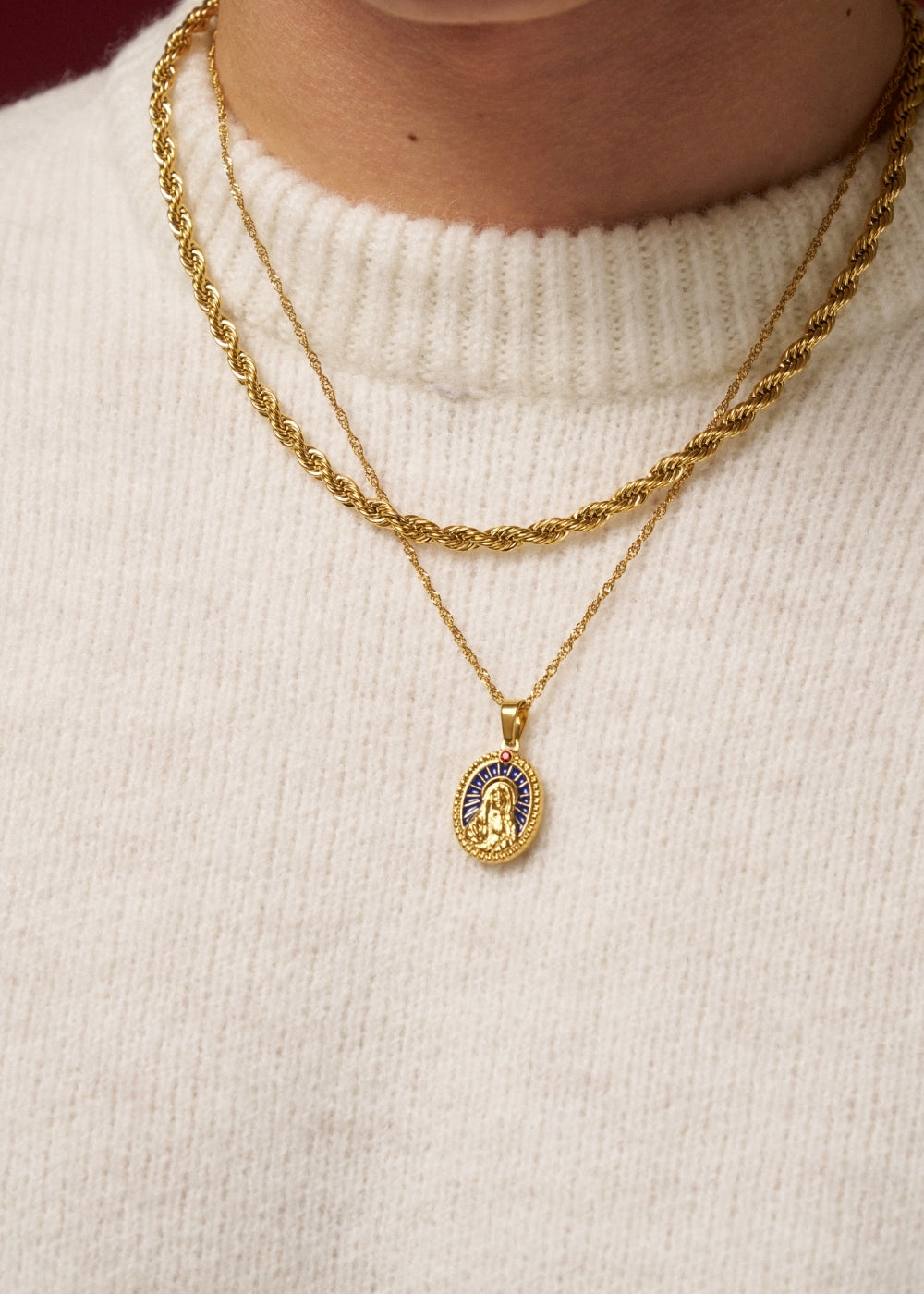

Leave a comment
This site is protected by hCaptcha and the hCaptcha Privacy Policy and Terms of Service apply.